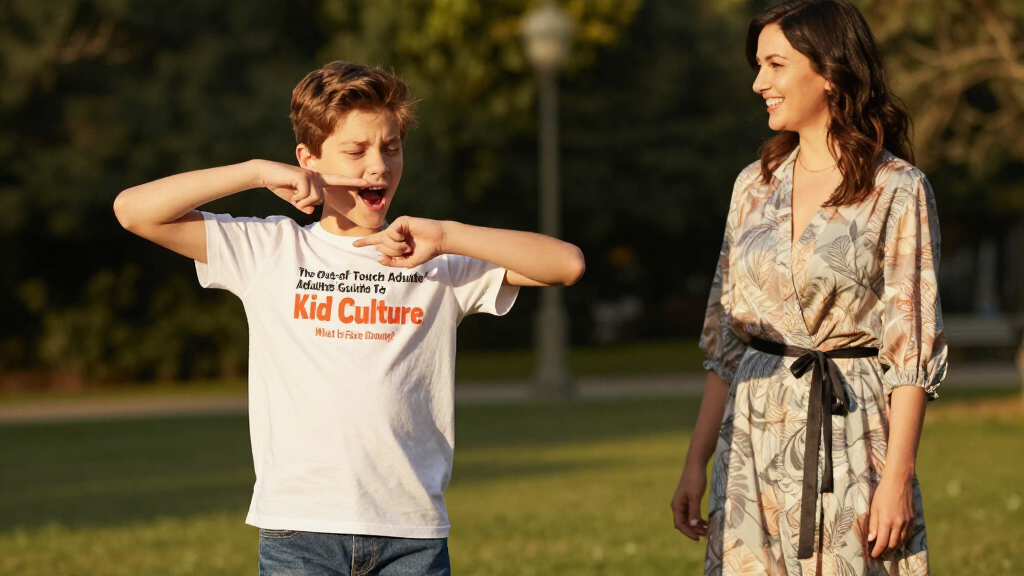
TL;DR
Face dancing is a new trend among children involving exaggerated facial movements, confusing many adults. This report clarifies what is known, why it matters, and what remains uncertain.
Face dancing is a new trend among children involving exaggerated facial movements, which has recently gained attention online and in social settings. Many adults find it confusing and unfamiliar, raising questions about its origins and significance. This is a good example of how generational gaps manifest in digital culture. This development matters because it highlights generational gaps in understanding digital and social media-driven youth culture.
According to reports from social media platforms, face dancing involves children making exaggerated, often humorous facial expressions, sometimes synchronized with music or other visual cues. The trend appears to have started on platforms like TikTok and TikTok-inspired apps, where children share videos of themselves performing these exaggerated facial routines. For more on youth digital culture, see this guide. Experts and observers note that face dancing is characterized by rapid, exaggerated movements of the eyes, mouth, and eyebrows, often in a rhythmic or choreographed manner. Understanding these trends can help bridge the gap between generations.
While the trend has gone viral among younger users, many adults remain unfamiliar with its purpose or origin. Some speculate that it functions as a form of playful self-expression or a way to connect with peers through humor and shared language. Others suggest it might be a form of digital mimicry or a new form of meme-based interaction. There is no official or academic consensus on the trend’s meaning or cultural significance, and it appears to be primarily driven by social media sharing and peer validation.
The Out-of-Touch Adults’ Guide to Kid Culture: What Is Face Dancing?
A new trend among children built on exaggerated facial movements has gone viral — and left most adults completely confused. This report clarifies what is known, why it matters for intergenerational understanding, and what remains uncertain.
“Children making exaggerated, humorous facial expressions — often synchronized with music — as a form of playful self-expression and peer connection.”
Why Face Dancing Matters
New Forms of Expression
The trend reflects broader shifts in how children communicate, express themselves, and build social bonds — largely through short-form video and shared visual language invisible to most adults.
Peer Validation Loops
Children seek acceptance and recognition through viral trends. Face dancing may influence social dynamics, peer standing, and even mental health as participation becomes a currency of belonging.
Misunderstanding Youth
Adults who can’t decode these behaviors risk misinterpreting harmless play. Recognizing them supports healthy social development and opens honest conversations about children’s online lives.
Origins & Rise in Kid Culture
Meme Roots
Earlier meme and dance crazes on short-form video platforms provided the raw material — later adapted to emphasize faces over physical movement.
TikTok Emergence
Children and preteens began sharing humorous, exaggerated facial routines on TikTok and TikTok-inspired apps in late 2023.
Algorithmic Amplification
Peer networks and social media algorithms spread the trend rapidly among highly engaged young users, accumulating thousands of views and likes.
Adult Confusion
The trend went viral among younger users while most adults remained unfamiliar with its purpose or origin — a classic generational gap.
Certainty of the Evidence
Theories vs. Established Facts
| Claim | Status | Evidence Base |
|---|---|---|
| Involves rapid, exaggerated eye, mouth & eyebrow movements | ✓ Observed | Widely documented in shared videos |
| Started on TikTok & similar short-form platforms | ~ Likely | Platform reports; exact origin hard to trace |
| Functions as playful self-expression / peer humor | ~ Speculated | Observer interpretation, no consensus |
| Form of digital mimicry or meme-based interaction | ~ Hypothesis | Fits meme-evolution patterns; unproven |
| Official academic consensus on cultural meaning | ✗ Does not exist | No formal research published to date |
What Comes Next?
Researchers, educators, and parents will keep watching as the trend evolves. The best move for adults: skip the panic, start the conversation — observe, ask questions, and stay informed about the platforms shaping youth culture.
Key Questions, Answered
What exactly is face dancing?
A trend where children make exaggerated, humorous facial expressions, often synchronized with music or choreographed. It is primarily shared on platforms like TikTok.
Why do kids do it?
For fun, self-expression, and peer validation. It’s a way to connect with friends and participate in trending online challenges.
Is it dangerous or harmful?
There is no evidence it is inherently harmful. Still, parents should monitor online activity and ensure children practice safe, respectful digital behavior.
Will it become a lasting trend?
Uncertain. Like many viral trends, it could fade quickly or evolve into a new form of digital expression.
Why Face Dancing Matters for Intergenerational Understanding
This trend exemplifies how youth culture continues to evolve rapidly through digital platforms, often leaving older generations behind. For parents, educators, and policymakers, understanding face dancing is important because it reflects broader shifts in communication, self-expression, and social bonding among children. It also highlights the challenges adults face in keeping up with new forms of online interaction and the potential for misunderstandings or misinterpretations of youth activities.
Moreover, face dancing may influence social dynamics, peer validation, and even mental health, as children seek acceptance and recognition through viral trends. Recognizing and understanding these behaviors can help adults support healthy social development and foster open communication with children about their online lives.
As an affiliate, we earn on qualifying purchases.
Origins and Rise of Face Dancing in Kid Culture
The phenomenon of face dancing appears to have originated on TikTok and other short-form video platforms, where children and preteens share humorous, exaggerated facial expressions. The trend seems to have gained momentum in late 2023, with numerous videos accumulating thousands of views and likes. Its roots are likely connected to earlier meme and dance trends, adapted into a form that emphasizes facial expressions over physical movement.
Historically, youth trends involving exaggerated gestures or expressions have existed in various forms, from dance crazes to meme-based challenges. However, face dancing is distinct in its focus on facial movements alone, often performed in a playful or humorous manner. Experts note that such trends tend to spread rapidly through peer networks and social media algorithms, especially among children who are highly engaged with digital content. There is limited academic research on face dancing specifically, but it fits within the broader context of digital youth culture and meme evolution.
As an affiliate, we earn on qualifying purchases.
Unclear Origins and Cultural Significance of Face Dancing
It is not yet clear how long face dancing will remain popular or whether it will evolve into a broader cultural phenomenon. Experts acknowledge that its origins are difficult to trace precisely, as it appears to have emerged spontaneously among children on TikTok and similar platforms. Additionally, there is no official academic or cultural analysis confirming its deeper meaning or significance, leaving many questions about its future trajectory and impact.
Some observers wonder whether face dancing might develop into a more structured activity or fade away as quickly as other viral trends. The lack of formal research or commentary means that its long-term implications remain uncertain.
As an affiliate, we earn on qualifying purchases.
Monitoring the Trend’s Development and Impact
Researchers, educators, and parents will likely continue observing face dancing as it evolves. Social media platforms may introduce new features or challenges related to the trend, potentially influencing its spread or transformation. Experts suggest that further analysis of its role in peer bonding and digital expression will be valuable in understanding its place within youth culture. Meanwhile, adults are encouraged to engage in open conversations with children about their online activities to better understand these emerging trends.
As an affiliate, we earn on qualifying purchases.
Key Questions
What exactly is face dancing?
Face dancing is a trend where children make exaggerated, humorous facial expressions, often synchronized with music or in a choreographed manner. It is primarily shared on social media platforms like TikTok.
Why do kids do face dancing?
Kids engage in face dancing for fun, self-expression, and peer validation. It’s a way to connect with friends and participate in trending online challenges.
Is face dancing dangerous or harmful?
There is no evidence to suggest face dancing is inherently harmful. However, parents should monitor online activity and ensure children understand safe and respectful digital behavior.
Will face dancing become a lasting trend?
It is uncertain how long face dancing will remain popular. Like many viral trends, it could fade quickly or evolve into a new form of digital expression.
How can adults better understand this trend?
Adults can learn about face dancing by observing children’s videos, engaging in open conversations, and staying informed about social media trends affecting youth culture.
Source: rss