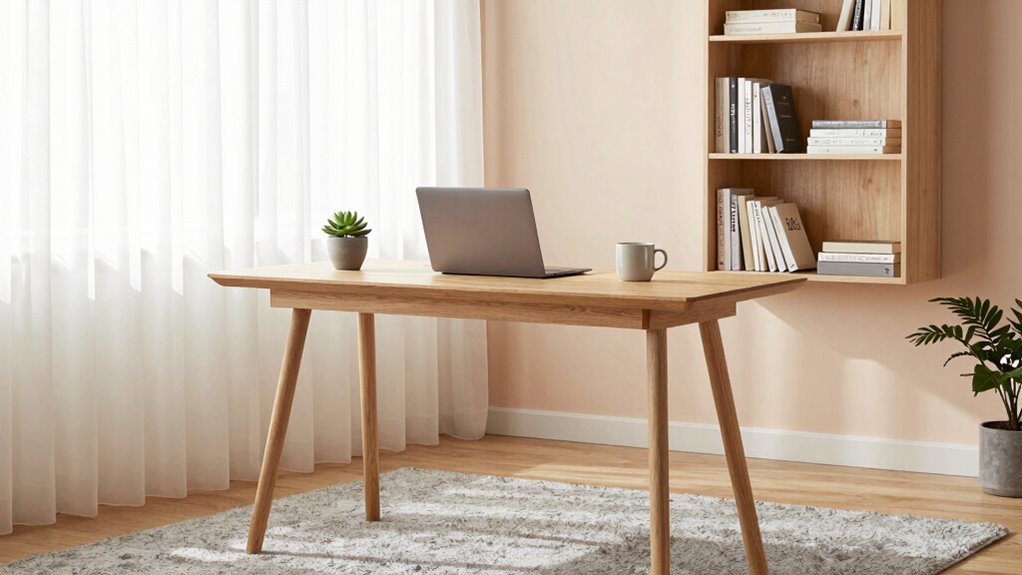
A truly productive environment is one that feels calm, not impressive. You’ll find that focusing on serenity helps boost concentration and reduces stress, making tasks easier to manage. Keep the space clutter-free, use soft, neutral tones, and add natural elements like plants to create a peaceful vibe. By prioritizing simplicity and comfort, you’ll notice better focus and sustained energy. If you keep exploring, you’ll discover more ways to cultivate a space that truly supports your productivity.
Key Takeaways
- Calm environments reduce mental overwhelm and enhance focus, leading to better productivity.
- Neutral tones and clutter-free spaces create a tranquil atmosphere that fosters concentration.
- Simplified design with natural elements supports mental well-being and reduces distractions.
- Ongoing organization and decluttering maintain a serene, efficient workspace.
- Prioritizing psychological comfort over impressiveness improves sustained motivation and task enjoyment.
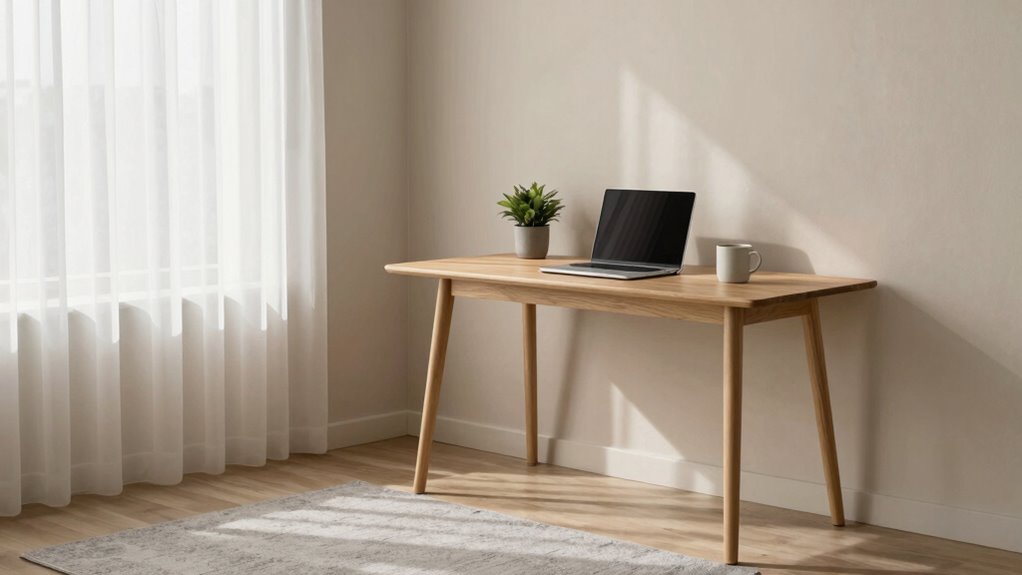
Creating a truly productive environment isn’t about impressing others with flashy decor or high-tech gadgets; it’s about cultivating a space that feels calm and inviting. When your environment promotes focus and serenity, it encourages your best work without unnecessary distraction. One essential approach is mindful design—a way of arranging your space intentionally to support your mental clarity and efficiency. You want to choose furniture, colors, and accessories that evoke tranquility, not overstimulate your senses. Soft, neutral tones or muted colors can help maintain a peaceful atmosphere, while clutter-free surfaces keep your mind from feeling overwhelmed.
A calm, inviting space with neutral tones and clutter-free surfaces boosts focus and mental clarity.
Clutter reduction plays a vital role here. When your space is chaotic, your mind tends to mirror that chaos, making it harder to concentrate. You might find yourself wasting time searching for things or feeling anxious about the mess. By consciously reducing clutter, you create a more streamlined environment that fosters calm. Invest in smart storage solutions to keep everyday items out of sight but within reach. Regularly declutter your workspace—discard or donate anything that doesn’t serve a purpose. This ongoing effort prevents clutter from piling up and guarantees your environment remains a place of focus rather than distraction. Incorporating organization techniques can further support your efforts in maintaining a tidy space.
Mindful design also extends to how you organize your tools and resources. Keep only what you need for your current projects within easy reach, and store the rest away. This minimizes visual noise and helps you stay centered on what matters most. Incorporate natural elements like plants or natural light to enhance the sense of calm, making your space more inviting and lively. Avoid overdecorating or adding unnecessary accessories that can contribute to visual clutter, which can hinder your productivity. Additionally, understanding the importance of biodiversity in your environment can inspire you to create a space that supports mental well-being and sustainability. Creating a healthy environment involves understanding how psychological comfort influences your focus and overall productivity. Including environmental sustainability practices can also help reinforce a sense of harmony and reduce stress related to environmental impact.
Creating a calm environment isn’t a one-time task; it’s an ongoing process of intentional choices. When you focus on mindful design and clutter reduction, you’re setting yourself up for sustained concentration and mental peace. It also helps to be mindful of how physical environment impacts your mood and energy levels, ensuring your workspace supports your overall well-being. When your environment feels calm and organized, you’ll notice your productivity naturally improves. You’ll work more efficiently, feel less overwhelmed, and enjoy your tasks more—proving that simplicity and serenity truly make a space productive.
As an affiliate, we earn on qualifying purchases.
Frequently Asked Questions
How Can I Make My Workspace Feel Calmer?
To make your workspace calmer, start by reducing clutter with minimal decor, which helps create a peaceful atmosphere. Incorporate natural elements like plants or wooden accents to bring a sense of tranquility. Keep your color palette soft and neutral, and guarantee good lighting. You’ll feel more focused and less overwhelmed, making your environment inviting and conducive to productivity. Small adjustments like these can considerably transform your workspace into a calming haven.
Do Colors Affect Productivity in a Calm Environment?
Colors do affect productivity in a calm environment through color psychology and mood enhancement. For example, a study shows that soft blue walls promote focus and reduce stress. Using calming colors like pastel greens or muted neutrals can make your space more conducive to concentration and relaxation. These subtle cues help you stay calm and centered, boosting overall productivity by creating a balanced, soothing atmosphere.
What Lighting Promotes a Peaceful Work Setting?
You should prioritize natural sunlight and soft lighting to create a peaceful work setting. Natural sunlight boosts your mood and energy, making your space feel warm and inviting. Soft lighting, like warm LED bulbs or lamps with dimming options, reduces harsh shadows and glare, helping you stay focused without straining your eyes. Combining these elements fosters a calm atmosphere that encourages productivity and relaxation, making your workspace more enjoyable.
Should Noise Levels Influence Workspace Design Choices?
A quiet workspace is like a clear sky—enhancing focus and reducing stress. Noise levels should definitely influence your workspace design choices. Use soundproofing strategies and ambient noise control to minimize distractions. Incorporate soft materials, partitions, or white noise machines to keep noise in check. By managing sound, you create a calm environment where you can concentrate and be more productive, instead of battling unwanted disruptions.
How Often Should I Declutter My Environment?
You should declutter your environment regularly—ideally once a month—to maintain organization and mental clarity. Incorporate good organizational habits by using effective storage solutions that keep things tidy and accessible. Regular decluttering helps prevent clutter buildup, making it easier to focus and work efficiently. Set a recurring reminder to reevaluate your space, so it stays calm and functional, supporting your productivity and overall well-being.
As an affiliate, we earn on qualifying purchases.
Conclusion
Imagine stepping into your workspace, where soft natural light filters through gentle curtains, and a quiet sense of calm wraps around you like a cozy blanket. In this peaceful environment, your focus sharpens, and distractions fade away. It’s not about impressing others with flashy decor but creating a space that nurtures your mind. When your surroundings feel calm, productivity flows effortlessly, turning everyday tasks into moments of quiet achievement and genuine satisfaction.
As an affiliate, we earn on qualifying purchases.
As an affiliate, we earn on qualifying purchases.