AI coaching is rapidly growing for solo professionals, offering personalized guidance that helps you navigate busy workdays and set realistic goals. It analyzes your work patterns, suggests improvements, and provides support that traditional coaching may lack. While AI tools promote transparency and ethical use, it’s important to stay mindful of data privacy and potential biases. By staying aware of these aspects, you can harness AI effectively while maintaining your independence—stay with us for more insights.
Listen free for 30 days with Audible
Thousands of audiobooks and originals — cancel anytime.
As an affiliate, we earn on qualifying purchases.
Key Takeaways
- AI coaching offers personalized guidance and goal-setting tailored to solo professionals’ unique work routines.
- Ethical considerations emphasize data privacy, fairness, transparency, and accountability in AI coaching systems.
- Increased trust in AI requires clear explanations of how recommendations are generated and data is used.
- Risks include over-dependence on AI, highlighting the need for critical thinking and autonomous decision-making.
- Choosing ethical, privacy-respecting AI tools enhances effective use while maintaining personal independence.
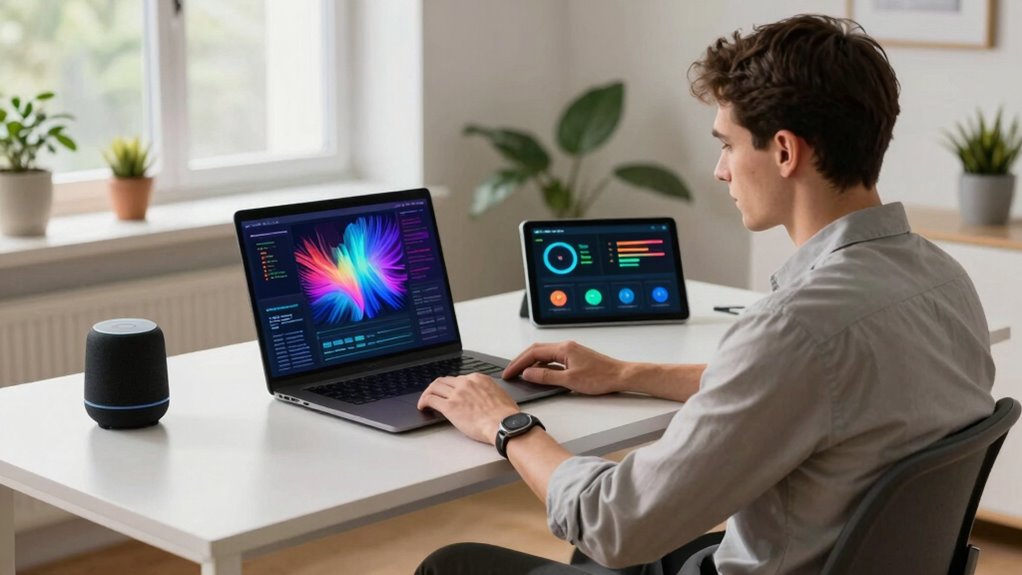
As a solo professional, you often juggle multiple roles, making it challenging to stay focused and motivated. That’s where AI coaching steps in, offering tailored guidance to help you navigate your busy days. But as you embrace these digital assistants, it’s crucial to consider ethical implications and AI transparency. You want a coach that not only boosts your productivity but also respects your privacy and maintains honesty in its operations.
AI coaching tools analyze your work patterns, suggest improvements, and help you set realistic goals. They’re designed to adapt to your unique needs, providing personalized support that traditional coaching can’t always match. This makes them invaluable for solo professionals who lack the resources for a dedicated coach or mentor. However, with this convenience comes responsibility. You should ask how transparent the AI is about its decision-making processes. Is it clear how your data is being used? Can you trust the recommendations it provides? AI transparency ensures you’re aware of how the system operates and helps you avoid blindly following advice that might be biased or flawed.
Ethical implications come into play when considering how these AI systems collect, store, and analyze your data. You need reassurance that your information isn’t being sold or misused. Good AI coaching platforms prioritize data privacy, but it’s important to verify their policies. Additionally, bias can creep into AI systems if they’re trained on narrow datasets. That bias might influence the guidance you receive, unintentionally steering you in certain directions or reinforcing stereotypes. As a user, you should be vigilant about these issues and seek out AI tools that are committed to fairness and accountability.
Using AI coaching also raises questions about dependence. While these tools can boost your efficiency, they shouldn’t replace your critical thinking or emotional judgment. It’s tempting to rely heavily on AI suggestions, but you need to maintain a level of autonomy and self-awareness. The best AI coaches serve as partners, helping you make informed decisions rather than dictating your actions. Understanding AI system training and its limitations is essential to ensure balanced reliance. Moreover, fostering awareness of your own values and motivations remains vital to avoid over-dependence on technology. A thorough understanding of how training data influences AI behavior can help you better evaluate their suitability for your needs.
In the end, AI coaching for solo professionals offers remarkable opportunities to enhance your work life, but it requires careful consideration of ethical implications and AI transparency. You want to work with systems that respect your privacy, offer clear insights into their functioning, and operate ethically. When you choose wisely, AI coaching can be a powerful tool that supports your growth without compromising your values or independence.
AI coaching tools for solo professionals
As an affiliate, we earn on qualifying purchases.
As an affiliate, we earn on qualifying purchases.
Frequently Asked Questions
How Secure Is My Data With AI Coaching Platforms?
Your data security depends on the platform’s data privacy policies and security measures. Reputable AI coaching platforms use encryption, regular security audits, and strict access controls to protect your information. However, always review their privacy policies, avoid sharing sensitive details, and choose platforms known for strong data privacy practices. Staying informed helps you guarantee your personal data remains safe while benefiting from AI coaching.
Can AI Coaching Replace Human Mentorship Entirely?
Sure, AI coaching can seem like it will replace human mentorship entirely—who needs emotions or intuition anyway? In reality, AI lacks true emotional intelligence and personalization accuracy, making it unlikely to fully replace human mentors. While AI offers valuable insights, it can’t replicate the nuanced understanding and empathy that come from real human connection. So, expect AI to supplement, not supplant, genuine mentorship in your growth journey.
What Skills Are Needed to Effectively Use AI Coaching Tools?
To effectively use AI coaching tools, you need strong digital literacy skills and a mindset focused on personal development. You should understand how to navigate and interpret data from these tools, enabling skill enhancement in areas like goal setting and problem-solving. Critical thinking helps you assess AI feedback accurately, while adaptability ensures you stay open to new insights and continuous improvement, guaranteeing AI’s benefits for your growth.
How Affordable Is AI Coaching Compared to Traditional Coaching?
Imagine you’re stepping into a new era—AI coaching’s affordability outshines traditional methods. You’ll find a favorable cost comparison, making personalized guidance more accessible than ever. AI tools eliminate hefty fees and scheduling hassles, offering swift, tailored support at a fraction of the price. This accessibility benefits solo professionals, enabling continuous growth without breaking the bank, and democratizes coaching, so more people can discover their potential without the high costs of conventional options.
What Industries Benefit Most From AI Coaching Solutions?
You’ll find that industries like healthcare, finance, and education benefit most from AI coaching solutions. Their industry applications include personalized training, decision support, and process automation. With technology integration, AI enhances efficiency and decision-making, making it easier for professionals to develop skills and optimize workflows. These sectors see quicker results and better outcomes, thanks to tailored coaching experiences powered by AI, which adapt to their unique needs and challenges.
personalized AI productivity assistant
As an affiliate, we earn on qualifying purchases.
As an affiliate, we earn on qualifying purchases.
Conclusion
So, here you are, relying on AI to guide your every move, yet somehow still hoping for that human touch. It’s funny—technology promises to make you more autonomous, but sometimes, it just leaves you more dependent. As you navigate this new era of AI coaching, remember: the real insight might just come from trusting your own instincts, not the algorithms. Ironically, in trying to be more independent, you’re often more interconnected than ever before.
privacy-focused AI coaching software
As an affiliate, we earn on qualifying purchases.
As an affiliate, we earn on qualifying purchases.
AI goal-setting apps for freelancers
As an affiliate, we earn on qualifying purchases.
As an affiliate, we earn on qualifying purchases.
NFL season / tailgating Picks
team gear
As an affiliate, we earn on qualifying purchases.