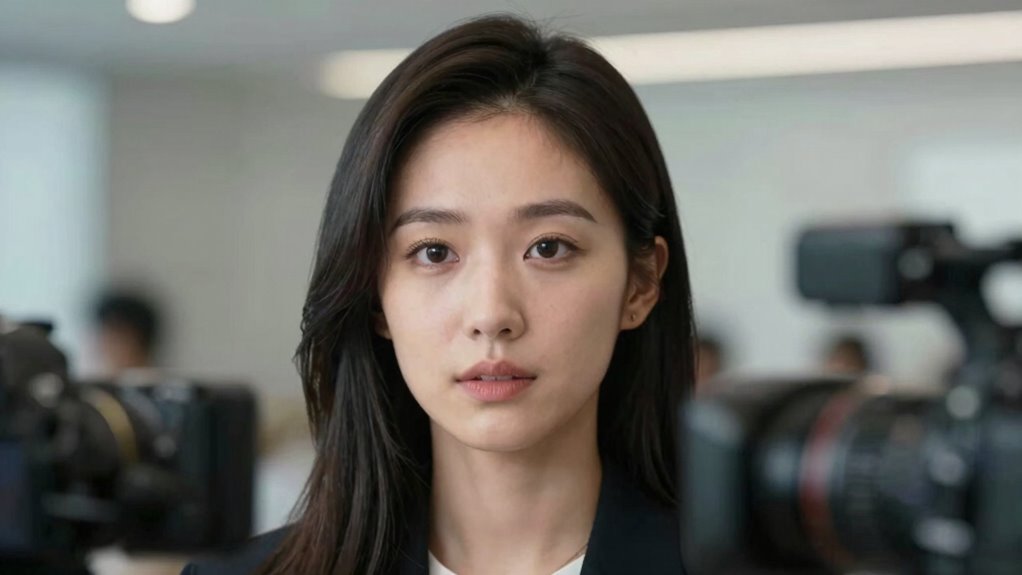

For most interview setups, I’d start with the Canon EF 50mm f/1.8 STM: its quiet autofocus, bright aperture, and compact size make it a practical choice for a Canon DSLR operator filming a seated subject. Sony shooters may prefer the TTArtisan AF-FF 40mm f/2, which pairs autofocus with a wider view and a light metal body. For Canon mirrorless cameras, the Canon RF 50mm F1.8 STM offers a similarly simple setup in the native RF mount.

Get the little things that make your day delivered free with Prime
- Fast, free delivery on millions of items
- Prime Video, Amazon Music and more included
- Member-only deals all year
The main decision is not simply which lens has the widest aperture. Camera mount compatibility comes first, followed by working distance, framing, and whether autofocus or manual focus better suits your recording style. An 85mm lens can isolate a speaker beautifully, but it needs more room and careful manual focusing. These four lenses cover distinct interview needs, from flexible autofocus to controlled portrait framing, with clear compromises in stabilization, focal length, and focus operation.
Key Takeaways
- Best general pick for Canon DSLR interviews: the EF 50mm f/1.8 STM combines a bright aperture with quiet autofocus and a compact body.
- Best Sony option: TTArtisan’s 40mm f/2 adds face and eye tracking support while giving a somewhat wider interview view than a 50mm lens.
- Best native Canon mirrorless pick: the RF 50mm F1.8 STM fits EOS R cameras directly, but it cannot replace a wider lens in tight rooms.
- Best for deliberate, tight portraits: the manual EF 85mm f/1.8 can create strong background separation, provided the operator can manage focus and camera distance.
- Room size changes the choice: 50mm and 85mm framing can feel restrictive in a small office, while a 40mm view offers more breathing room.
| Canon EF 50mm f/1.8 STM Lens for Canon EOS DSLR Cameras |  | Best Overall for Canon DSLR Interviews | Focal length: 50mm | Maximum aperture: f/1.8 | Mount: Canon EF | VIEW ON AMAZON | See Our Full Breakdown |
| TTArtisan AF-FF 40mm f/2 Full-Frame Autofocus Lens for Sony E-Mount |  | Best Sony Interview Lens | Focal length: 40mm | Maximum aperture: f/2 | Mount: Sony E | VIEW ON AMAZON | See Our Full Breakdown |
| Canon RF 50mm F1.8 STM Lens for EOS R Series Cameras |  | Best Compact Native RF Option | Focal length: 50mm | Maximum aperture: f/1.8 | Mount: Canon RF | VIEW ON AMAZON | See Our Full Breakdown |
| EF 85mm f/1.8 Portrait Lens for Canon DSLR Cameras – Manual Focus |  | Best for Controlled, Tight Portrait Interviews | Focal length: 85mm | Maximum aperture: f/1.8 | Mount: Canon EF/EF-S | VIEW ON AMAZON | See Our Full Breakdown |
| lens for interview | Focal length | Maximum aperture | Mount | Focus |
|---|---|---|---|---|
| Canon EF 50mm f/1.8 STM Lens f | 50mm | f/1.8 | Canon EF | Autofocus with full-time manual adjustment |
| TTArtisan AF-FF 40mm f/2 Full- | 40mm | f/2 | Sony E | Autofocus with STM and lead-screw motor |
| Canon RF 50mm F1.8 STM Lens fo | 50mm | f/1.8 | Canon RF | — |
| EF 85mm f/1.8 Portrait Lens fo | 85mm | f/1.8 | Canon EF/EF-S | Manual |
More Details on Our Top Picks
Canon EF 50mm f/1.8 STM Lens for Canon EOS DSLR Cameras
I put the Canon EF 50mm f/1.8 STM first because it balances the core interview requirements well: a bright f/1.8 aperture, autofocus, and a small, light body. Its STM focus drive is described as near-silent, a useful trait when the camera microphone is close or room audio is being recorded. The focal length gives a familiar portrait perspective, and the wide aperture can soften a distracting office background or help in a dim room.
Compared with the TTArtisan 40mm f/2, this lens offers a wider maximum aperture but a slightly tighter angle of view. That can help when the interviewer wants a more isolated head-and-shoulders frame, though a small room may not provide enough distance. Against the manual EF 85mm f/1.8, the 50mm is easier to keep focused on a moving or expressive speaker because it has autofocus. It also avoids the 85mm’s particularly tight framing.
The tradeoff is the fixed focal length: framing changes require moving the camera, changing subject distance, or switching lenses. It also has no optical stabilization, so I’d pair it with a tripod or other stable support for interviews. The 49mm filter size means filters may need to be bought separately, and its f/1.8 aperture cannot blur backgrounds as strongly as a faster lens such as the 85mm f/1.8 under comparable framing. This is my most balanced DSLR recommendation, not a universal fit for cramped spaces or moving camera work.
Pros:- Near-silent STM autofocus suits interview audio and video use.
- Bright f/1.8 aperture helps in modest light and softens backgrounds.
- Compact 159 g body is easy to balance on a lightweight setup.
- Full-time manual focus allows small focus corrections without giving up autofocus.
Cons:- Fixed 50mm framing can feel too tight in a small office or studio.
- No optical image stabilization; a stable camera support is advisable.
- A 49mm filter is required for filters, and the lens cannot zoom to reframe.
Best for: Canon DSLR owners who want an affordable-to-operate, compact autofocus prime for seated interviews, talking-head videos, and mixed stills-and-video work.
Not ideal for: Sony or Canon RF camera owners who need a native mount, operators filming in very tight rooms, and anyone who needs optical stabilization in the lens.
- Focal length:50mm
- Maximum aperture:f/1.8
- Mount:Canon EF
- Focus:Autofocus with full-time manual adjustment
- Closest focusing distance:0.35 m
- Filter size:49mm
- Weight:159 g
Our verdict“For a Canon DSLR interview kit, I’d choose this 50mm first for its useful mix of quiet autofocus, low-light flexibility, and manageable size.”
TTArtisan AF-FF 40mm f/2 Full-Frame Autofocus Lens for Sony E-Mount
Sony E-mount users get the lineup’s most distinctive compromise with the TTArtisan AF-FF 40mm f/2. Its 40mm focal length opens up a little more of the room than either 50mm lens, which can make a two-person conversation or a seated guest easier to frame when camera placement is limited. At just 167 g, its all-metal construction also stays light enough for a small camera body or a compact video rig.
The autofocus system is the strongest interview-specific reason to choose it. The STM and lead-screw drive is described as near-silent and supports eye and face tracking, offering a hands-off focus option that the manual 85mm cannot provide. Compared with the Canon EF 50mm f/1.8 STM, it gives up one stop of maximum aperture, but the wider view may be more helpful than extra background blur when a small room limits camera distance. Its USB-C firmware port also gives owners a way to update the lens.
That convenience comes with real limits. This is a Sony E-mount lens, not a Canon alternative, and its f/2 aperture is less bright than the f/1.8 options. The fixed perspective still means no quick zoom adjustment, and reported edge distortion may matter if the frame includes straight architectural lines. There is no optical stabilization, so a tripod or stabilized camera setup remains sensible. I rank it just behind the Canon 50mm overall because it is a strong but mount-specific fit, rather than a broadly applicable pick.
Pros:- Near-silent autofocus with eye and face tracking support.
- 40mm view gives more room around the subject than a 50mm prime.
- Light 167 g all-metal construction suits compact camera rigs.
- Rear USB-C port supports firmware upgrades.
Cons:- f/2 is less bright than the f/1.8 lenses in this roundup.
- No optical image stabilization.
- Fixed focal length and possible edge distortion limit some framing choices.
Best for: Sony E-mount owners who want a compact autofocus prime for interviews and value a slightly wider view, face tracking support, and a metal build.
Not ideal for: Canon users, interviewers who need the strongest low-light aperture in this group, or anyone who depends on lens-based stabilization or zoom framing.
- Focal length:40mm
- Maximum aperture:f/2
- Mount:Sony E
- Focus:Autofocus with STM and lead-screw motor
- Minimum focus distance:0.4 m
- Aperture blades:7
- Weight:167 g
- Stabilization:None
Our verdict“I’d choose the TTArtisan for Sony interviews in tight spaces when quiet autofocus and a little extra width matter more than the brightest aperture.”
Canon RF 50mm F1.8 STM Lens for EOS R Series Cameras
The Canon RF 50mm F1.8 STM is the straightforward choice for an EOS R owner who wants a small, native-mount lens for a simple interview setup. It provides the same broad 50mm, f/1.8 formula as the Canon EF option, with a compact design and quiet autofocus suited to video. Its Super Spectra coating is intended to reduce ghosting and flare, which can help when a bright window or practical light enters the frame.
Compared with the EF 50mm f/1.8 STM, the key distinction is the camera system it fits: this lens is designed for Canon EOS R bodies, while the EF version is for Canon DSLR cameras. I would choose based on the body rather than assume the two are drop-in substitutes. Against the Sony TTArtisan 40mm, the RF lens has a brighter f/1.8 aperture but a tighter 50mm view. That makes it better for isolating one speaker when there is enough working distance, and less forgiving in a cramped room.
Its limits are familiar but still relevant for interviews. There is no optical stabilization, and the fixed focal length leaves repositioning as the main way to alter composition. A 50mm prime can also be awkward if the room does not let the camera sit far enough back for the desired shot. I rank it below the EF DSLR 50mm not because its core interview role is weaker, but because the supplied details do not establish extra interview-specific capability beyond a compact native RF fit and quiet autofocus. EOS R users should treat that native compatibility as the deciding benefit.
Pros:- Native RF mount is intended for Canon EOS R series cameras.
- f/1.8 maximum aperture supports low-light shooting and background separation.
- Compact design is easy to carry and balance on a small mirrorless body.
- Quiet autofocus is suited to recorded video.
Cons:- No optical image stabilization.
- Fixed 50mm framing offers no zoom flexibility in changing rooms.
- May be too tight when the camera cannot be placed far from the subject.
Best for: Canon EOS R owners seeking a small, native RF-mount lens for a stationary single-person interview with a moderate camera-to-subject distance.
Not ideal for: Canon DSLR or Sony users, operators working in very restricted rooms, and handheld shooters who need lens-based stabilization.
- Focal length:50mm
- Maximum aperture:f/1.8
- Mount:Canon RF
- Lens type:Prime
- Autofocus:Yes
- Angle of view:46 degrees
- Stabilization:None
- Coating:Super Spectra
Our verdict“For EOS R owners, this is my compact native-mount interview pick when a 50mm frame fits the available room.”
EF 85mm f/1.8 Portrait Lens for Canon DSLR Cameras – Manual Focus
The manual EF 85mm f/1.8 suits a very particular interview style: a locked camera, a cooperative subject, enough room to stand well back, and an operator prepared to focus by hand. Its longer focal length creates a tighter portrait view than the 40mm or 50mm options, while the f/1.8 aperture can produce pronounced background separation. In a planned sit-down interview, that look can make the speaker stand apart from a busy setting.
Compared with the autofocus Canon EF 50mm f/1.8 STM, the 85mm favors visual isolation over operating ease. The 50mm is the safer choice when the subject shifts in their chair or when an operator wants autofocus assistance; the 85mm gives more compressed portrait framing but puts focus responsibility on the operator. It also asks for more camera-to-subject distance than the TTArtisan 40mm, making it a poor match for small rooms even when its background blur is appealing.
The manual focus ring can be useful when an interview is carefully staged and focus is set before recording, but it raises the chance of missed focus if a speaker leans forward or changes position. The listing also notes that camera settings may need manual adjustment and that error messages can occur if setup is incorrect. I would not make this the default interview lens for an unattended camera or a one-person crew relying on autofocus. It earns a place for deliberate portrait work, not for flexibility.
Pros:- 85mm framing gives a tight portrait view and strong subject separation.
- f/1.8 aperture supports shallow depth of field and low-light work.
- Manual focus ring allows deliberate focus placement in a controlled shot.
- UMC coating and hybrid aspherical element are specified for the optical design.
Cons:- Manual focus makes tracking a speaking subject more demanding.
- Long focal length needs more working distance than the 40mm and 50mm lenses.
- Camera setup may require manual adjustments, with possible error messages if configured incorrectly.
Best for: Canon DSLR users filming a seated subject in a spacious, controlled setup, especially when the operator can set and monitor manual focus.
Not ideal for: Beginners, solo operators who need dependable subject tracking, moving subjects, or anyone working in a small room with limited camera distance.
- Focal length:85mm
- Maximum aperture:f/1.8
- Mount:Canon EF/EF-S
- Focus:Manual
- Lens element feature:Hybrid aspherical lens
- Coating:Ultra Multi-Coating
Our verdict“I’d reserve this 85mm for controlled portrait interviews where tight framing matters more than autofocus convenience or room flexibility.”

How We Picked
I ranked these lenses around the demands of a recorded interview rather than general photography. A useful interview lens must let the operator hold a flattering, consistent frame, maintain focus on a speaking subject, and work with the camera system already in use. I gave particular weight to autofocus behavior, aperture, focal length, and practical handling, since those factors shape footage more directly than a long list of optical claims.
I also treated compatibility as a hard buying filter. The TTArtisan model is for Sony E-mount cameras, the two EF lenses are for Canon DSLR bodies, and the RF 50mm is designed for Canon EOS R cameras. Mount adapters may be part of some systems, but they can affect operation and are not assumed here. The ranking favors lenses that suit common single-camera interview workflows, while the manual 85mm remains useful for a narrower, more controlled role.
These are not interchangeable choices. A wider angle can make a small room workable, while a longer portrait lens demands more subject-to-camera distance. Quiet autofocus matters when the lens is expected to track a speaker, but a locked-off interview can also be run with manual focus if the subject stays put and the operator has time to set focus carefully. None of the listed options has optical stabilization, so I treated support and camera movement as part of the decision rather than implying a lens can solve them.
| lens for interview | Maximum aperture | Mount | Focus | Coating |
|---|---|---|---|---|
| Canon EF 50mm f/1.8 STM Lens f | f/1.8 | Canon EF | Autofocus with full-time manual adjustment | — |
| TTArtisan AF-FF 40mm f/2 Full- | f/2 | Sony E | Autofocus with STM and lead-screw motor | — |
| Canon RF 50mm F1.8 STM Lens fo | f/1.8 | Canon RF | — | Super Spectra |
| EF 85mm f/1.8 Portrait Lens fo | f/1.8 | Canon EF/EF-S | Manual | Ultra Multi-Coating |
Factors to Consider When Choosing Lens For Interviews
I’d narrow an interview lens choice in this order: confirm the camera mount, check the room and camera distance, then decide how much focus control the shoot requires. These four primes can all make portrait-style footage, but their different focal lengths and focus systems suit different working conditions.Start with the camera mount
A lens that does not fit the camera is not a practical interview pick, regardless of its aperture. The TTArtisan 40mm is for Sony E-mount cameras. The two EF lenses are aimed at Canon DSLR bodies, while the RF 50mm is made for Canon EOS R cameras. Check the exact body and lens mount before choosing; do not assume EF and RF are the same system. If you plan to use an adapter, confirm compatibility and autofocus behavior for that camera-lens pairing.
Match focal length to the room
Focal length affects how much room the frame shows and how far the camera needs to sit from the interviewee. The 40mm TTArtisan gives more breathing room than the 50mm lenses, which can help in an office or home studio where backing the camera up is difficult. A 50mm prime creates a tighter single-person composition when there is enough distance. The 85mm manual lens needs the most space and is best treated as a portrait choice for controlled setups rather than a flexible room-to-room option.
Choose autofocus or manual focus deliberately
Autofocus can reduce the operator’s workload when a subject shifts naturally during a conversation. The Canon STM 50mm options and the TTArtisan provide autofocus, with the TTArtisan listing eye and face tracking support. That does not remove the need to check focus behavior on the camera body. The 85mm is manual focus only; it can work when the speaker remains in a marked position, but it puts focus adjustments on the operator. For a solo recording setup, autofocus is generally the less demanding path in this group.
Use aperture for light and background control
All four lenses have relatively bright maximum apertures, ranging from f/2 to f/1.8. A wider aperture can help in low light and soften the background, but it also reduces depth of field, which makes focus accuracy more demanding. The f/1.8 lenses offer a small aperture advantage over the TTArtisan f/2, while the same f/1.8 rating on the 85mm can deliver a tighter portrait look because of its longer focal length. I would prioritize a properly lit, consistently focused interview over chasing the blurriest background.
Plan for stabilization and fixed framing
None of these lenses lists optical image stabilization, and all are fixed focal length primes. For a sit-down interview, a tripod or other stable support can address camera shake more directly than swapping between these lenses. Since there is no zoom, the framing has to be set by moving the camera, changing the subject’s position, or choosing another lens. Measure the available camera distance and test the intended composition before recording, especially with the 50mm and 85mm options.
Think about the audio and crew setup
Near-silent autofocus is helpful, but it cannot replace good microphone placement and a recorded sound check. A microphone mounted on or near the camera may pick up more lens or handling noise than a separate microphone positioned close to the speaker. For a one-person crew, autofocus and face tracking can simplify monitoring; for a crew with a dedicated focus operator, manual focus may be manageable. I’d select the lens around the actual crew workflow, not an assumption that every interview subject will stay perfectly still.
Frequently Asked Questions
Which lens is the best general choice for an interview?
For a Canon DSLR user, I’d start with the Canon EF 50mm f/1.8 STM because it combines autofocus, a bright aperture, and a compact body. It is not a universal answer: Sony E-mount owners should look at the TTArtisan 40mm, while EOS R owners need to consider the native RF 50mm. The room and camera system matter as much as the lens’s general-purpose appeal.
Is a 50mm lens too tight for an interview?
It depends on the room and the intended framing. A 50mm lens can produce a pleasing single-person interview shot if the camera can sit far enough back, but it may feel cramped in a small office. The TTArtisan’s 40mm focal length offers a wider view among these options. If you cannot test framing in advance, measure the available camera-to-subject distance and compare it with the frame you want.
Should I use autofocus or manual focus for interviews?
Autofocus is usually easier for a solo operator or for a speaker who moves naturally, especially with the listed STM options and the TTArtisan’s eye and face tracking support. Manual focus can work well in a controlled setup where the subject stays on a mark and focus can be set before recording. The 85mm model is manual only, so I would choose it for deliberate, monitored portrait work rather than hands-off recording.
Will these lenses stabilize handheld interview footage?
None of the four products lists optical image stabilization. A stable tripod or other camera support is a practical choice for a seated interview, while supported camera bodies may have their own stabilization features. Check the camera’s capabilities separately; do not assume lens-based stabilization is present. A fixed focal length also means stabilization will not provide a way to change framing.
Can I use one of these lenses on any Canon camera?
No. The EF 50mm and manual EF 85mm are intended for Canon EF/EF-S DSLR systems, while the RF 50mm is for Canon EOS R cameras. The TTArtisan is for Sony E-mount bodies. Some combinations may be possible with adapters, but camera and lens compatibility, including autofocus behavior, should be checked for the exact equipment before buying.
Conclusion
My recommendation depends first on the camera body and then on the interview room. For Canon DSLR owners, the EF 50mm f/1.8 STM is my best all-around starting point because autofocus and a bright aperture keep the setup straightforward. For Sony E-mount users filming in tighter spaces, the TTArtisan 40mm f/2 offers a wider view and face-tracking support. EOS R owners should choose the RF 50mm when they want a compact native-mount prime and can accommodate its framing.
Choose the manual 85mm only if you have room to work, can monitor focus, and want a tight portrait rather than an easy general setup. If your interviews happen in changing locations or very small rooms, none of these fixed primes offers zoom flexibility; plan camera placement carefully or look for a compatible wider zoom. For any of these lenses, a stable camera position and a separate, well-placed microphone will make the interview workflow more dependable.