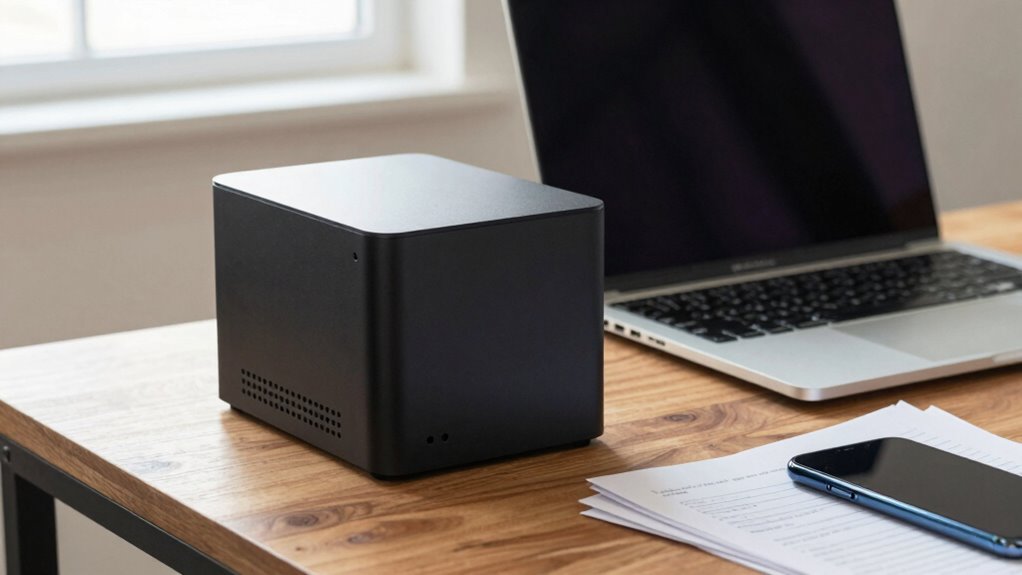

When choosing between a mini PC and a laptop, consider hidden costs beyond the initial price. Mini PCs may need extra peripherals and have limited upgrade options, increasing future expenses. Laptops are portable but can be pricier upfront and costly to repair. Energy use, support fees, and device lifespan also impact your budget over time. To make the smartest choice, you’ll want to understand all these factors—stay tuned to uncover the details you’d overlook.
Key Takeaways
- Mini PCs may require additional peripherals, increasing initial setup costs compared to all-in-one laptops.
- Upgrading and maintenance costs can be higher for mini PCs due to limited upgradeability.
- Laptops often have higher upfront costs but include built-in essentials, potentially reducing accessory expenses.
- Energy consumption differences impact long-term operational costs, with mini PCs typically using less power.
- Support and repair expenses vary, with mini PCs being easier and cheaper to fix than complex laptops.
How to Evaluate Mini PCs vs. Laptops for Your Business Needs
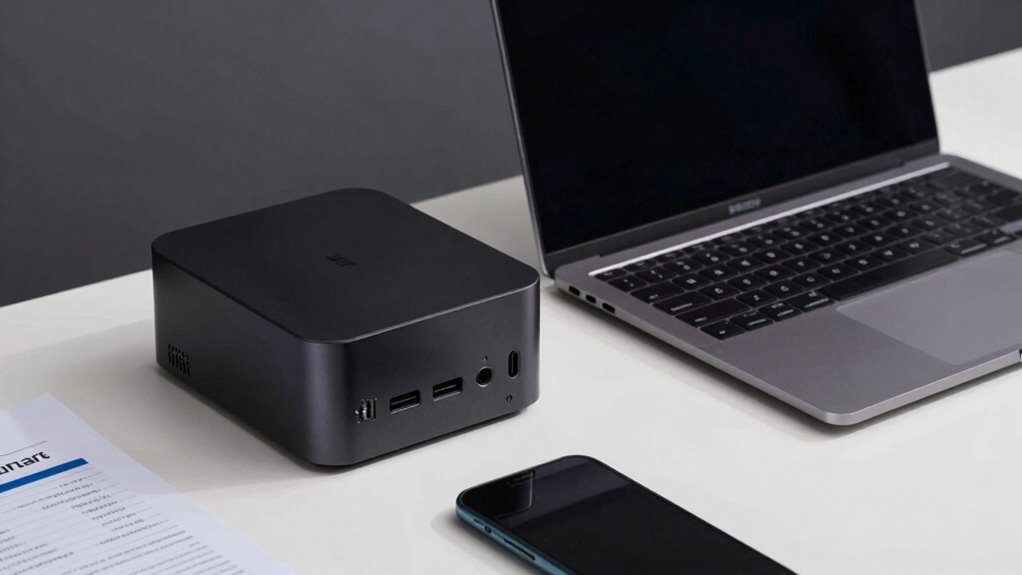
When choosing between a mini PC and a laptop for your business, it’s vital to assess your specific needs and workflows. Start by comparing the cost comparison—mini PCs often have a lower upfront price but may require additional peripherals. Consider performance metrics, such as processing power, RAM, and storage capacity, to guarantee the device can handle your daily tasks efficiently. If portability is essential, a laptop offers mobility, but if space-saving and customization matter more, a mini PC might suit you better. Think about your typical work environment and whether you need to move your device frequently. Additionally, understanding the hidden costs associated with each option can prevent unexpected expenses down the line. Being aware of long-term expenses, such as maintenance and upgrades, can further influence your decision-making process. The cost of peripherals—such as monitors, keyboards, and mice—should also be factored into your total budget. It’s helpful to evaluate the upgradeability of each device, as this can affect future costs and performance. Moreover, considering the energy efficiency of your choice can lead to savings on electricity bills over time. Ultimately, weighing the cost comparison against performance metrics helps you determine which device aligns best with your business priorities and budget.
What Are the True Upfront Costs of Each Device?
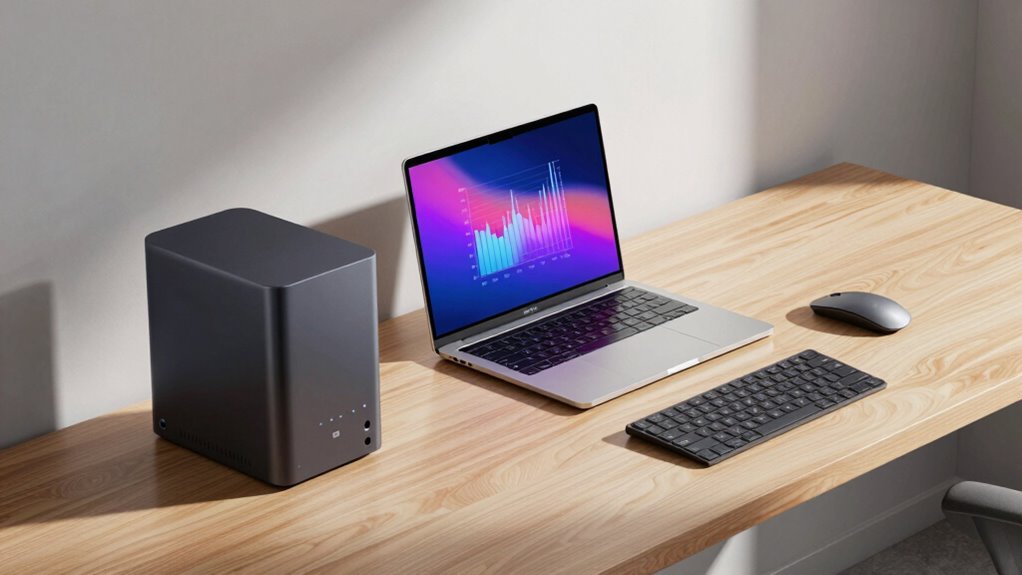
Understanding the true upfront costs of mini PCs and laptops requires looking beyond the initial purchase price. Your device compatibility needs and user preferences play a big role in what you’ll spend upfront. For a mini PC, the base price might be lower, but you’ll often need to purchase peripherals like monitors, keyboards, and mice separately. Device compatibility is crucial to ensure all components work seamlessly together, which can impact your overall costs. Additionally, mini PCs may require specific hardware specifications to run certain applications efficiently, influencing your choice and expenses. Some mini PCs might also necessitate additional software licenses, further increasing the initial investment. Ensuring hardware compatibility from the start can help avoid costly replacements or upgrades later on. Laptops usually include these essentials, but high-performance models can cost considerably more. Consider your preferred operating system, hardware specifications, and portability needs—these factors influence the price. Additionally, some devices may require specific accessories or adapters right away, adding to upfront costs. Ultimately, your choice depends on balancing initial expenses with your device compatibility needs and how well each device aligns with your user preferences. Understanding the importance of device compatibility can help prevent unexpected costs after purchase.
How Does Upgradeability Impact Your Long-Term Budget?
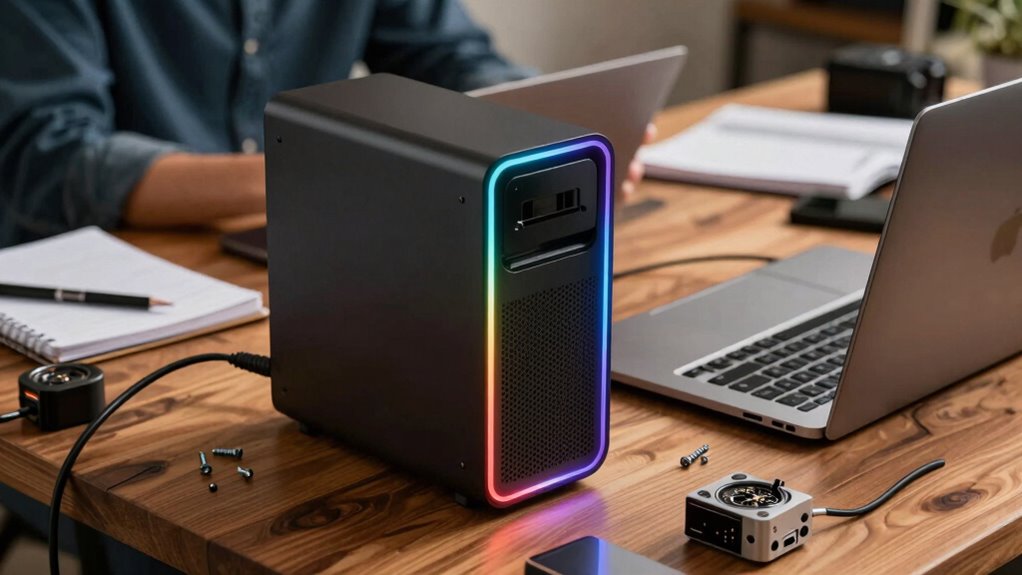
Upgradeability plays an essential role in shaping your long-term budget because it determines how easily you can extend the lifespan and performance of your device. With better upgrade flexibility, you can keep your system current without replacing everything. Consider these points:
- Component Compatibility: Ensuring your device supports new parts reduces upgrade costs and frustration.
- Ease of Upgrading: Devices designed for simple upgrades save you time and money, making future improvements affordable.
- Longevity: The more adaptable your device is, the longer it stays relevant, delaying the need for a costly replacement. Additionally, understanding hardware upgradeability can help you make more informed choices when selecting a device. Incorporating modular design principles can further enhance upgrade options and extend device usefulness.
- System Maintenance: Proper maintenance of your device can also impact upgradeability and overall long-term performance, especially when combined with landscaping strategies that make upgrades more accessible.
Choosing a device with high upgrade flexibility helps you avoid unnecessary expenses and maximizes your investment over time. It’s a smart way to manage your long-term tech budget effectively.
How Portability Affects Cost and Productivity
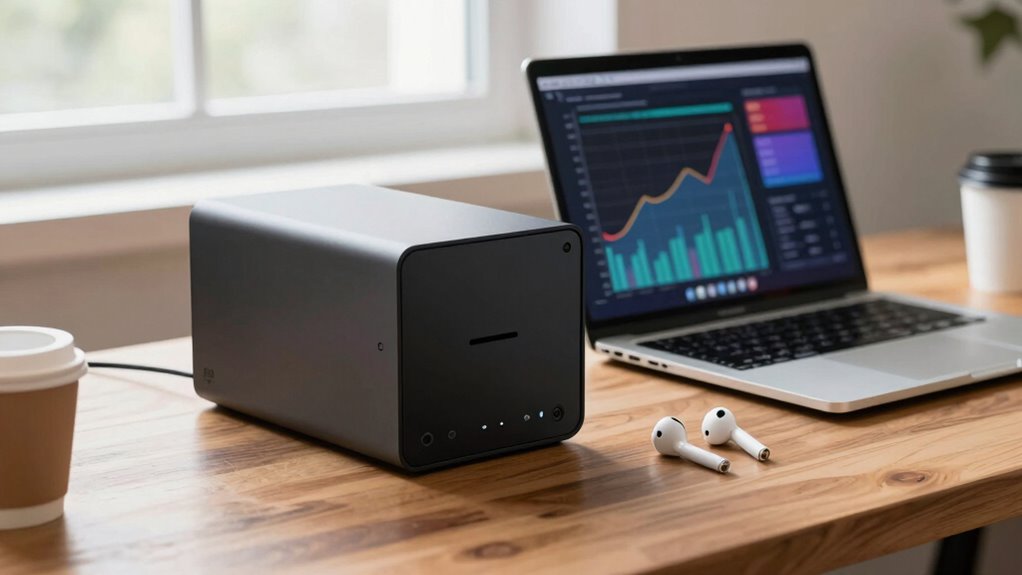
Portability markedly influences both your costs and your ability to stay productive on the go. When you prioritize portability convenience, you can work from anywhere, saving time and reducing the need for extra equipment. A lightweight laptop offers greater mobility flexibility, making it easier to attend meetings, travel, or work remotely without hassle. This increased mobility can boost your productivity by enabling you to seize opportunities wherever you are. Additionally, choosing devices that incorporate sustainable fabric technology can help reduce environmental impact over time. Incorporating energy-efficient components into your device choices can also contribute to long-term savings and lower operational costs. However, the trade-off might be higher initial costs or limited upgrade options compared to a mini PC. Still, the convenience of being able to work seamlessly across different locations often outweighs these expenses. Ultimately, choosing a device with better portability aligns with your need for device flexibility and can substantially impact your overall efficiency and costs. Considering features like water efficiency in device design may also contribute to long-term savings and environmental benefits. Moreover, evaluating durability can ensure your device withstands frequent travel and handling, further supporting your mobile productivity.
What Is the Real Energy Cost of Running Your Device?
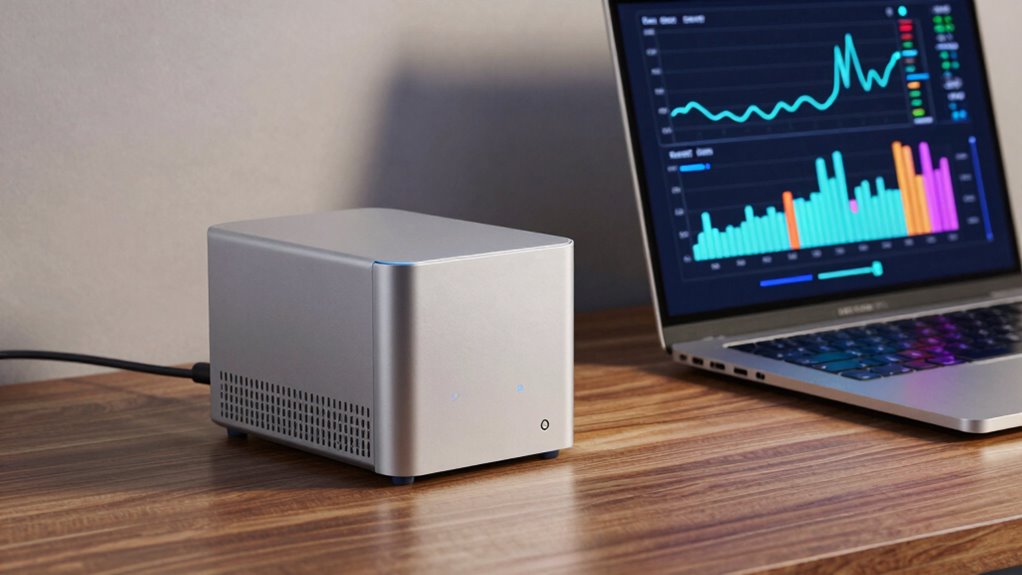
Understanding the energy your device uses can help you save money and reduce environmental impact. Mini PCs typically consume less power than laptops, but long-term costs can add up. Considering these factors helps you choose a device that’s both efficient and eco-friendly. Additionally, power consumption levels can vary based on device specifications and usage patterns, influencing overall energy costs over time. Monitoring your device’s energy use through power management settings can further optimize efficiency and reduce expenses. Being aware of energy efficiency standards can guide you in selecting devices that are designed to minimize energy consumption and environmental impact. Regularly assessing your device’s energy consumption patterns can also help identify opportunities for further savings and sustainability.
Power Consumption Differences
Although mini PCs generally consume less power than laptops, the actual energy cost depends on how you use them. Your device’s power consumption varies based on workload and settings. To maximize energy savings and power efficiency:
- Keep your device in sleep mode when idle to reduce unnecessary power draw.
- Use energy-efficient components and settings, like LED screens and low-power processors.
- Limit high-performance tasks that spike energy use, such as gaming or video editing.
Long-Term Energy Costs
While managing daily power use can lower short-term energy bills, understanding the long-term costs of running your device provides a clearer picture of its overall expense. Energy efficiency plays a key role here, as devices with lower power consumption require less energy over time. A mini PC, often designed for efficiency, may have a lower long-term energy cost compared to a more powerful laptop. However, if your device has high power consumption, these costs can add up substantially over months and years. Considering energy efficiency helps you choose a device that minimizes ongoing expenses. Ultimately, understanding these long-term energy costs ensures you’re not just saving on immediate bills but also reducing your total operational expenses.
Environmental Impact Factors
Ever wondered how much environmental impact your device’s energy use really has? The energy costs extend beyond your electricity bill, affecting the planet. Consider these points:
- Operating your device consumes electricity, contributing to carbon emissions depending on your energy source.
- Proper disposal through recycling programs reduces e-waste and conserves resources.
- Choosing devices made from eco-friendly materials lessens environmental harm during production and disposal.
Both mini PCs and laptops can be environmentally friendly if you prioritize energy efficiency and responsible disposal. Look for devices with energy-saving features and support recycling programs. Opting for eco-friendly materials during manufacturing minimizes toxic waste. Being mindful of these factors helps you reduce your device’s real energy cost and lessen your environmental impact.
How Do Maintenance and Support Fees Add Up?
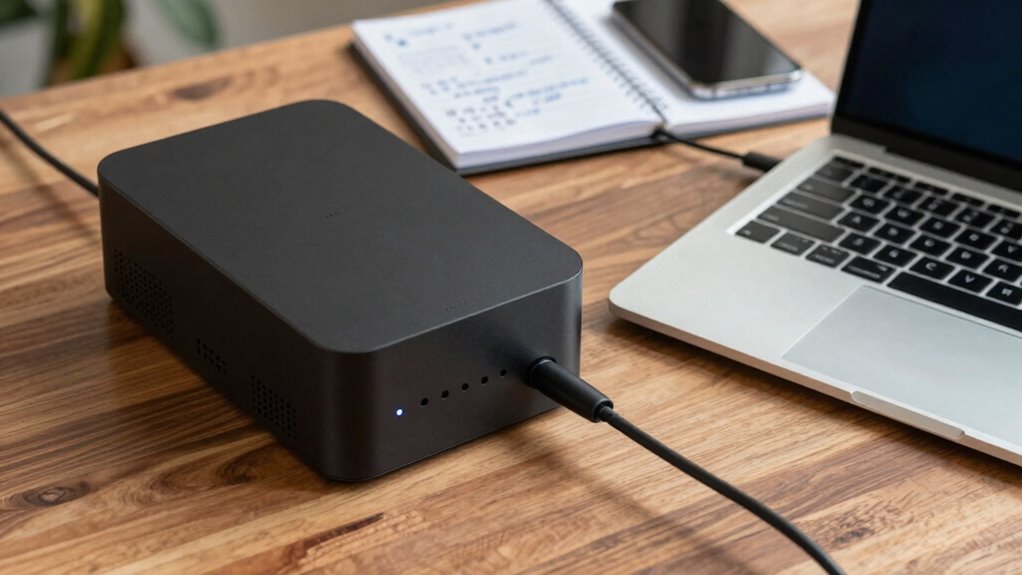
Maintenance and support fees can quickly add up over time, affecting your overall costs. You may face ongoing expenses for support services, repairs, or replacements as your device ages. Understanding these costs helps you make smarter decisions between a mini PC and a laptop.
Ongoing Support Costs
Ongoing support costs for mini PCs and laptops can add up quickly over time, impacting your total budget. You’ll want to consider how device durability and warranty coverage influence long-term expenses.
- Device durability: A more durable device reduces the frequency of repairs or replacements, saving you money over time.
- Warranty coverage: A thorough warranty can cover parts and labor, preventing unexpected costs.
- Support fees: Regular support services, like software updates or tech assistance, often come with ongoing fees that can accumulate.
Both mini PCs and laptops require consistent support, but choosing a device with better durability and warranty coverage can considerably lower your support costs in the long run.
Repair and Replacement Fees
Repair and replacement fees can quickly add up if your device encounters frequent issues or wears out prematurely. Devices with higher durability tend to last longer and require fewer repairs, saving you money over time. However, even durable devices aren’t immune to problems, making warranty coverage essential. Without proper warranty, repair costs can become a significant expense, especially if parts need replacement or professional servicing is required. Mini PCs often have fewer moving parts and are generally easier to repair, potentially reducing costs. Laptops, with their complex designs, may incur higher repair fees when issues arise. Regular maintenance and understanding your warranty coverage can help limit unexpected expenses, but it’s vital to factor in potential repair costs when choosing between a mini PC and a laptop.
How Long Will Your Device Last, and When Will You Need to Replace It?

Your device’s lifespan depends on how you use it and the quality of its components. A well-built device with high device durability can serve you longer before needing a replacement. Typically, a laptop or mini PC’s upgrade lifespan ranges from 3 to 5 years, but this varies.
Consider these factors:
- Regular maintenance and updates can prolong your device’s life.
- Upgrading components like RAM or storage can delay replacement.
- Heavy usage or outdated hardware will shorten the device’s lifespan.
Eventually, you’ll notice slower performance, increased crashes, or hardware failures, signaling it’s time to replace. Planning for device replacement ensures you maintain productivity without unexpected disruptions. Staying mindful of these signs helps optimize your investment.
Which Device Offers the Best Value for Your Business?
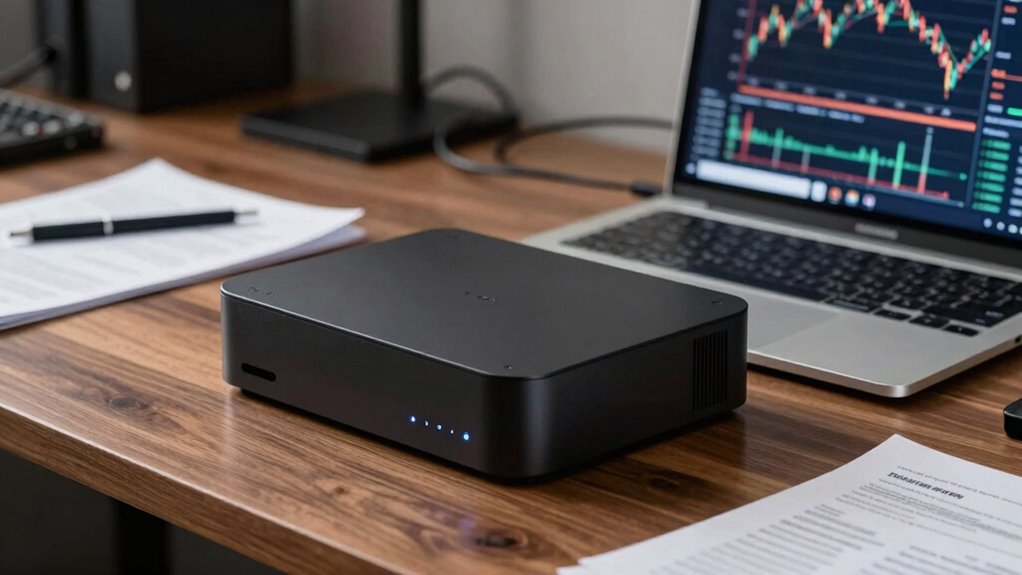
Choosing between a mini PC and a laptop ultimately depends on your business needs and budget, as each offers distinct advantages. If you prioritize cost-efficiency and easy integration with cloud computing, a mini PC provides excellent value, especially when you need multiple devices for your team. Its compact size reduces space and setup costs, and ongoing maintenance is often lower. Laptops, on the other hand, deliver portability and ergonomic design, boosting productivity on the go. While they may come with a higher initial price, they eliminate the need for multiple devices and support remote work seamlessly. Consider how much you’ll rely on mobility versus fixed workspace needs. Overall, evaluating your specific operational requirements helps determine which device offers the best value for your business.
Frequently Asked Questions
How Do Mini PCS Compare to Laptops in Terms of Security Features?
Mini PCs generally offer similar security features to laptops, including support for security updates and encryption protocols. You can easily install security updates to patch vulnerabilities and enable encryption to protect sensitive data. However, laptops often come with built-in security hardware like fingerprint scanners or facial recognition, which mini PCs might lack. Still, with the right software and hardware upgrades, mini PCs can provide robust security comparable to laptops.
What Hidden Costs Are Associated With Software Compatibility?
You might think software compatibility costs are straightforward, but they’re often concealed. You could face unexpected expenses with software licensing fees or the need for costly updates to guarantee compatibility across devices. Managing updates becomes more complex and time-consuming, especially if your mini PC or laptop isn’t fully compatible. These hidden costs can quickly add up, affecting your budget and productivity more than you realize.
How Does Device Warranty Duration Influence Total Cost?
Device warranty duration impacts your total cost by affecting warranty coverage and potential repair delays. A longer warranty provides peace of mind, covering repairs and reducing unexpected expenses. It minimizes repair delays, helping you stay productive without costly downtime. Shorter warranties may save money upfront but could lead to higher costs if repairs are needed later. Consider warranty duration carefully to balance initial savings against long-term reliability and support.
Are There Differences in Repair Accessibility Between Mini PCS and Laptops?
Imagine your mini PC stops working right before a big project, and you wonder about repair access. Mini PCs often have better repair access, making it easier to swap out components without professional help. Unlike many laptops, they usually offer greater upgrade potential, saving you time and money. So, you’ll likely find repairs simpler and more cost-effective with a mini PC, especially when quick fixes matter most.
How Do Environmental Factors Affect Device Longevity and Costs?
Environmental factors considerably impact your device’s longevity and costs. Exposure to dust, humidity, or extreme temperatures can reduce device durability, leading to more frequent repairs or replacements. You should protect your mini PC or laptop from environmental impact by keeping them in a controlled environment and using protective cases. This proactive approach helps extend their lifespan, saving you money and ensuring consistent performance in the long run.
Conclusion
Choosing between a mini PC and a laptop isn’t just about the upfront price—you need to contemplate hidden costs that can surprise you later. Will the initial savings outweigh maintenance, upgrades, or energy expenses? The decision could shape your business’s future more than you realize. Stay tuned, because uncovering the true costs might just change how you see your tech investment—and your bottom line—forever. Are you ready to make the smartest choice?