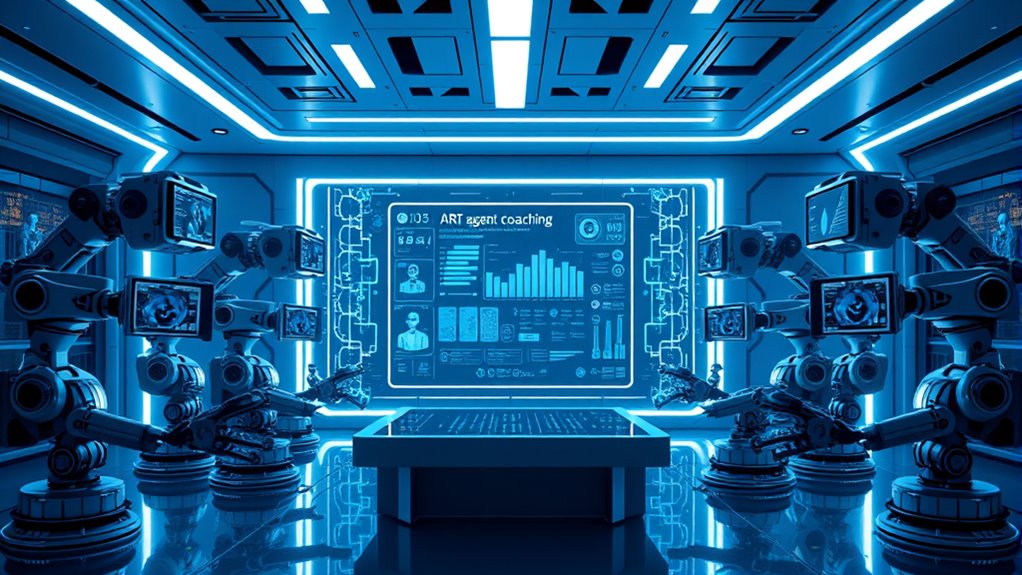

Multi-agent coaching systems deploy a team of specialized AI agents that work together to support your personal growth. These agents focus on different areas like motivation, skill-building, and emotional regulation, collaborating to create tailored and effective coaching plans. Their teamwork offers a richer, more nuanced experience that adapts to your progress. Exploring how these systems operate and their benefits can help you understand new ways to achieve your goals more effectively.
Key Takeaways
- Multi-agent coaching systems utilize specialized AI agents that collaborate to deliver personalized, comprehensive guidance aligned with user goals.
- Agent cooperation enhances problem-solving, providing nuanced feedback and real-time adjustments tailored to individual development needs.
- Ethical safeguards ensure transparency, privacy, and fairness, fostering user trust and secure environments for goal achievement.
- Attention to detail in system design guarantees cohesive strategies, reliable performance, and overall robustness of the coaching experience.
- Such systems adapt dynamically, evolving with user progress and offering a multi-faceted support network for sustained growth.
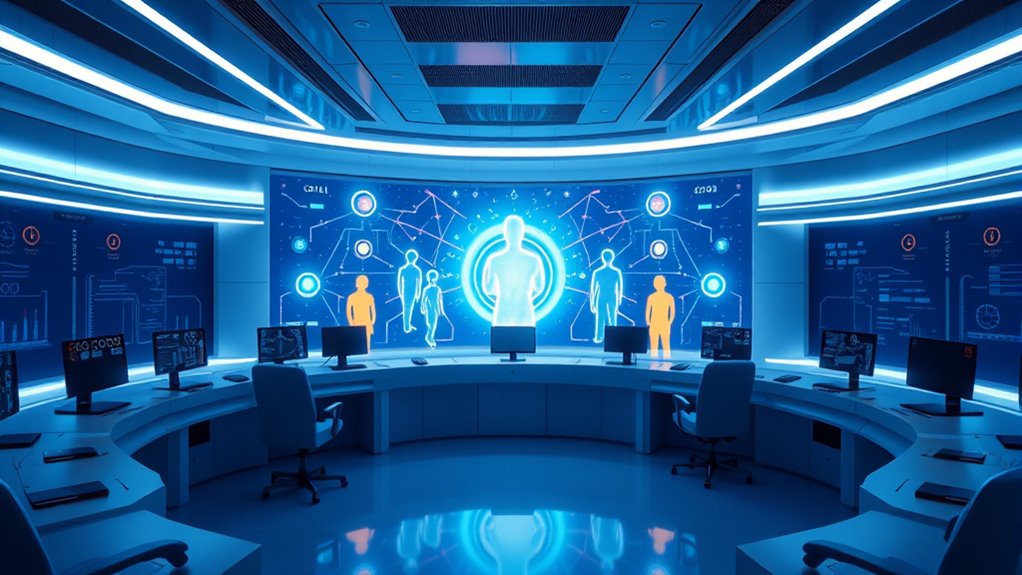
Have you ever wondered how coaching can be more adaptive and personalized? Imagine a team of AI agents working together seamlessly, each bringing specialized expertise to help you achieve your goals. That’s the core idea behind multi-agent coaching systems. Instead of relying on a single coach or algorithm, these systems deploy multiple AI agents that collaborate, share insights, and adapt dynamically to your evolving needs. This approach guarantees that your coaching experience becomes more tailored, thorough, and effective. With agent collaboration at the heart of the system, each AI agent can focus on a particular aspect of your development—such as motivation, skill-building, or emotional regulation—while communicating with others to create a holistic plan tailored specifically to you. This coordination allows for more nuanced feedback, smarter problem-solving, and a richer coaching experience that adjusts in real-time. You’re not just getting generic advice but a customized, multi-faceted support network that evolves as you progress.
Additionally, the effectiveness of multi-agent systems depends heavily on attention to detail, ensuring that each component functions correctly and contributes to a cohesive coaching strategy. However, integrating multiple AI agents raises important ethical considerations. Transparency becomes essential—you’re entitled to know how these agents operate, what data they collect, and how they make decisions. Making certain that the system respects your privacy and maintains data security isn’t optional; it’s fundamental. Ethical considerations also extend to fairness and bias. If the agents are trained on biased data, they might deliver skewed guidance, which could hinder your growth or reinforce harmful stereotypes. Developers must actively work to eliminate bias, ensure fairness, and prioritize your well-being over profits or efficiency. Furthermore, you should have control over the coaching process, including opting out of certain data collection or choosing which agents to interact with more frequently. These ethical safeguards help build trust and foster a safe environment where you feel comfortable sharing personal information and exploring sensitive issues.
The collaboration among agents isn’t just a technical feature; it’s a vital element that determines the system’s effectiveness and fairness. When agents work well together, they create a more personalized and adaptive coaching experience, but only if ethical standards are embedded into their design. As you engage with a multi-agent coaching system, you benefit from the diversity of perspectives and expertise that each agent brings. At the same time, you should remain informed and vigilant about how your data is used and how decisions are made. Ultimately, the success of these systems depends on balancing technological innovation with ethical responsibility, ensuring that your growth and trust are always prioritized.
Frequently Asked Questions
How Do Multi-Agent Systems Adapt to Individual Coaching Needs?
You might wonder how multi-agent systems adapt to your coaching needs. They use personalization strategies to tailor their guidance based on your progress, preferences, and feedback. Through adaptive learning, each AI agent adjusts its approach, ensuring your experience stays relevant and effective. This dynamic collaboration helps you stay motivated and achieve your goals faster, as the system continuously refines its support to match your evolving needs.
What Are the Privacy Implications of Multi-Agent Coaching?
Imagine a coaching system that collects your personal data to tailor advice. This highlights privacy concerns, especially data privacy and security risks. Multi-agent systems could inadvertently share sensitive information between agents or expose it to breaches. You need clear policies on data access, encryption, and user control to protect your privacy. Without proper safeguards, your private information could be vulnerable to misuse or leaks, compromising your trust and security.
Can Multi-Agent Coaching Replace Human Coaches Entirely?
You might wonder if multi-agent coaching can fully replace human coaches. While these systems offer personalized feedback and round-the-clock support, they face personalization challenges and can’t match human empathy and ethical considerations. Human coaches understand nuanced emotions and ethical dilemmas better, making them essential for deeper personal growth. So, although AI can supplement coaching, it’s unlikely to replace human coaches entirely, especially in complex or sensitive situations.
How Do Agents Communicate and Coordinate Effectively?
Think of agents as a well-orchestrated band, where each instrument must stay in sync. They communicate through established communication protocols, like a shared language, to share updates and coordinate actions. Agent protocols guide their interactions, ensuring smooth cooperation. When each agent understands its role and follows these protocols, they work seamlessly together, creating a harmonious system that effectively supports your goals without missing a beat.
What Industries Benefit Most From Multi-Agent Coaching Systems?
You’ll find that industries like education and business benefit most from multi-agent coaching systems. These systems enable personalized learning by tailoring feedback to individual needs, helping learners improve quickly. In business, they optimize processes and decision-making, boosting efficiency and productivity. By harnessing coordinated AI teams, you gain customized support that adapts to your goals, making your efforts more effective and results more achievable.
Conclusion
In the world of multi-agent coaching systems, mastery meets motivation through manageable, multi-faceted mentors. As you advance, these dedicated digital delegates deliver dynamic, data-driven direction, driving your development. Embrace this empowering ensemble, and you’ll experience an extraordinary evolution—elevating effort, enthusiasm, and expertise. With such a team tailored to your goals, growth is guaranteed, and your journey becomes joyful, just like a well-orchestrated symphony of success.