
AI coaching in hybrid work offers you scalable, personalized support that boosts employee engagement and provides real-time guidance tailored to individual needs. It complements human interaction, helping managers understand team dynamics and address challenges often unseen in remote settings. By prioritizing ethics, transparency, and fairness, AI builds trust and inclusivity. When implemented thoughtfully, it can transform your organization into a more motivated and connected environment. If you want to discover how this approach can work for you, keep exploring.
Key Takeaways
- AI coaching offers personalized, scalable support for remote and in-office employees, enhancing engagement and development.
- It complements human interaction by providing real-time, private guidance and insights into team dynamics.
- Ethical AI practices ensure data privacy, fairness, and transparency, building trust in hybrid work environments.
- AI analytics help measure coaching effectiveness and inform data-driven decisions for workforce growth.
- Responsible implementation balances innovation with security, fostering a more connected and motivated hybrid workforce.

Have you ever wondered how AI coaching can transform the hybrid work experience? As more organizations shift to a blend of remote and in-office work, the need for personalized support becomes critical. AI coaching offers a scalable way to provide tailored development, but it also raises important questions around AI ethics. You might worry about data privacy, bias, and transparency—concerns that need addressing to build trust. When implemented thoughtfully, AI coaching can enhance employee engagement by offering continuous feedback, personalized learning paths, and real-time support. It doesn’t replace human interaction but complements it, ensuring employees feel valued and understood even when working remotely.
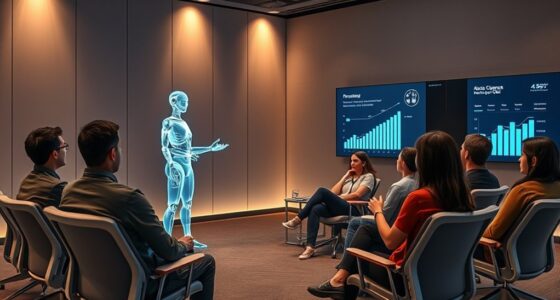
AI coaching enhances hybrid work with personalized support, fostering trust, engagement, and continuous development.
In a hybrid setting, traditional coaching methods sometimes fall short, especially when managers aren’t always available or aware of underlying issues. AI coaching fills this gap by providing employees with immediate, private guidance that’s tailored to their unique needs. This personalized approach helps employees stay motivated and connected to their development goals. As a result, engagement levels tend to rise because workers feel supported and recognized, regardless of where they’re working from. Plus, AI can identify patterns in behavior or performance that might go unnoticed in a busy, hybrid environment, giving managers insights into how to better support their teams. Additionally, leveraging AI analytics can help organizations measure the effectiveness of coaching initiatives and make data-driven improvements. Embracing ethical AI practices ensures that these insights are used responsibly and fairly. Understanding how to foster trust in AI systems is essential for sustainable implementation. Moreover, understanding the fundamentals of AI ethics can help organizations develop policies that promote fairness and accountability. Integrating cybersecurity measures is also crucial to protect sensitive employee data from potential breaches.
However, integrating AI coaching isn’t just about deploying technology; it’s about doing so ethically. You need to guarantee that AI systems operate transparently and fairly, avoiding biases that could unfairly influence employee evaluations or development opportunities. Prioritizing AI ethics means being clear about how data is collected, used, and protected. It also involves making sure the AI’s recommendations are unbiased and equitable, fostering an inclusive environment where all employees feel they have equal access to growth. When these ethical principles are upheld, employees are more likely to trust and actively engage with AI coaching tools, viewing them as valuable resources rather than intrusive surveillance.
Ultimately, AI coaching in a hybrid work environment offers a compelling case for enhancing employee engagement while maintaining ethical standards. It provides personalized, real-time support that helps employees thrive, no matter where they’re working. By focusing on AI ethics, organizations can build trust and ensure that AI-powered tools serve everyone fairly. This balance of innovation and integrity paves the way for a more connected, motivated, and productive workforce, transforming the hybrid work experience into something that benefits both employees and organizations alike.
AI coaching software for hybrid work
As an affiliate, we earn on qualifying purchases.
As an affiliate, we earn on qualifying purchases.
Frequently Asked Questions
How Does AI Coaching Personalize Employee Development?
AI coaching personalizes your employee development by using personalization algorithms to analyze your strengths, weaknesses, and learning style. It adapts feedback and training suggestions to fit your specific needs, ensuring relevant skill enhancement. This targeted approach helps you improve faster and more efficiently, making your growth journey tailored to your goals. You get ongoing support that evolves with you, maximizing your potential in a hybrid work environment.
What Are the Privacy Concerns With AI Coaching Data?
You might worry about privacy concerns with AI coaching data, especially around data security and confidentiality issues. It’s essential that organizations implement strict protocols to safeguard your personal and performance data, ensuring it’s stored securely and accessed only by authorized personnel. Transparency about data collection and usage helps build trust, so you know your information remains confidential and protected from breaches or misuse.
Can AI Coaching Replace Human Managers Effectively?
You might wonder if AI coaching can replace human managers. While AI can boost emotional intelligence and enhance creative problem solving, it can’t fully replace human intuition and empathy. Studies show 85% of employees value emotional support from managers. AI can assist, but the nuance of human understanding remains irreplaceable. So, AI acts as a powerful tool, complementing human managers rather than replacing them entirely.
How Accessible Is AI Coaching for Small Businesses?
AI coaching is becoming increasingly accessible for small businesses, though cost barriers and accessibility challenges remain. You can find affordable options tailored to small teams, making AI tools more attainable. However, limited tech infrastructure or lack of familiarity with AI may pose hurdles. Still, as technology advances and prices drop, more small businesses will discover how AI coaching can enhance performance and growth without hefty investments.
What Industries Benefit Most From AI Coaching Integration?
Imagine a jazz band improvising seamlessly—industries like tech, healthcare, and finance thrive with AI coaching, boosting workforce adaptability and leadership agility. You’ll find that these sectors benefit most because continuous learning and swift decision-making are critical. AI coaching acts as a conductor, guiding your team through rapid changes, sharpening skills, and fostering resilience. If your industry values agility, integrating AI coaching can transform your leadership and operational performance.
As an affiliate, we earn on qualifying purchases.
Conclusion
As you embrace AI coaching in your hybrid work setup, you might find that technology becomes a quiet but steady partner—like a lighthouse guiding you through foggy mornings. The more you lean into these tools, the clearer your path becomes, revealing opportunities you hadn’t seen before. In this dance between human and machine, you may discover that the future isn’t just about work, but about finding harmony—where innovation and intuition meet, like two sides of the same coin.
As an affiliate, we earn on qualifying purchases.
AI analytics for workforce development
As an affiliate, we earn on qualifying purchases.
As an affiliate, we earn on qualifying purchases.