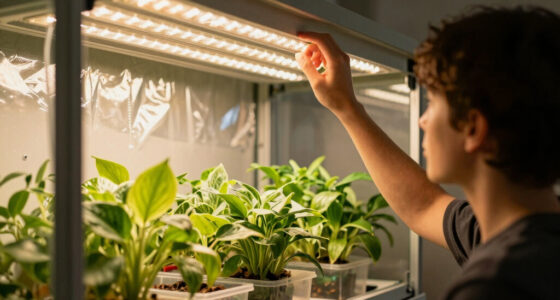
When it comes to mixing nutrients, spills are almost inevitable. Choosing the right containment tray can prevent costly damage and keep your workspace safe. For nutrient mixing, options like the Pig Containment Tray stand out with its large capacity, ideal for larger spills. Meanwhile, the Spill Containment Pallet with Drain offers a good balance of size and ease of cleaning, perfect for smaller spills. If space is tight, the Eagle Spill Utility Tray provides a compact, stackable solution, though it’s limited to minor leaks. Let’s explore how these choices stack up for nutrient mixing needs, highlighting their specific strengths and tradeoffs.

Get the little things that make your day delivered free with Prime
- Fast, free delivery on millions of items
- Prime Video, Amazon Music and more included
- Member-only deals all year
Key Takeaways
- Larger capacity trays like the Pig Containment Tray are suited for bigger spill volumes during nutrient mixing.
- Stackable and space-efficient trays such as the Eagle Utility Tray excel for small-scale, frequent use in limited spaces.
- Chemical-resistant materials ensure durability when handling nutrient solutions, but some trays are more suited for temporary containment.
- Ease of cleaning and drain features can significantly reduce maintenance time, especially in busy nutrient mixing setups.
- Tradeoffs often involve balancing capacity, size, and cost — larger trays can be unwieldy, while smaller trays may require more frequent emptying.
| Spill Containment Pallet with Drain, 5.3 Gallon Capacity |  | Best for Small to Medium Spills | Material: High-density polyethylene | Dimensions: 26 x 14 x 4.7 inches | Capacity: 5.3 gallons | VIEW LATEST PRICE | See Our Full Breakdown |
| 3-Piece Chemical Reagent Containment Tray Set – Alkali and Acid Resistant Laboratory Spill Trays |  | Best for Versatile Laboratory Use | Material: Plastic | Sizes: Large, Medium, Small | Features: Alkali- and acid-resistant | VIEW LATEST PRICE | See Our Full Breakdown |
| Eagle Spill Containment Utility Tray, 5 Gallon Sump |  | Best for Minor Leaks and Drips | Material: High-density polyethylene | Capacity: 5 gallons | Made in: USA | VIEW LATEST PRICE | See Our Full Breakdown |
| spill containment tray for nutrient mixing | Material | Capacity |
|---|---|---|
| Spill Containment Pallet with | High-density polyethylene | 5.3 gallons |
| 3-Piece Chemical Reagent Conta | Plastic | — |
| Eagle Spill Containment Utilit | High-density polyethylene | 5 gallons |
More Details on Our Top Picks
Spill Containment Pallet with Drain, 5.3 Gallon Capacity
The Spill Containment Pallet with Drain is a versatile choice for nutrient mixing stations that deal with smaller volumes. Its 5.3-gallon capacity makes it suitable for containing drips and minor spills from mixing containers or small tanks. Its durable HDPE construction resists corrosion and chemicals common in nutrient solutions. The built-in drain and removable non-slip cover make cleaning straightforward, saving time in busy environments. Compared to larger trays, this model is more compact and easier to move around, but its limited capacity means it’s not ideal for handling large spills or leaks from big containers. This pick suits hobbyists or small-scale growers prioritizing ease of handling and quick cleanup.
Pros:- Leak-proof, corrosion-resistant HDPE
- Removable non-slip cover for cleaning
- Built-in drain for easy liquid removal
- Compact and lightweight for portability
Cons:- Limited capacity for large spills
- Designed mainly for small containers
- May require careful handling to avoid damage
Best for: Small-scale nutrient mixing and spill management
Not ideal for: Large spills or continuous large-volume use
- Material:High-density polyethylene
- Dimensions:26 x 14 x 4.7 inches
- Capacity:5.3 gallons
- Weight:Approximately 4.85 pounds
- Drain:Yes
- Stackable:Yes
Our verdict“A practical, space-efficient option for managing minor nutrient spills with easy maintenance.”
3-Piece Chemical Reagent Containment Tray Set – Alkali and Acid Resistant Laboratory Spill Trays
The 3-Piece Chemical Reagent Containment Tray Set offers flexibility with multiple sizes, making it appealing for varied nutrient mixing tasks. Although primarily designed for chemical labs, its alkali- and acid-resistant plastic makes it durable against nutrient solutions, which can sometimes be corrosive. Compared to single-tray options, this set provides options to contain small to medium spills across different containers. However, its lightweight plastic construction might be less durable for heavy-duty use, and it’s limited to lab environments. This set is ideal for those who need adaptable, chemical-resistant trays without investing in large, space-consuming solutions.
Pros:- Includes multiple sizes for versatility
- Alkali- and acid-resistant plastic
- Lightweight and portable
- Polished surface for easy cleaning
Cons:- Limited to lab or controlled environments
- No specific dimensions provided
- Plastic may be less durable over time
Best for: Laboratory or small-scale nutrient mixing requiring versatility
Not ideal for: Heavy-duty or outdoor use
- Material:Plastic
- Sizes:Large, Medium, Small
- Features:Alkali- and acid-resistant
- Lightweight:Yes
- Design:Polished surface
- Use case:Lab environments
Our verdict“A flexible, chemical-resistant set ideal for small-scale or laboratory nutrient mixing tasks.”
Eagle Spill Containment Utility Tray, 5 Gallon Sump
The Eagle Spill Containment Utility Tray offers a compact solution for managing small spills, drips, or leaks during nutrient handling. Its 5-gallon capacity makes it suitable for routine, minor accidents rather than large spills. Made from durable, chemical-resistant HDPE, this tray is built to withstand frequent cleaning and chemical exposure. Its stackable design is perfect for limited workspaces, especially in labs or workshops where space preservation matters. However, it’s not meant for large or long-term containment, so if your nutrient mixing involves bigger spills, this tray might fall short. It’s best for environments prioritizing regular spill capture over volume capacity.
Pros:- Chemical-resistant, durable construction
- Space-saving, stackable design
- Supports cleaner workspaces
- Made in the USA
Cons:- Limited to small spills
- Not suitable for large leak containment
- Requires regular cleaning for buildup prevention
Best for: Routine small spills and drip containment
Not ideal for: Large spills or continuous large-volume use
- Material:High-density polyethylene
- Capacity:5 gallons
- Made in:USA
Our verdict“A reliable, space-efficient tray for capturing minor nutrient leaks and drips.”

How We Picked
To select the best spill containment trays for nutrient mixing, I focused on features that matter most in a laboratory or grow room setting, such as chemical resistance, capacity, ease of cleaning, and space-saving design. I compared the materials used, the flexibility of sizes, and how well each product handles typical nutrient spills. Special attention was given to whether the trays are suitable for small leaks or larger spills, and how user-friendly they are for frequent handling. I aimed for a balanced mix of durability, size, and practicality, ensuring each option serves a specific role in nutrient mixing environments.
| spill containment tray for nutrient mixing | Material |
|---|---|
| Spill Containment Pallet with | High-density polyethylene |
| 3-Piece Chemical Reagent Conta | Plastic |
| Eagle Spill Containment Utilit | High-density polyethylene |
Factors to Consider When Choosing Best Spill Containment Tray For Nutrient Mixing
Selecting the right spill containment tray for nutrient mixing involves considering capacity, material, size, and ease of cleaning. Your specific needs—whether managing small drips or large spills—will determine the best fit. Understanding the environment, volume of nutrients, and frequency of spills helps narrow down options that balance durability, space, and cost-effectiveness.Capacity and Volume Handling
For nutrient mixing, consider how much liquid you typically handle. Larger trays like the Pig Containment Tray excel when you deal with big containers or multiple small containers that might leak simultaneously. Smaller trays, such as the Eagle Utility Tray, are suitable for routine minor spills but won’t handle large leaks without overflowing. Matching tray capacity to your typical spill volume is essential to avoid overflow and ensure safety.
Material Durability and Chemical Resistance
Durability is key, especially with nutrient solutions that may be corrosive or reactive. High-density polyethylene (HDPE) and impact-resistant plastics are common, offering excellent chemical resistance and impact durability. Metal trays are less common but can provide robustness in industrial settings. Be mindful that plastic trays, while lightweight, may degrade over time if exposed to UV or harsh chemicals outdoors.
Size and Space Efficiency
In tight spaces, stackable and compact trays like the Eagle Utility Tray make a significant difference. For larger nutrient operations, a bigger tray such as the Pig Containment Tray provides ample capacity but requires more storage space. Balance your workspace constraints with the volume you need to contain, choosing a tray that can be stored easily when not in use.
Ease of Cleaning and Maintenance
Look for trays with features like removable covers and built-in drains. These elements simplify cleanup and reduce downtime. The ability to quickly remove liquids prevents buildup and contamination, which is particularly important in nutrient mixing routines where cleanliness affects crop health or experiment integrity.
Frequently Asked Questions
What size spill containment tray is best for nutrient mixing?
The size depends on your typical spill volume and workspace. For small-scale or hobbyist setups, a tray with a capacity of around 5 gallons, like the Eagle Utility Tray, often suffices. For larger operations with multiple containers or frequent bigger spills, a larger capacity such as the Pig Containment Tray provides more security. Always match the tray size to your typical spill volume to prevent overflow and ensure safety.
What material should I look for in a nutrient spill containment tray?
Materials like high-density polyethylene (HDPE) or impact-resistant plastics are ideal because they resist chemicals commonly found in nutrients. These materials also withstand impacts and are easy to clean. Metal trays are less common in nutrient environments due to potential corrosion, but in industrial settings, stainless steel can be an option. Prioritize chemical resistance and durability for the best long-term performance.
Are stackable spill trays better for small spaces?
Yes, stackable trays such as the Eagle Utility Tray or the HDPE pallets are designed for limited spaces, allowing for vertical storage when not in use. This feature helps maximize your workspace efficiency and keeps your environment organized. For larger capacity needs, stacking might be less practical due to weight and size, so consider your available space and spill volume.
How often should I clean my spill containment tray?
Cleaning frequency depends on how often spills occur and the type of nutrient solutions used. Regular cleaning after each spill or at the end of each day helps prevent buildup of residues that can affect chemical resistance or hygiene. Trays with drains and removable covers make this process quicker and more effective, maintaining a safe and clean mixing environment.
Can I use laboratory trays for outdoor nutrient mixing?
Laboratory trays like the 3-Piece Chemical Reagent Set can be used outdoors if made from UV-resistant and weatherproof materials. However, most laboratory-grade plastics are not designed for prolonged outdoor exposure, which can lead to degradation. For outdoor use, opt for trays explicitly rated for weather resistance or those made from UV-stable HDPE to ensure longevity.
Conclusion
Choosing the right spill containment tray depends heavily on your specific needs. If you handle large quantities of nutrients and want maximum spill capacity, the Pig Containment Tray is the best fit. Those with limited space or primarily dealing with minor leaks might prefer the Eagle Utility Tray or the Spill Pallet with Drain. Laboratory setups requiring versatility and chemical resistance should consider the 3-Piece Set. Evaluate your typical spill volume, workspace constraints, and chemical exposure to select the most appropriate containment solution for your nutrient mixing operations.
NFL season / tailgating Picks
team gear
As an affiliate, we earn on qualifying purchases.