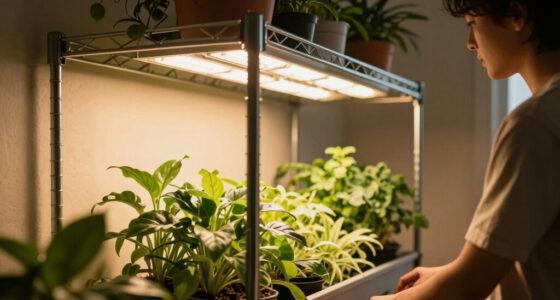
Choosing the best commercial hydroponic tower system depends on your scale, budget, and expertise. For large-scale indoor farming, the WooRoot Max offers impressive capacity with 148 pods and automation, but comes at a higher cost and complexity. The GX Hydroponic Tower stands out for small spaces and organic produce, providing self-watering and self-lighting features with a more accessible price point. Meanwhile, the Hydroponics Growing System Kit balances capacity and simplicity with a durable, 12-tier design suitable for both indoor and commercial use. Each option targets different priorities: high yield, ease of use, or space efficiency, with tradeoffs in setup complexity and initial investment.

Get the little things that make your day delivered free with Prime
- Fast, free delivery on millions of items
- Prime Video, Amazon Music and more included
- Member-only deals all year
Key Takeaways
- Large-scale systems like WooRoot Max deliver maximum capacity but require significant setup and investment.
- Compact units such as GX and B0GSZ3N9HP cater to small spaces and hobbyists with lower initial costs.
- Automation features can reduce manual effort but often increase system complexity and price.
- Water recycling and energy-efficient lighting are common traits in top models, promoting sustainability.
- Choosing the right system depends on your space, budget, and whether you prioritize yield, automation, or simplicity.


| commercial hydroponic tower system | Lighting |
|---|---|
| Large Hydroponics Growing Syst | 100W full-spectrum LEDs with timer |
| GX Hydroponic Tower Vertical P | LED Grow Lights with Timer |
| Hydroponics Growing System Kit | — |
| Hydroponic Tower 14-Layer Grow | — |
| Large Hydroponics Growing Syst | 100W full-spectrum LED |
More Details on Our Top Picks
Large Hydroponics Growing System, 148 Pod Vertical Indoor Garden Tower
The WooRoot Max stands out for its enormous capacity, supporting 148 pods across five tiers. Its full-spectrum LED lighting and automated nutrient circulation make it ideal for serious growers—whether for commercial farms or large educational projects. Compared with smaller systems, it offers unparalleled productivity but demands a significant initial investment and technical setup. This system is best suited for those with space and resources to handle complex installation and higher power needs.
Pros:- Massive growing capacity with 148 pods
- Full-spectrum LEDs with customizable schedules
- Automated nutrient circulation and misting system
- Supports large indoor grow spaces
Cons:- High initial cost and setup complexity
- Requires electrical and water connections
- Potentially overkill for small growers
Best for: Commercial growers, educational institutions, large-scale urban farms
Not ideal for: Small-scale hobbyists or those with limited space and budget
- Pod Count:148
- Lighting:100W full-spectrum LEDs with timer
- Water Reservoir:34L
- Misting Tank:9.5L
- Growth Area:150 sq ft
- Dimensions:Supports 5 tiers
Our verdict“This system excels in capacity and automation, making it perfect for large-scale commercial operations, but its complexity and cost limit its appeal for smaller setups.”
GX Hydroponic Tower Vertical Planter System Kit with 24 Net Pots and LED Grow Lights
The GX Hydroponic Tower is a compact, self-contained system that emphasizes organic, chemical-free food production. Its self-watering design and integrated LED grow lights allow for minimal manual intervention, making it ideal for balcony gardens or small indoor areas. Compared with larger systems, it sacrifices capacity—supporting only 24 pots—but compensates with ease of use and water savings. This model is perfect for urban farmers seeking organic yields without extensive infrastructure.
Pros:- Supports organic, chemical-free growth
- Space-efficient, ideal for small areas
- Recycles water, saving up to 95%
- Includes essential accessories for quick setup
Cons:- Limited capacity for larger harvests
- LED grow lights may need adjustment for optimal growth
- Requires monitoring and minor setup
Best for: Urban gardeners, small-scale organic growers, balcony farmers
Not ideal for: Large-scale commercial farms needing high capacity
- Number of Pots:24
- Material:Food Grade
- Lighting:LED Grow Lights with Timer
- Watering System:Self-watering, recycles water
- Tower Thickness:2mm
- Includes:Reservoir tank with wheels, water pump, rockwool cubes, plant nutrients, pH test pen, germination light, water gauge
Our verdict“This system offers a straightforward, space-saving solution for organic growers with modest needs, though it isn’t suited for large-scale production.”
Hydroponics Growing System Kit, 12 Tiers, 60 Holes Hydroponic Grow Tower with Wheels for Indoor and Commercial Gardening
This 12-tier tower offers a balanced mix of capacity and simplicity, supporting 60 plants with automatic water circulation. Its durable PP construction and space-saving vertical design make it suitable for indoor farms or small commercial setups. Compared with larger, more automated systems, it’s easier to assemble and operate, though it still requires an electrical connection for water circulation. This option is ideal for growers seeking a reliable system that balances capacity with ease of use.
Pros:- Durable, high-quality material
- Supports 60 plants with efficient water circulation
- Simpler to operate than larger automated systems
- Space-efficient design
Cons:- Requires electricity for water circulation
- Assembly can be complex for some users
- Limited to moderate plant capacity
Best for: Indoor commercial growers, small farms, serious hobbyists
Not ideal for: Large-scale operations needing hundreds of plants
- Material:PP
- Number of Tiers:12
- Planting Holes per Tier:5
- Total Planting Positions:60
- Water Tank Capacity:6.6 gallons
Our verdict“This kit strikes a middle ground, offering enough capacity and automation for small commercial growers or serious hobbyists, without the complexity of larger systems.”
Hydroponic Tower 14-Layer Growing System Kit with 70 Slots, 20L Water Tank & Pump
The 14-layer Hydroponic Tower provides a high plant capacity in a compact footprint, supporting up to 70 plants with automated top-to-bottom watering. Its large 20L water tank and timed pump reduce manual effort, making it suitable for small-scale commercial or dedicated hobbyist growers. Compared with larger, more complex systems, it offers a straightforward setup but is limited to small plants and herbs. It’s an excellent choice for those prioritizing automation in a small space.
Pros:- High capacity in a small footprint
- Automated watering system reduces manual labor
- Soil-free, pest-resistant design
- Suitable for indoor and outdoor use
Cons:- Requires electrical power for pump
- Initial setup may be challenging for beginners
- Limited to small or medium plants
Best for: Indoor/outdoor small-scale commercial growers, herb and vegetable enthusiasts
Not ideal for: Large-scale farms needing hundreds of plants
- Number of Layers:14
- Plant Slots:70
- Water Tank Capacity:20 liters
- Watering System:Top-to-bottom timed pump
Our verdict“This tower is best for growers seeking automation and space efficiency, especially for herbs and small vegetables, though it isn’t designed for large-scale production.”
Large Hydroponics Growing System, 148-Pod Vertical Hydroponic Tower Garden
The WooRoot Max is a repeat entry, emphasizing its role as a large-capacity, automated tower suitable for year-round cultivation. Its 148 pods and full-spectrum LED lighting support continuous, high-yield production, whether for commercial or educational purposes. Compared with other systems, it combines high capacity with automation, but its setup complexity and higher price point may deter small-scale growers or hobbyists. It’s best for those who need maximum output in a compact vertical footprint.
Pros:- High capacity with 148 pods
- Automated operation reduces effort
- Supports year-round cultivation
- Versatile for multiple applications
Cons:- Complex setup and operation
- Costly investment
- Limited remote control options available
Best for: Commercial farms, educational institutions, urban farming projects
Not ideal for: Small-scale or hobby growers with limited budgets
- Pod Count:148
- Number of Tiers:5
- Lighting:100W full-spectrum LED
- Reservoir Capacity:34L
- Misting Tank Capacity:9.5L
- Growth Cycle:Up to 30 days
Our verdict“Ideal for large-scale, automated indoor farms or educational projects where high yield and automation take priority, despite higher costs and complexity.”

How We Picked
Our selection process focused on systems that balance capacity, automation, ease of use, and suitability for commercial operations. We evaluated the scalability, build quality, features like lighting and watering automation, and user feedback. Products were chosen to represent different operational sizes and user needs—from large-scale indoor farms to space-efficient balcony setups. Price, ease of setup, and ongoing maintenance also played key roles in our decisions.
Factors to Consider When Choosing Best Commercial Hydroponic Tower System
Selecting the best commercial hydroponic tower system involves balancing capacity, automation, space constraints, and budget. Larger systems like WooRoot Max excel in high yield but require more setup and investment, making them suitable for established farms or educational institutions. Smaller, automated models such as GX and B0GSZ3N9HP provide ease of use and space efficiency, perfect for urban farmers or hobbyists. Understanding your scale, desired automation level, and available space will guide you toward the right system.Capacity and Scale
Determine how many plants you need to grow simultaneously. Large systems with hundreds of pods are ideal for commercial farms or educational setups, but they demand significant space and investment. Smaller systems support fewer plants but are easier to install and manage, making them suitable for limited spaces or experimental projects.
Automation and Ease of Use
Automated watering, lighting, and nutrient circulation can save time and reduce errors, but often come with higher initial costs and setup complexity. For small or beginner setups, systems with manual controls or simpler automation may be preferable, even if they require more hands-on management.
Space and Location
Consider whether your space is indoors, outdoors, or on a balcony. Compact, vertical towers like GX or B0GSZ3N9HP fit small spaces and outdoor environments, while larger systems like WooRoot Max need dedicated indoor areas with power and water access.
Budget and Investment
High-capacity, automated systems tend to be more expensive upfront, but can offer higher yields and lower labor costs over time. Smaller, manual or semi-automated systems are more affordable initially but may require more ongoing effort. Match your financial capacity with your growth ambitions.
Frequently Asked Questions
What is the typical capacity of a commercial hydroponic tower system?
The capacity varies widely, from smaller models supporting around 24 plants to large-scale systems with over 140 pods. Your choice should depend on your production goals, available space, and budget. Large systems like WooRoot Max support hundreds of plants, making them suitable for commercial farms, while smaller towers are better for hobbyists or small businesses.
Are automated hydroponic towers difficult to set up?
Automation features, such as automated watering and lighting, can add complexity during initial setup. Larger, more advanced systems often require technical knowledge for installation and calibration. However, many modern systems include detailed instructions and customer support, making the process manageable for those with some technical skills or willingness to learn.
How much space do I need for a commercial hydroponic tower system?
The space requirement depends on system size. Large systems like WooRoot Max need a dedicated indoor area capable of supporting their footprint and power connections, while smaller towers like GX or B0GSZ3N9HP can fit on balconies or small indoor corners. Always account for access, maintenance space, and proximity to water and power sources.
What are the ongoing costs associated with these systems?
Ongoing expenses include electricity for pumps and lights, water (though recycling reduces this), nutrients, and system maintenance. Automated systems may also require software updates or app subscriptions if remote control features are included. Evaluating these costs against expected yields helps determine overall profitability.
Can these hydroponic systems grow a variety of crops?
Yes, most systems support a range of leafy greens, herbs, and small vegetables. Larger systems with adjustable lighting and nutrient delivery can support a wider variety of crops, while smaller models are typically best for herbs and small plants. Always check the system’s capacity and plant size compatibility before starting your crops.
Conclusion
For commercial operations with large-scale production needs, the WooRoot Max offers unmatched capacity and automation, justifying its higher price. Small-scale farmers and urban growers will find the GX Hydroponic Tower or B0GPFTVDFK more manageable and cost-effective, especially if space is limited or organic produce is a priority. Hobbyists or those new to hydroponics should consider systems with simpler setup and operation, while experienced growers aiming for maximum yield will lean toward larger, automated solutions.
Fall Picks
fall essentials
As an affiliate, we earn on qualifying purchases.