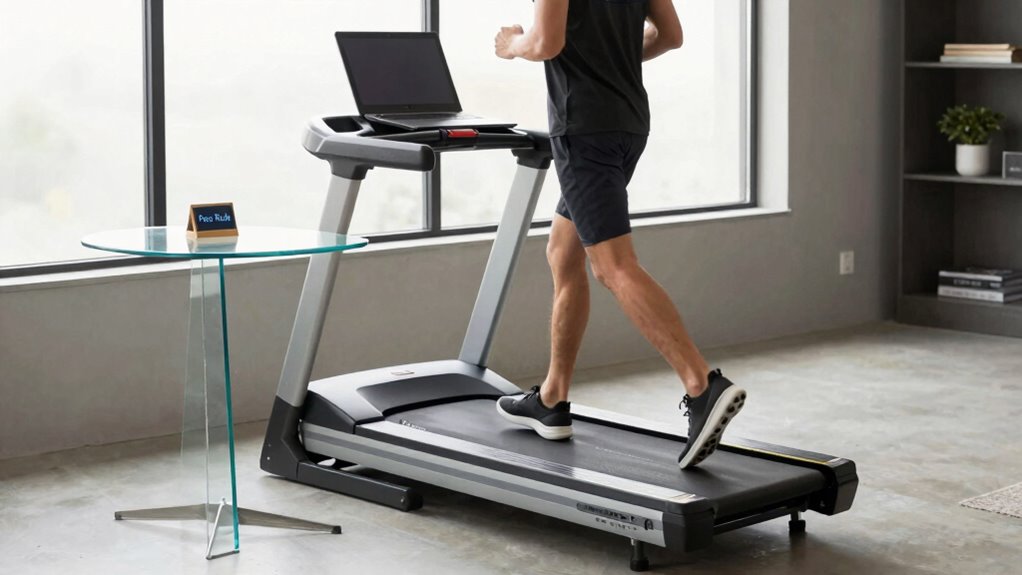
To prevent rookie injuries at your treadmill desk, follow the pace rule by maintaining a comfortable, natural walking speed that feels easy and sustainable. Listen to your body—if you’re out of breath or struggling to stay steady, slow down. Gradually adjust your speed with small steps and stay aware of your posture and environment. Using technology can help you monitor and keep safe, so keep exploring ways to optimize your routine for long-term safety.
Key Takeaways
- Set a comfortable, natural walking speed to prevent fatigue and reduce injury risk during treadmill desk use.
- Regularly monitor your pace and adjust gradually to stay within safe, ergonomic limits.
- Recognize signs of overexertion, like breathlessness or unsteady gait, and slow down immediately.
- Use supportive footwear and maintain treadmill maintenance to ensure smooth, controlled speed.
- Incorporate the pace rule by making small adjustments and staying attentive to body signals for safety.
Why Safe Walking Speed Is Key to Using Your Treadmill Desk
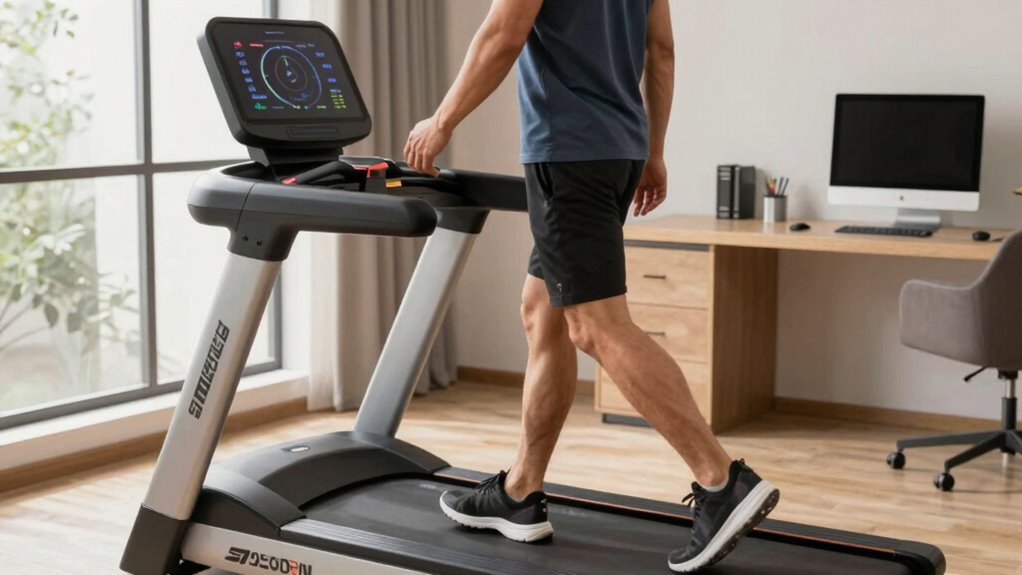
Walking at a safe speed on your treadmill desk is essential for maintaining good posture, avoiding injury, and staying comfortable throughout your workday. Your pace awareness guarantees you stay within safety thresholds that prevent overexertion and strain. Moving too fast can lead to awkward movements, muscle fatigue, or even falls, while walking too slowly might reduce the benefits of using the treadmill desk. By keeping your speed within recommended safety thresholds, you maintain control and stability, reducing the risk of accidents. Staying mindful of your pace helps you find a rhythm that supports productivity without compromising safety. Remember, the key is to walk at a pace that feels natural, keeps you comfortable, and allows you to focus on your work without distraction or concern. Additionally, understanding your recommended walking speeds can help you optimize your treadmill desk experience while prioritizing safety. Maintaining awareness of safe treadmill practices ensures you stay within your capabilities and enjoy a healthier, more productive work routine.
How to Find Your Ideal Walking Speed Safely
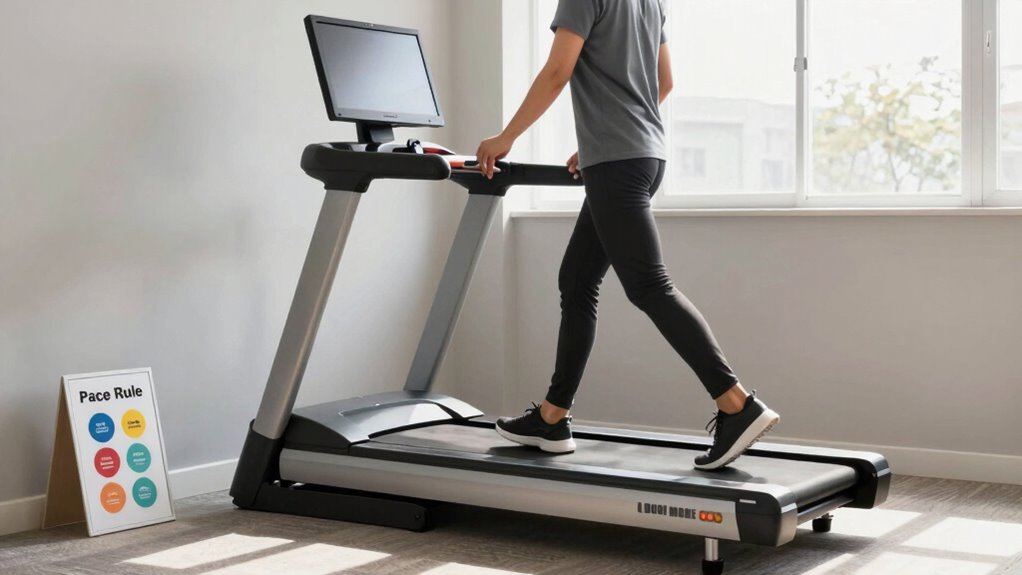
Finding your ideal walking speed on a treadmill desk begins with listening to your body and making small adjustments. Start slow and gradually increase your pace, paying attention to how you feel—if you notice discomfort or fatigue, slow down. Using ergonomic accessories, like adjustable desks and supportive mats, can help maintain proper posture, reducing strain during your walk. Regular treadmill maintenance ensures the equipment runs smoothly, preventing sudden jolts or speed fluctuations that could cause injury. Keep in mind that your ideal speed should allow you to work comfortably without feeling out of breath or overly fatigued. Adjust as needed, and check your setup frequently to maintain safety and comfort. Proper treadmill setup and ensuring the equipment is well-maintained can significantly reduce the risk of accidents. Being aware of safety best practices ensures you stay protected during your walking sessions. Additionally, understanding ergonomic principles related to treadmill desks can further enhance your safety and comfort during use. Paying attention to equipment ergonomics can help you avoid unnecessary strain and injury over time.
How to Tell If You’re Walking Too Fast or Too Slow

How can you tell if your walking pace on a treadmill desk is just right? Pay attention to your walking cadence—your steps per minute—and how you perceive your speed. If you feel like you’re rushing or out of breath, you’re likely going too fast. Conversely, if your movements feel sluggish or you’re struggling to keep a steady rhythm, you might be walking too slowly. Your speed perception should feel natural and comfortable, allowing you to focus on your work without feeling strained or overly relaxed. A good rule of thumb is to maintain a pace where your breathing stays steady, and your steps feel smooth. Regularly check your cadence and adjust as needed to keep your walking pace safe and sustainable. Monitoring your contrast ratio can also help ensure your visual comfort during extended periods of work. Additionally, paying attention to your walking form can help prevent fatigue and injuries over time. Incorporating ergonomic adjustments can further optimize your treadmill desk setup for safety and comfort. Being aware of your engine feel and how it influences your movement can also help you maintain a consistent and safe walking pace.
Applying the Pace Rule: A Simple Step-by-Step Method
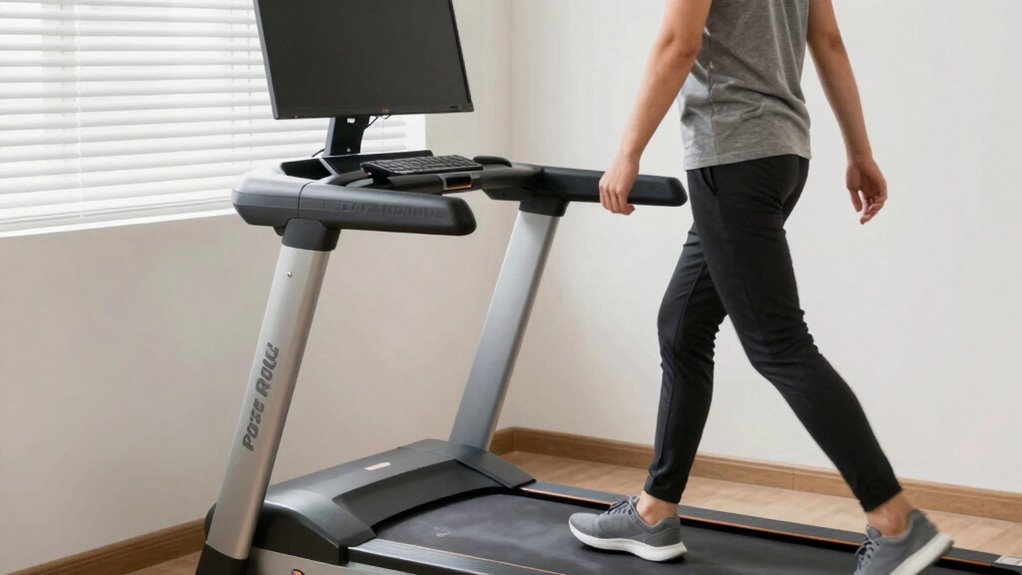
To apply the pace rule effectively, start by setting a comfortable walking speed that feels natural. Keep an eye on your speed and adjust as needed to stay within a safe range. Regularly monitoring your pace helps you maintain safety and comfort throughout your work session. Incorporating body jewelry measurements can also help you better understand environmental acoustics, ensuring a more controlled and safe walking environment. Being aware of essential oil benefits can complement your safety practices by promoting relaxation and reducing stress during your activity. Additionally, understanding solar system safety principles can help you recognize potential hazards and maintain an optimal safety mindset during your routines. Incorporating pace awareness techniques can further enhance your ability to stay within safe limits and prevent overexertion.
Set a Comfortable Pace
Setting a comfortable pace on your treadmill desk is essential to guarantee fatigue and assure productivity. When you choose a pace that feels natural, you’re less likely to strain yourself or develop injuries. Focus on footwear selection to guarantee proper support, which helps maintain comfort over time. Keep treadmill maintenance in mind; a well-maintained belt reduces noise and wobbling, making it easier to set a steady speed. Start slow and gradually increase your pace until you find that sweet spot where walking feels effortless. Remember, a pace that’s too fast can cause fatigue, while too slow might reduce effectiveness. Adjust your speed based on how you feel, and always prioritize comfort and safety. Your goal is steady, sustainable movement that supports your workday. Additionally, monitoring your treadmill performance can help identify issues early and ensure a safe walking environment. Incorporating proper support through footwear and equipment also contributes to injury prevention and overall comfort during use.
Monitor Your Speed Regularly
Monitoring your speed regularly guarantees you stay within a safe and effective walking zone. Check your pace often, especially after changes in footwear choices or environmental hazards like uneven flooring or clutter. Proper footwear provides stability, so if your shoes are worn or unsupportive, your speed might unintentionally increase or decrease, risking injury. Stay alert to environmental hazards that could cause you to stumble or alter your stride. environmental hazards can significantly impact your stability, so being aware of your surroundings is crucial. Adjust your treadmill speed accordingly, ensuring it remains comfortable and sustainable. Using a simple method like periodically glancing at your speed display helps you maintain control. Consistent monitoring allows you to prevent overexertion or accidental slips, keeping your workout safe and productive. Additionally, treadmill safety features can assist in alerting you to irregularities or malfunctions. Remember, a cautious approach keeps injuries at bay and enhances your overall treadmill desk experience. Ensuring Comfort and Safety With Home Products Regularly inspecting your footwear and treadmill environment contributes to overall safety. Additionally, understanding proper treadmill maintenance can help prevent unexpected malfunctions that might compromise your safety.
Adjusting Your Speed During the Day Without Losing Safety
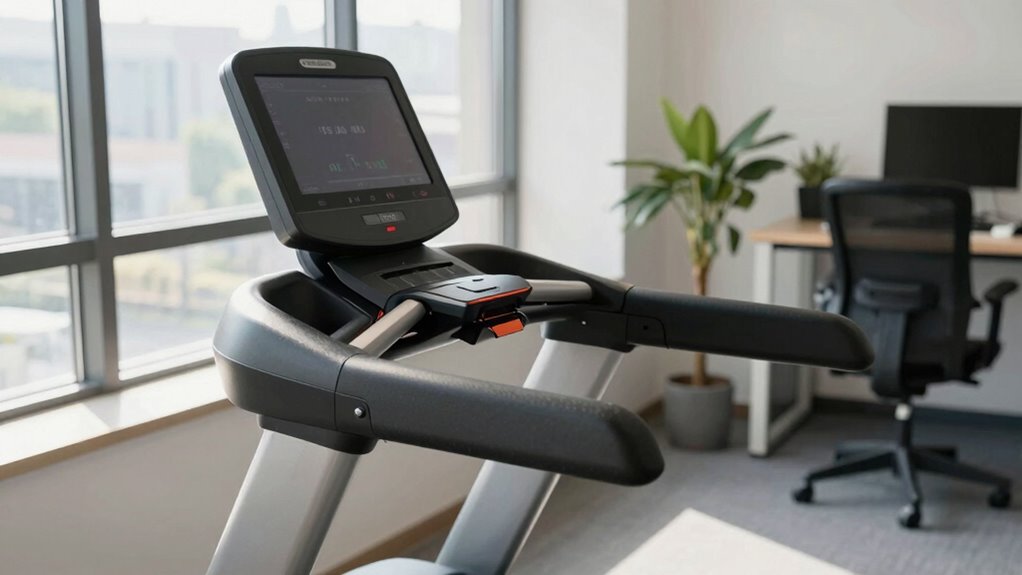
As you go through your day, adjusting your treadmill desk speed can help you stay comfortable and productive, but it’s essential to do so safely. Sudden changes can disrupt your workflow or cause injury. To maintain safety, consider footwear considerations that support proper gait and reduce strain. Pay attention to workplace ergonomics by ensuring your desk and monitor setup support good posture at each speed. When adjusting your pace:
- Make small, gradual changes
- Keep your feet firmly planted
- Avoid distractions while changing speed
- Use the treadmill’s control panel carefully
- Check your posture after adjustments
How Technology Can Help You Maintain a Safe Pace
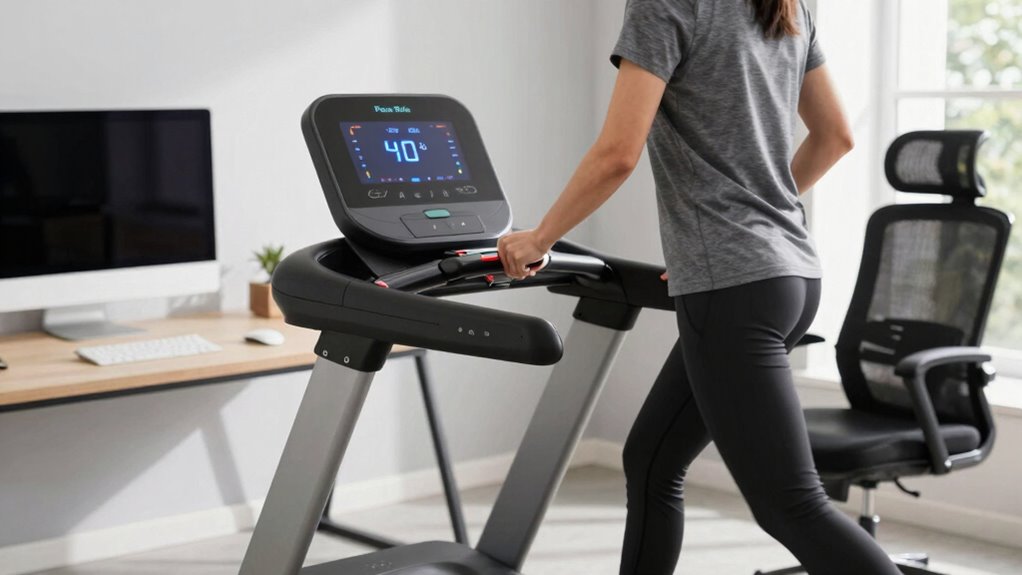
Technology plays a crucial role in helping you maintain a safe pace on your treadmill desk by providing real-time feedback and easy adjustments. Wearable devices, like fitness trackers or smartwatches, monitor your speed, heart rate, and step count, alerting you if you’re moving too fast or too slow. Safety apps can sync with these devices to offer instant notifications, guiding you to stay within your ideal pace. Some apps even analyze your walking patterns, suggesting adjustments to prevent overexertion or instability. By leveraging these tools, you gain continuous awareness of your pace, reducing the risk of injury. Incorporating wearable devices and safety apps into your routine creates a responsive system that supports safe, efficient movement while working at your treadmill desk.
What to Do If You Feel Unsteady or Overexerted
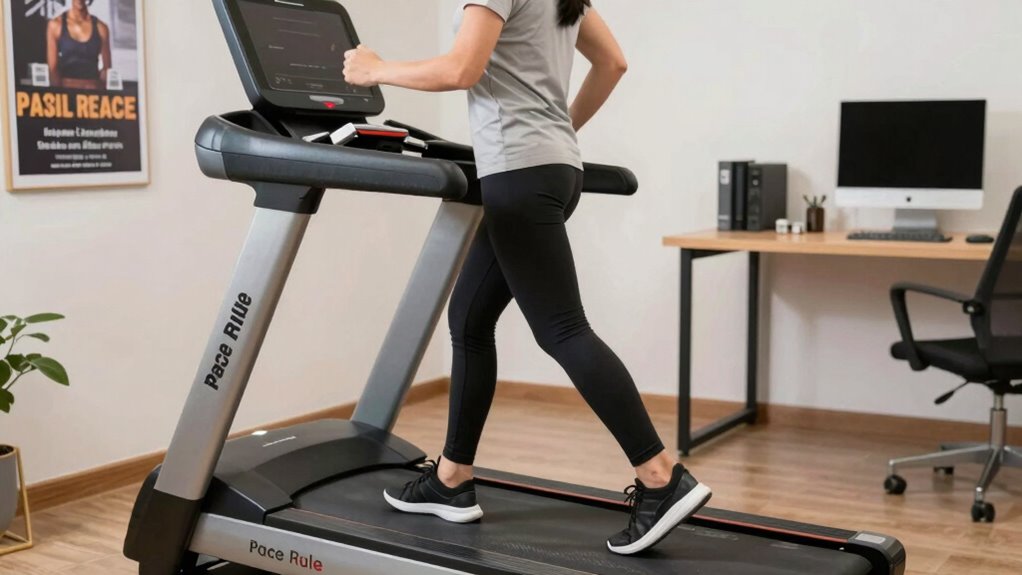
If you start to feel unsteady or overexerted while using your treadmill desk, it’s important to respond immediately to prevent injury. First, slow down or stop walking to regain control. Stay hydrated with hydration tips like sipping water regularly, especially if you feel dizzy. Check your footwear choices—ensure you wear supportive, well-fitting shoes to improve stability. If you feel faint, sit down safely nearby to avoid falling. Pay attention to your body signals; don’t ignore signs of fatigue or discomfort. Remember, taking a brief break can help reset your pace and prevent overexertion. Keeping these strategies in mind helps you stay safe and comfortable during your treadmill desk sessions.
Building a Safe, Long-Term Treadmill Desk Routine
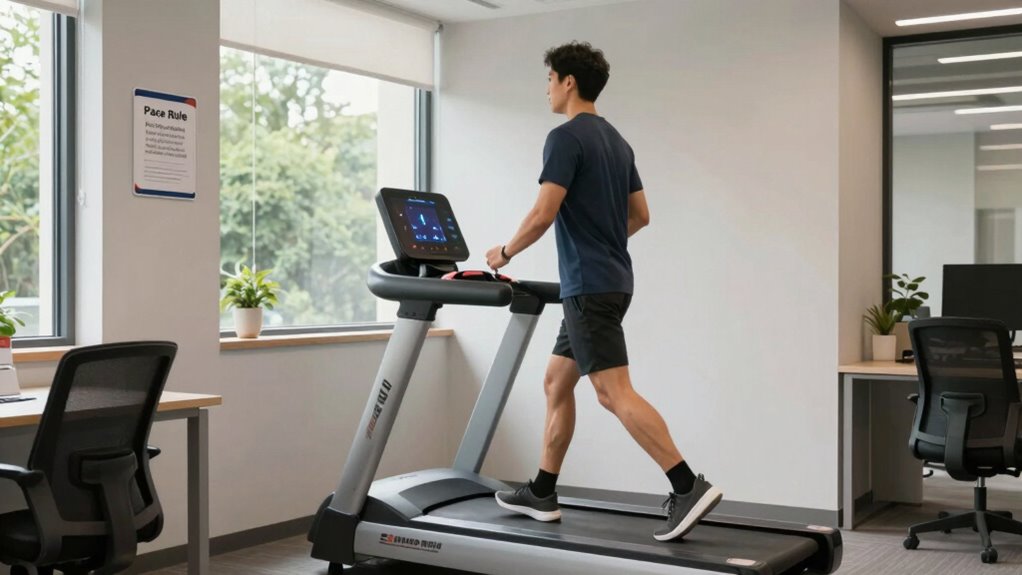
Creating a safe, long-term treadmill desk routine requires consistent planning and mindful practices. Start by making ergonomic adjustments to your workspace, ensuring your monitor, keyboard, and mouse are at comfortable heights to prevent strain. Prioritize proper footwear choices—wear supportive, non-slip shoes that cushion your feet and provide stability. These choices help maintain proper posture and reduce injury risk over time. Establish a gradual walking pace and set regular break intervals to avoid fatigue. Stay attentive to your body’s signals and adapt your routine as needed. Consistency is key, but flexibility ensures safety. By focusing on ergonomic adjustments and footwear choices, you create a sustainable routine that promotes comfort, reduces injury, and helps you enjoy the benefits of your treadmill desk long-term.
Common Mistakes That Can Lead to Rookie Injuries
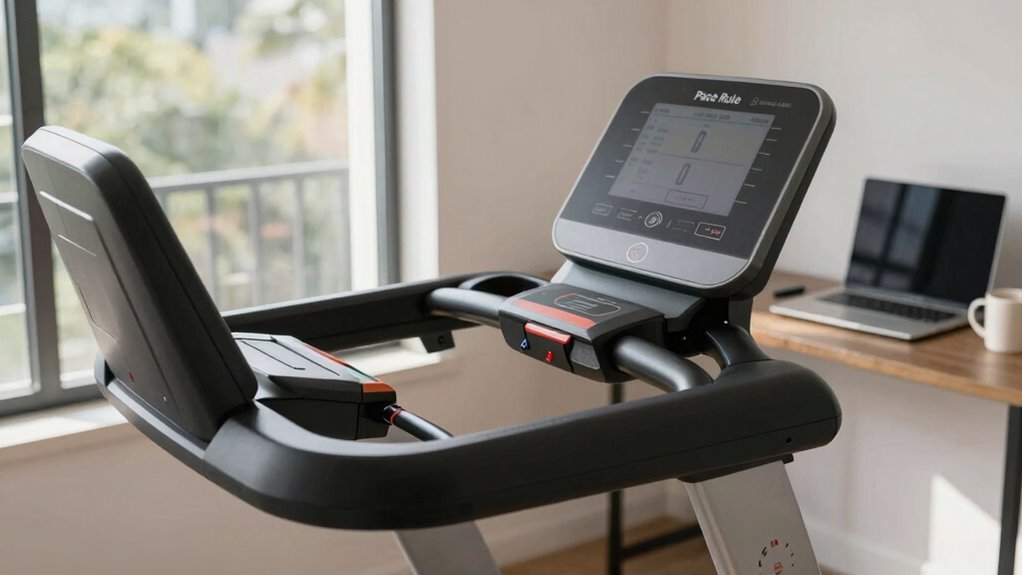
One common mistake is neglecting proper posture, which can strain your neck and back over time. Another is ignoring the recommended speed limits, risking falls or injuries. Staying mindful of your posture and speed helps keep your treadmill desk safe and comfortable.
Poor Posture Habits
Poor posture habits are among the most common mistakes people make when using a treadmill desk, and they can quickly lead to discomfort or injury. Maintaining proper ergonomic alignment is essential; slouching or leaning forward strains your neck and back. Your footwear choices also matter—worn-out shoes or unsupportive soles can cause instability and poor posture. To prevent issues, avoid these pitfalls:
- Slouching or leaning on your desk
- Looking down at your screen
- Sitting too low or too high
- Wearing improper footwear
- Ignoring ergonomic adjustments
Focusing on good ergonomic alignment and wearing supportive footwear helps you stay balanced and comfortable. Regularly check your posture, keep your screen at eye level, and choose appropriate shoes to reduce the risk of rookie injuries from poor posture habits.
Ignoring Speed Limits
Ignoring speed limits on a treadmill can quickly lead to injuries, especially if you start running or walking at a pace that’s too fast for your experience level. Just like cycling safety emphasizes gradual progression, maintaining appropriate speeds helps prevent accidents. Rushing beyond your comfort zone can cause loss of balance or falls, risking serious harm. It’s also important to follow gym etiquette by respecting the equipment’s recommended settings and not pushing your limits unnecessarily. A common mistake is increasing speed without considering your skill, which can lead to rookie injuries. Always start slow, stay within your pace, and listen to your body. Staying mindful of speed limits ensures a safer, more comfortable experience, protecting you from avoidable mishaps.
Frequently Asked Questions
Can I Use a Treadmill Desk While Running or Only Walking?
You can use a treadmill desk while walking, but running isn’t recommended for safety reasons. Running on a treadmill desk can compromise desk ergonomics and increase the risk of accidents. For ideal running safety, stick to walking at a comfortable pace that maintains proper posture and avoids strain. This ensures you stay productive without risking injuries or sacrificing ergonomic benefits, making your treadmill desk experience both safe and effective.
How Often Should I Take Breaks During Treadmill Desk Use?
Think of your workday as a marathon, not a sprint. You should take rest breaks every 30 to 60 minutes to stretch and reset. During these breaks, hydrate with water and practice hydration tips like sipping regularly. This keeps your energy steady, prevents fatigue, and reduces injury risk. Listening to your body is key—if you feel tired or stiff, it’s time for a break, even if it’s sooner.
Is It Safe to Multitask While Walking on a Treadmill Desk?
Yes, you can multitask on a treadmill desk, but you need distraction management to stay safe. Focus on tasks that don’t divert your attention from maintaining proper posture correction and awareness of your pace. Avoid complex or highly stimulating activities that could cause you to lose balance or strain. Keep your workspace organized, stay mindful of your movements, and take regular breaks to guarantee safety and productivity.
What Footwear Is Best for Treadmill Desk Safety?
You should choose footwear with good support, cushioning, and a non-slip sole to guarantee treadmill desk safety. Proper footwear enhances treadmill ergonomics, helping you maintain balance and comfort during your walk. Avoid loose or worn-out shoes that can cause slips or injuries. Opt for athletic shoes designed for walking or running, which provide stability and reduce fatigue, so you can stay productive and safe while working at your treadmill desk.
Are There Specific Health Conditions That Affect Treadmill Desk Safety?
About 15% of adults have health conditions that can impact treadmill desk safety, so it’s essential to take into account your health. Conditions like heart issues, joint problems, or balance disorders can increase risk. Always consult a healthcare professional before starting. Follow safety precautions like starting at low speeds and monitoring how you feel. Being aware of your health and adjusting your approach helps prevent injuries and ensures you stay safe while working.
Conclusion
Remember, finding your perfect walking rhythm is like gently guiding a boat through calm waters—you want a steady, smooth pace. Stay mindful of your comfort and avoid rushing into rougher currents. When you listen to your body’s quiet signals, you’ll enjoy a safe, steady voyage at your treadmill desk. By respecting your pace, you’ll keep your journey smooth and enjoyable, turning every workday into a peaceful walk toward success.