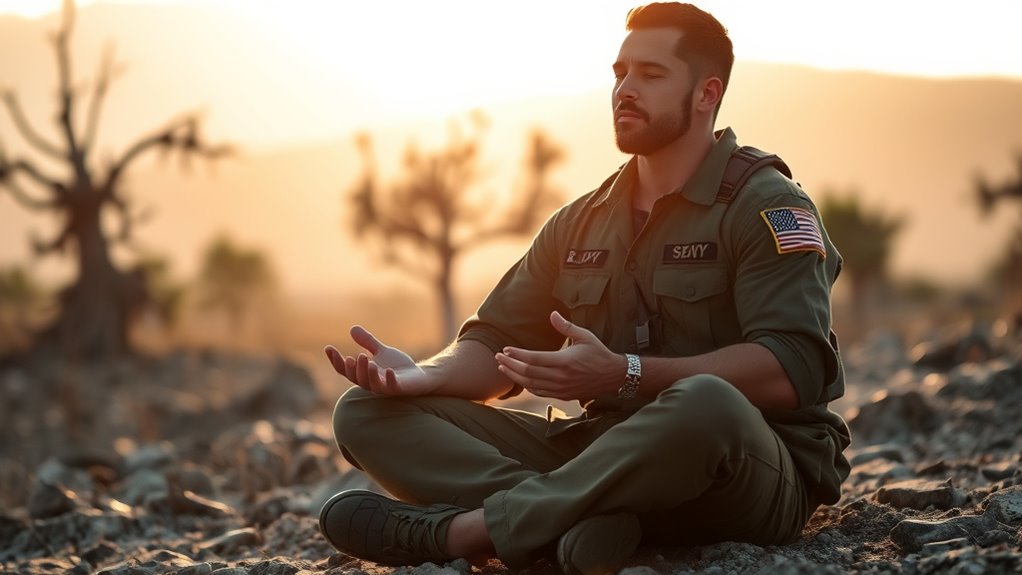

Tactical breathing is a powerful Navy SEAL technique that helps you rapidly calm your nervous system in stressful moments. By inhaling deeply through your nose for four counts, holding your breath for four, then exhaling fully for four, you activate your body’s relaxation response. This controlled breathing reduces anxiety, lowers heart rate, and sharpens focus. Learning this method can transform how you handle pressure—keep going to discover more about mastering your stress response.
Key Takeaways
- Tactical breathing is a Navy SEAL technique that helps control the nervous system during high-stress situations.
- It involves inhaling, holding, and exhaling for a count of four to induce relaxation.
- The method activates the parasympathetic nervous system, reducing stress hormones and anxiety.
- Regular practice enhances quick access to calmness in crises and improves emotional resilience.
- It is a simple, portable stress management tool applicable anytime, anywhere to maintain focus and composure.
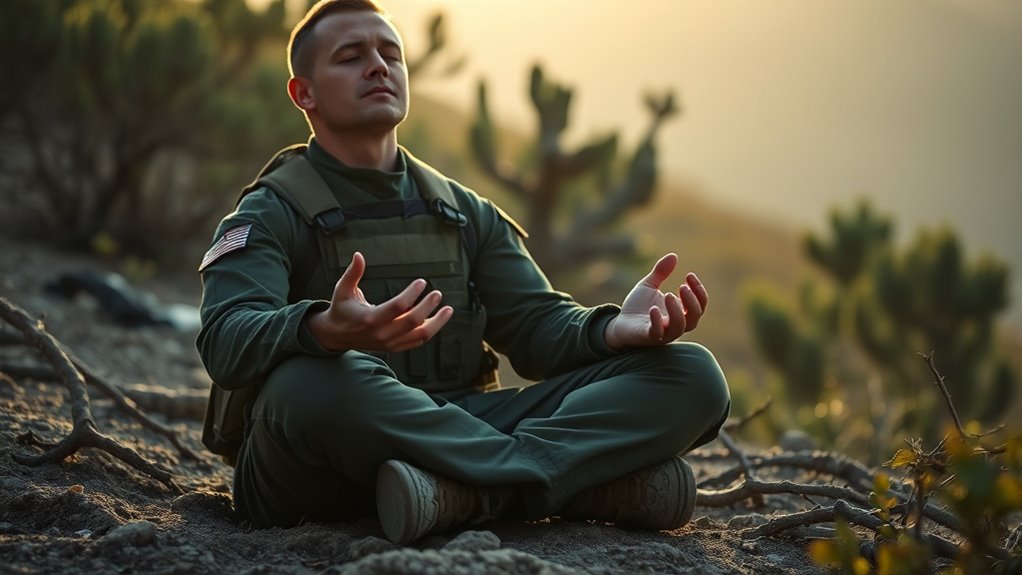
Have you ever wondered how some people stay calm and focused in high-pressure situations? It’s not just luck or innate composure; many rely on specific techniques to manage their stress and reduce anxiety. One powerful method is tactical breathing, a skill used by Navy SEALs to control their nervous system during intense moments. When you learn to master this technique, you can transform your response to stress and stay centered no matter what’s happening around you.
Tactical breathing works by consciously controlling your breath, which directly influences your nervous system. When stress levels spike, your body triggers a fight-or-flight response, increasing your heart rate, tightening muscles, and flooding your brain with stress hormones. By practicing deliberate breathing, you send a calming signal to your brain, helping to reduce anxiety and bring you back to a state of focus. It’s a practical form of stress management that you can use anytime, anywhere—whether in a high-stakes meeting, before giving a presentation, or during a personal crisis.
The technique itself is simple but powerful. You inhale deeply through your nose for a count of four, filling your lungs completely. Then, you hold your breath for another four counts. Finally, you exhale slowly and fully through your mouth for four counts. Repeat this cycle several times, paying close attention to the rhythm of your breath. This controlled breathing pattern activates your parasympathetic nervous system—the part responsible for relaxation—counteracting the effects of stress hormones and anxiety. Over time, practicing tactical breathing enhances your ability to stay calm under pressure, making it an essential tool for stress management and anxiety reduction.
Consistency is key. The more you practice, the easier it becomes to access this calming response when needed. Start by integrating tactical breathing into your daily routine, such as during meditation or quiet moments, so it becomes second nature. When faced with a stressful situation, you can immediately employ this technique to regain control. It’s like flipping a switch from chaos to calm, giving you mental clarity and emotional resilience.
Ultimately, tactical breathing isn’t just about calming down in the moment; it’s about building your capacity to handle stress more effectively over time. By mastering this Navy SEAL technique, you take charge of your nervous system, reducing anxiety and fostering a sense of mastery over your reactions. The more you practice, the more natural it becomes to remain composed—regardless of the chaos around you. Additionally, understanding the science of high-quality projectors can help you create an optimal environment for relaxation and focus, further supporting your stress management efforts.
Frequently Asked Questions
Can Tactical Breathing Be Effective During High-Stress Medical Emergencies?
During high-stress medical emergencies, tactical breathing can be highly effective. It helps you stay focused and manage panic, much like mindfulness meditation or progressive muscle relaxation. By slowing your breathing, you activate your nervous system’s calming response, allowing you to think clearly and act efficiently. Practicing this technique beforehand makes it easier to stay composed when pressure mounts, ultimately improving your ability to handle critical situations confidently.
How Quickly Does Tactical Breathing Impact Anxiety Levels?
Imagine your mind as a stormy sea; tactical breathing acts as a lighthouse guiding you to calm waters. You’ll often experience rapid calming and immediate relief within seconds to a minute, as controlled breaths signal your nervous system to relax. This technique helps quell anxiety quickly, making it a powerful tool during stressful moments. With consistent practice, you’ll find your response to anxiety becomes faster and more effective.
Is Tactical Breathing Suitable for Children or Beginners?
You might wonder if tactical breathing is suitable for children or beginners. Generally, it’s age-appropriate and beginner-friendly, but you’ll want to teach it gently. For kids, simplify the process and use visual cues or fun metaphors. As a beginner, take your time to practice regularly, ensuring you feel comfortable. With patience, tactical breathing can be an effective tool for anyone, regardless of age or experience.
Are There Any Potential Risks or Contraindications?
When considering tactical breathing, you should perform a risks assessment and be aware of any contraindications. While generally safe, it’s important to recognize that individuals with certain health conditions, like respiratory issues or anxiety disorders, might experience discomfort or adverse effects. Always consult a healthcare professional if you’re unsure, and monitor how you feel during practice to guarantee safety. Being cautious helps prevent potential risks and maximizes benefits.
How Does Tactical Breathing Compare to Other Relaxation Techniques?
You might find tactical breathing more immediate and focused than mindfulness meditation or progressive muscle relaxation, which often require longer practice. Tactical breathing’s rhythmic pattern helps quickly calm your nervous system during stressful moments. While mindfulness and muscle relaxation promote overall well-being, tactical breathing is especially effective in acute stress. Each technique has its benefits, but tactical breathing offers a fast, practical way to regain control when you need it most.
Conclusion
Now that you know these tactical breathing techniques, you’re armed with tools to calm your nervous system whenever stress strikes. Think of your breath as a steady anchor in a turbulent sea, helping you regain control and clarity. Just like a Navy SEAL stays composed under pressure, you can master your breathing to stay centered in any situation. Practice regularly, and soon, calmness will become your natural response, no matter how stormy things get.