
To think like a rebel thinker, embrace seven powerful mental models that challenge conventional wisdom and sharpen your reasoning. These include understanding biases like confirmation bias, using decision frameworks such as decision trees and pre-mortems, and recognizing the importance of mental models that promote rationality and long-term thinking. By mastering these tools, you’ll improve your decision-making, reduce impulsiveness, and develop a more independent, critical mindset. Keep going to discover how these models can truly transform your perspective.

Get the little things that make your day delivered free with Prime
- Fast, free delivery on millions of items
- Prime Video, Amazon Music and more included
- Member-only deals all year
Key Takeaways
- The inversion model helps challenge assumptions by analyzing what not to do or what would cause failure.
- The second-order thinking model encourages considering long-term consequences of decisions.
- The pre-mortem technique involves imagining potential failures to identify overlooked risks.
- Decision trees enable systematic evaluation of options and outcomes to reduce biases.
- Recognizing cognitive biases like confirmation bias enhances critical thinking and independent judgment.
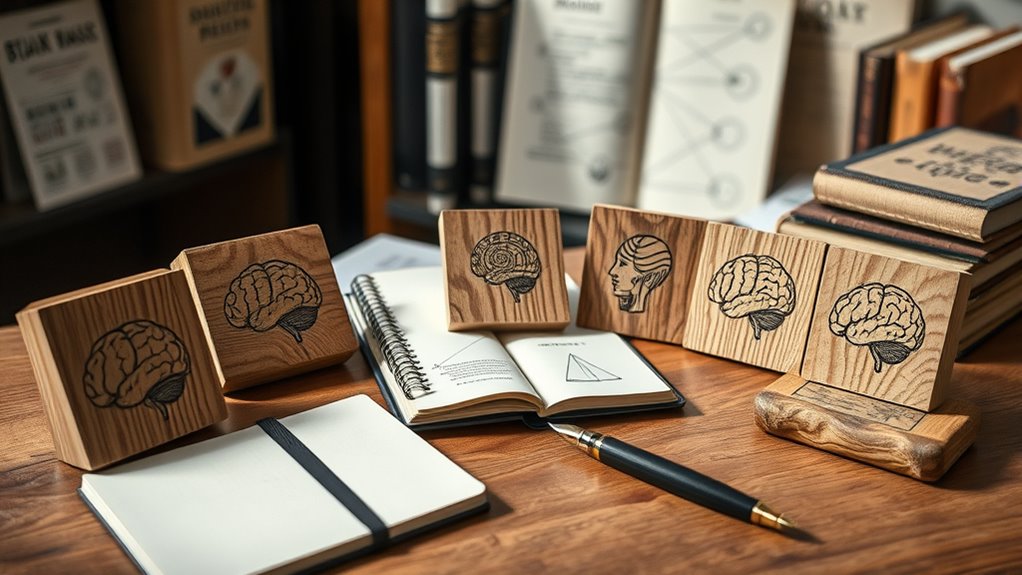
Mental models are powerful tools that help you understand and steer through complex situations more effectively. They serve as mental shortcuts, enabling you to see patterns, anticipate outcomes, and make smarter choices. Among these, decision-making frameworks stand out because they provide structured approaches to evaluating options. When you face tough choices, these frameworks guide you through logical steps, reducing impulsiveness and emotional interference. They help you weigh pros and cons, consider long-term impacts, and avoid common pitfalls like cognitive biases—those mental shortcuts your brain takes that can distort your judgment. Recognizing cognitive biases such as confirmation bias or anchoring bias allows you to step back and question your assumptions, leading to more rational decisions.
By applying decision-making frameworks, you avoid falling prey to these biases. For example, using a pre-mortem technique encourages you to imagine potential failures before they happen, helping you uncover overlooked risks. Similarly, employing a decision tree forces you to consider various outcomes systematically, reducing the influence of cognitive biases like overconfidence. When you understand these mental models, you become more deliberate about how you approach problems, instead of relying solely on intuition or gut feelings, which are often clouded by biases. Additionally, understanding the role of contrast effects in decision-making helps you recognize how relative comparisons can influence your choices and perceptions.
Using decision frameworks like pre-mortems and decision trees minimizes biases and promotes deliberate, rational problem-solving.
In practice, integrating decision-making frameworks into your thinking process sharpens your judgment. It allows you to step outside your immediate emotional reactions and assess the situation objectively. For instance, when you’re contemplating a major life or career move, these models help you clarify your priorities and evaluate options based on evidence rather than biases. They encourage critical thinking and foster a mindset of continuous learning, which is essential if you want to challenge conventional wisdom and think independently.
Mastering decision-making frameworks and understanding cognitive biases transforms how you approach problems. It makes you more resilient against misleading heuristics and emotional reactions that can lead to poor choices. Instead of reacting impulsively, you learn to pause, analyze, and make decisions rooted in logic and evidence. Over time, this mental discipline boosts your confidence and autonomy, empowering you to rebel against the herd mentality. By consistently applying these mental models, you develop a sharper, more rational mind capable of steering through uncertainty with clarity and purpose. Ultimately, they become your secret weapon for thinking differently and making better decisions in every aspect of life.
decision tree decision making tool
As an affiliate, we earn on qualifying purchases.
As an affiliate, we earn on qualifying purchases.
Frequently Asked Questions
How Can Mental Models Improve Everyday Decision-Making?
Mental models improve your everyday decision-making by providing heuristic shortcuts and decision trees that simplify complex choices. When you use these tools, you quickly assess options, identify potential pitfalls, and make smarter moves. Instead of overthinking, you tap into proven frameworks that guide your reasoning. This approach helps you act more confidently, reduces errors, and guarantees you stay aligned with your goals, even in uncertain or fast-paced situations.
Are Mental Models Applicable in Personal Relationships?
You can definitely apply mental models in personal relationships. They enhance your emotional intelligence and help you understand others better. Using models like empathy or the second-order thinking, you can navigate conflicts more effectively and resolve disagreements calmly. Mental models encourage you to think critically about your actions and responses, fostering stronger connections. By practicing these, you’ll improve communication, build trust, and create healthier, more resilient relationships.
What Is the Most Versatile Mental Model for Rebels?
You might think rebels need a wild, unpredictable mental model, but the most versatile one is actually the “second-order thinking.” It’s ironic—by questioning first impressions, you release counterintuitive insights and master creative problem solving. This model helps you see beyond the obvious, challenge norms, and craft innovative solutions. Embrace it, and you’ll turn your rebellious instincts into strategic advantages, making your unconventional ideas even more impactful.
How Do I Develop New Mental Models Effectively?
To develop new mental models effectively, you should embrace diverse learning techniques like active recall and spaced repetition, which reinforce understanding. Engage in creative thinking by questioning assumptions and exploring different perspectives. Keep a curious mindset, experiment with applying these models to real-world problems, and reflect on your experiences. Consistent practice and openness to new ideas will help you build a versatile mental toolkit that boosts your rebel thinking.
Can Mental Models Help Overcome Cognitive Biases?
Mental models can definitely help you overcome cognitive distortions by giving you clearer perspectives and structured ways to analyze situations. They enable bias mitigation by challenging automatic thoughts and assumptions, encouraging you to think critically. When you apply mental models, you become more aware of your cognitive biases, making it easier to correct them and make decisions based on reality rather than distorted perceptions. This boosts your overall judgment and reasoning skills.
As an affiliate, we earn on qualifying purchases.
Conclusion
Embracing these seven mental models is like adding powerful lenses to your thinking toolkit. They help you see beyond the obvious and navigate complex ideas with clarity. When you apply them consistently, your mind becomes a compass guiding you through chaos and uncertainty. Remember, these models aren’t just tools—they’re the keys to releasing your rebel thinker within. Keep practicing, and watch your perspective expand like a universe bursting with endless possibilities.
mental models book for critical thinking
As an affiliate, we earn on qualifying purchases.
As an affiliate, we earn on qualifying purchases.
cognitive bias awareness training
As an affiliate, we earn on qualifying purchases.
As an affiliate, we earn on qualifying purchases.
Fall Picks
fall essentials
As an affiliate, we earn on qualifying purchases.