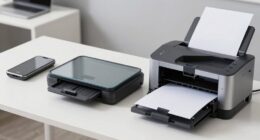
To stop your printer from jamming, start by regularly cleaning the paper path and rollers to remove dust and debris. Use high-quality, flat paper stored in a cool, dry place, and always check for wrinkles or tears before loading. Refill toner and ink cartridges properly, and ensure your printer settings match the paper type. Schedule routine maintenance and inspections, and if jams persist, learn step-by-step troubleshooting tips to resolve common issues effectively.
Key Takeaways
- Regularly clean the paper path and rollers to prevent debris buildup and misfeeds.
- Use high-quality, properly stored paper to avoid wrinkles and misalignment issues.
- Check and replace worn rollers and misaligned components promptly to ensure smooth paper feeding.
- Keep firmware updated and calibrate the printer for optimal performance and proper alignment.
- Inspect for and clear paper jams carefully, removing tears or misaligned sheets to prevent recurring jams.
Why Printer Jams Happen and How Regular Maintenance Prevents Them
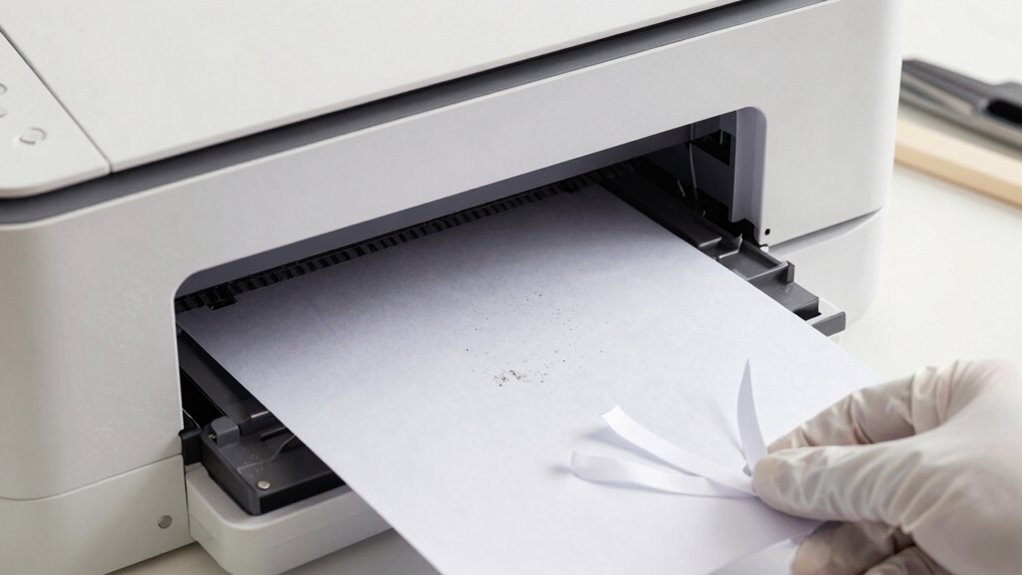
Printer jams often occur because of paper misfeeds, debris inside the device, or worn rollers. Poor paper quality can cause feeding issues, leading to misalignment and jams. Using low-quality or wrinkled paper increases the chance of a paper misfeed, disrupting smooth operation. Proper printer alignment ensures paper feeds correctly through the rollers, reducing friction and preventing jams. Regular maintenance, like cleaning the paper path and checking rollers, keeps everything aligned and functioning well. When you use high-quality paper and keep your printer properly aligned, you minimize the chance of jams caused by improper paper feeding. Addressing these factors regularly helps your printer run smoothly, avoiding unnecessary delays and damage. Additionally, understanding how wear and tear affects the rollers and other components can help in scheduling timely replacements, prolonging the life of your printer. Incorporating preventive maintenance routines can further enhance the printer’s reliability and performance. Regularly inspecting for debris buildup inside the printer can prevent blockages that lead to jams. Being aware of signs of component deterioration allows you to take proactive steps before issues escalate. Proper care and attention to paper quality and alignment are key to preventing frequent paper jams.
How to Check and Clear Paper Jams Safely
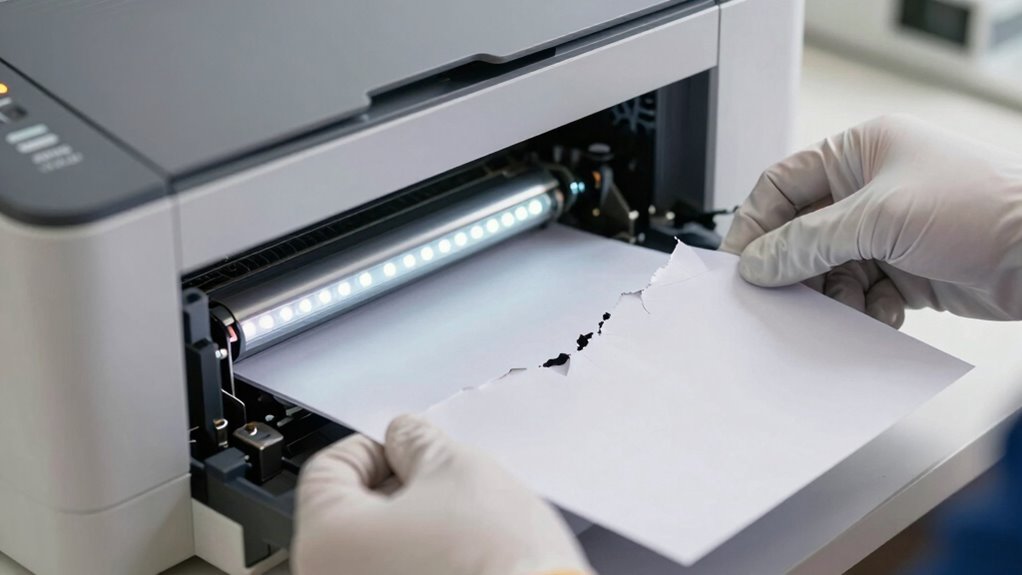
Before you start clearing a paper jam, turn off your printer to prevent damage. Next, carefully remove the paper and inspect it for tears or misalignments. Using the proper DIY tools and following safety precautions is essential to avoid injury and further damage. Additionally, consulting your printer’s maintenance guidelines can help prevent common issues and extend its lifespan. Ensuring your printer’s filtration and suction systems are clean can also contribute to smoother operation and fewer jams. Regularly performing preventative maintenance can reduce the likelihood of jams and other problems. Being aware of common printer problems can also help you troubleshoot more effectively. By following these steps, you can clear jams safely and keep your printer running smoothly.
Power Off Printer
To safely check for and clear paper jams, you should first turn off the printer and unplug it from the power source. Power off the device completely to prevent any internal movement or electrical issues. Make sure the printer has fully shut down before proceeding. Unplugging the device ensures there’s no power running through it, reducing the risk of injury or damage. Wait a few moments to allow any internal components to settle. This step is vital for your safety and the printer’s longevity. Once the printer is powered off and unplugged, you can confidently open panels or access areas to inspect and clear paper jams. Always handle parts gently to avoid damaging delicate components during the process. Handling printer parts carefully is essential when performing maintenance tasks. Additionally, consulting your printer’s user manual can provide specific guidance tailored to your model. Being aware of internal mechanisms can help prevent future jams and maintain smooth operation. Properly understanding paper feeding systems can also improve your troubleshooting efficiency.
Remove and Inspect Paper
Wondering how to safely remove and inspect paper for jams? First, gently open the printer’s access panel and carefully grasp the paper. Avoid tearing it to prevent paper remnants that could cause future jams. Check the paper alignment; misaligned paper often leads to jams, so straighten it if needed. Look for any torn pieces or debris stuck inside. While inspecting, keep an eye on the rollers—they should be clean and free of dust. To jam prevention, always use the recommended paper type and store it properly. If you notice any curled or wrinkled sheets, replace them. Regularly cleaning of printer rollers can help prevent buildup that causes paper jams. Additionally, maintaining proper ambient conditions, such as air quality, can reduce dust and debris that contribute to paper jams. Furthermore, inspecting and maintaining the air purifier filters in your environment can ensure cleaner air, which can indirectly improve printer operation by reducing dust buildup around the device. Ensuring optimal humidity levels can also help prevent static and paper misfeeds, leading to fewer jams. Using high-quality paper with consistent weight and texture can significantly improve paper feed performance, reducing the likelihood of jams and misfeeds. Proper paper handling is key to maintaining your printer’s performance.
Keep Your Printer Clean to Avoid Jams
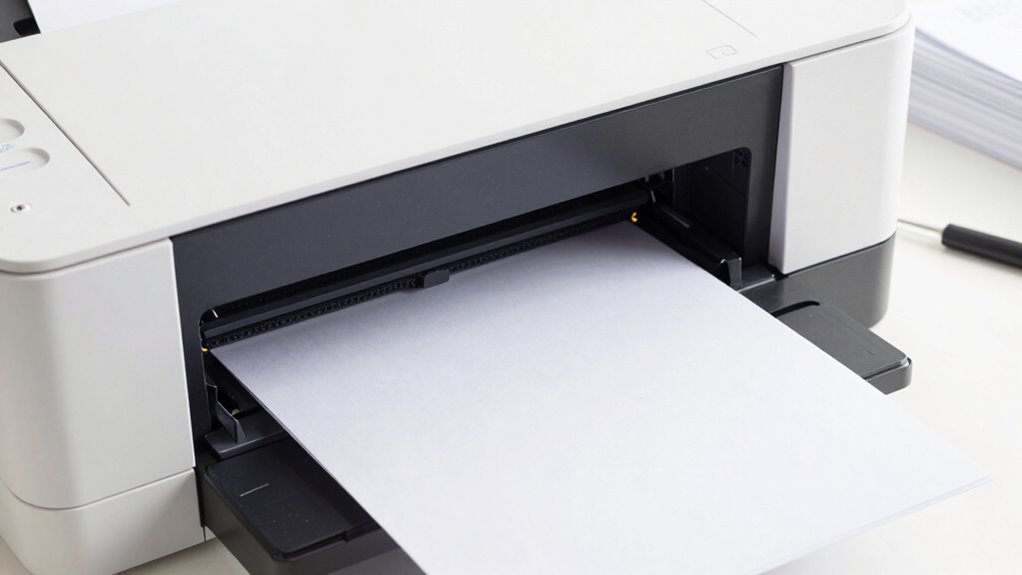
Keeping your printer clean helps prevent paper jams before they happen. Make sure to regularly clean the paper path and remove dust or debris that can cause issues. Also, check for paper wrinkles to guarantee smooth printing and avoid unnecessary jams. Additionally, being mindful of humidity management for your printer components can help reduce static and paper misfeeds, especially in high-traffic areas. Maintaining proper air circulation around your printer can further help control humidity levels and prevent issues. Implementing proper storage techniques for paper and ink can also minimize the risk of jams caused by environmental factors. Finally, be sure to follow eco-friendly disposal tips for your printer components to help reduce environmental impact.
Regularly Clean Paper Path
Regularly cleaning the paper path is essential to prevent paper jams and guarantee smooth printer operation. Over time, dust and debris can accumulate, causing misfeeds or jams. Establishing a consistent cleaning schedule helps keep the paper path clear and your printer running efficiently.
To maintain your printer, consider these tips:
- Inspect the paper path regularly for paper scraps or dust buildup.
- Use a soft, lint-free cloth to wipe down rollers and guides.
- Avoid using harsh chemicals that could damage sensitive parts.
- Keep spare cleaning supplies nearby for quick touch-ups.
Remove Dust and Debris
Have you ever noticed how dust and debris can silently accumulate inside your printer? Over time, this buildup can cause paper jams or misfeeds. To prevent that, perform regular dust removal and debris clearing. Turn off your printer and unplug it before cleaning. Use a soft, lint-free cloth or a small brush to gently wipe away dust from the paper rollers, feed tray, and internal components. Compressed air can help dislodge stubborn debris from tight spots, but be careful not to blow dust further inside. Avoid using harsh cleaners, which can damage sensitive parts. Keeping your printer free of dust and debris ensures smooth paper feeding and reduces the chances of jams. Regular maintenance like this keeps your printer running efficiently and extends its lifespan.
Check for Paper Wrinkles
Ever wondered why paper jams happen even when your printer seems clean? One common culprit is paper wrinkles or improper paper folding. Wrinkled or folded paper can cause uneven feeding, leading to jams. Before printing, check your paper for any creases or folds that could disrupt the paper path. Smooth out any wrinkles with your hands, and make sure the paper lies flat in the tray. Using paper straight from the pack and avoiding overfilling the tray can also help. Remember, even tiny folds or creases can throw off the entire printing process. Keeping your paper smooth and wrinkle-free minimizes the risk of jams and keeps your printer running smoothly. Regularly inspecting your paper is a simple but effective maintenance step.
Use the Right Paper and Store It Properly
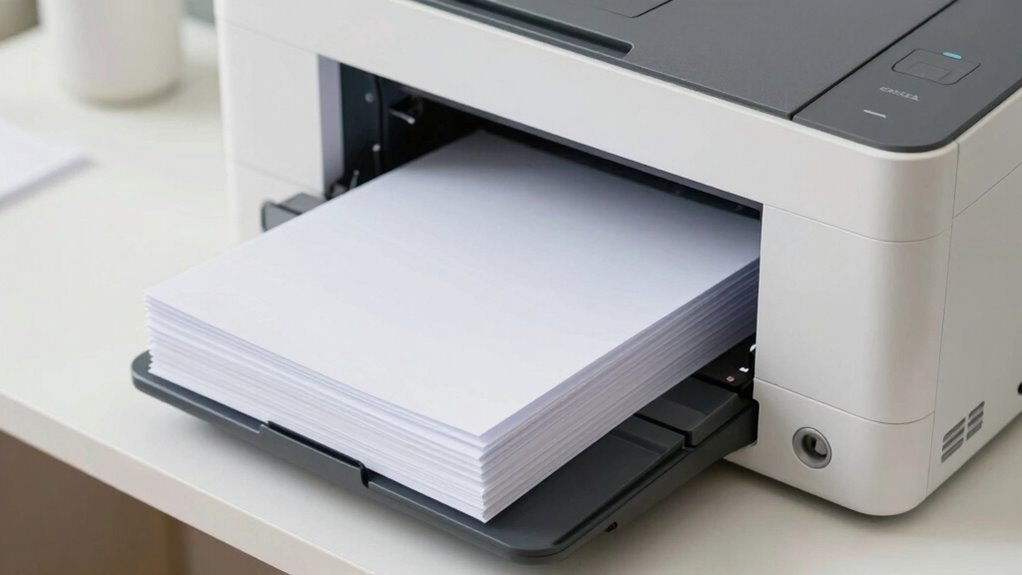
Using the right paper is essential for achieving high-quality print results, and proper storage guarantees that the paper remains in ideal condition. Proper paper storage involves keeping sheets in a cool, dry place away from humidity, direct sunlight, and dust, which can cause warping or sticking. Always choose suitable paper for your printer type—laser, inkjet, or multifunction—to prevent jams and guarantee *peak* performance. Store paper flat and in its original packaging or a sealed container to prevent bending or moisture absorption. Regularly check stored paper for signs of damage before loading it into your printer. By maintaining proper paper storage and selecting suitable paper, you reduce the risk of jams and guarantee consistent, professional print quality.
Check and Refill Ink and Toner Cartridges Correctly
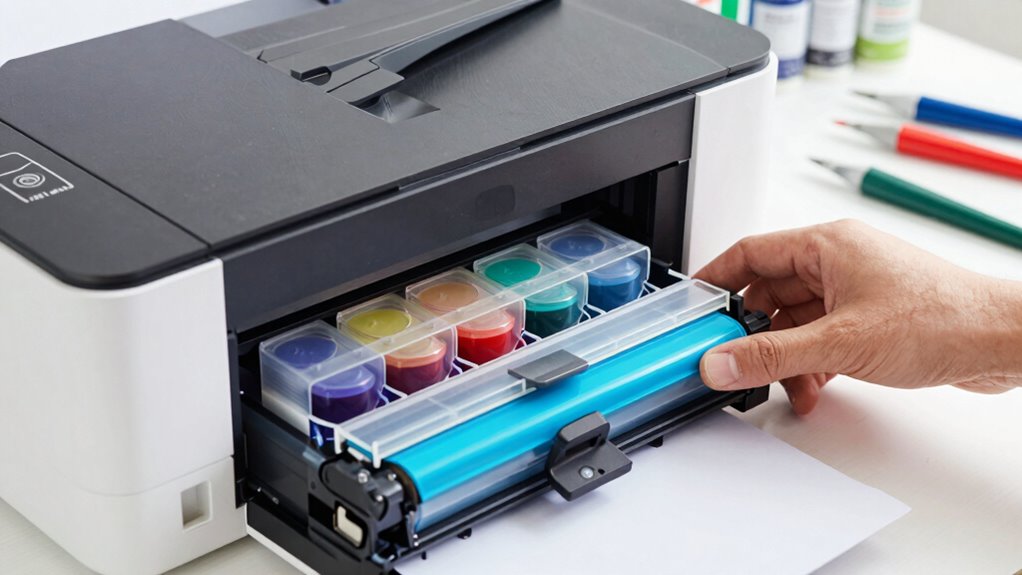
To guarantee ideal print quality and prevent potential issues, it’s important to regularly check and refill your ink and toner cartridges correctly. Low toner levels can cause faded prints, while empty ink cartridges lead to streaks or blank pages. Always handle cartridges carefully to avoid damage and ensure proper installation. Keep an eye on the printer’s display or software notifications for toner level updates. Refill or replace cartridges when needed, following manufacturer instructions. Here are some tips to help:
- Check toner levels regularly using printer software
- Refill ink cartridges in a clean, dust-free area
- Use compatible cartridges to avoid printing problems
- Store spare cartridges upright in a cool, dry place
Adjust Printer Settings to Reduce Paper Feed Errors
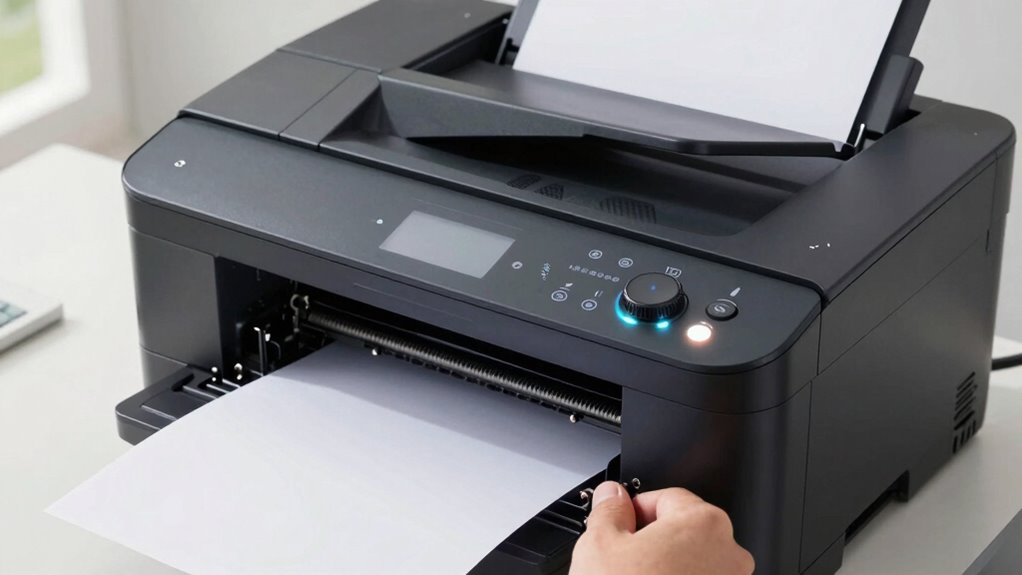
Have you noticed frequent paper jams or misfeeds during printing? Adjusting your printer settings can markedly reduce these issues. Start by ensuring proper printer calibration to align rollers and paper paths. Check your paper type settings and select the correct media to prevent misfeeds caused by incompatible paper. Also, optimize toner distribution; uneven toner can cause paper sticking or feeding errors. Use the following table to guide your adjustments:
| Issue | Solution |
|---|---|
| Paper jams from misfeeds | Calibrate printer and select correct paper type |
| Uneven toner distribution | Adjust toner settings and clean cartridges |
| Frequent misfeeds | Update printer firmware and check rollers |
Making these tweaks helps your printer feed paper smoothly, preventing jams and improving overall performance.
Schedule Routine Maintenance for Your Printer

Regularly scheduling maintenance for your printer guarantees it continues to operate efficiently and prevents costly breakdowns. Consistent upkeep ensures your paper alignment stays accurate and your ink cartridge functions smoothly. Set reminders to check and clean internal parts, replace worn components, and verify paper feeds.
Regular printer maintenance keeps your device running smoothly and prevents costly issues.
You can also:
- Regularly inspect paper trays and straighten misaligned paper
- Clean the print head and check ink cartridge placement
- Update printer firmware for peak performance
- Schedule professional service if you notice persistent issues
This routine helps catch problems early, reduces paper jams, and keeps your printer running smoothly. Maintaining proper paper alignment and ensuring ink cartridges are correctly installed are key to avoiding jams and print errors. Stay proactive to extend your printer’s lifespan.
Troubleshoot Common Printer Jams Step-by-Step
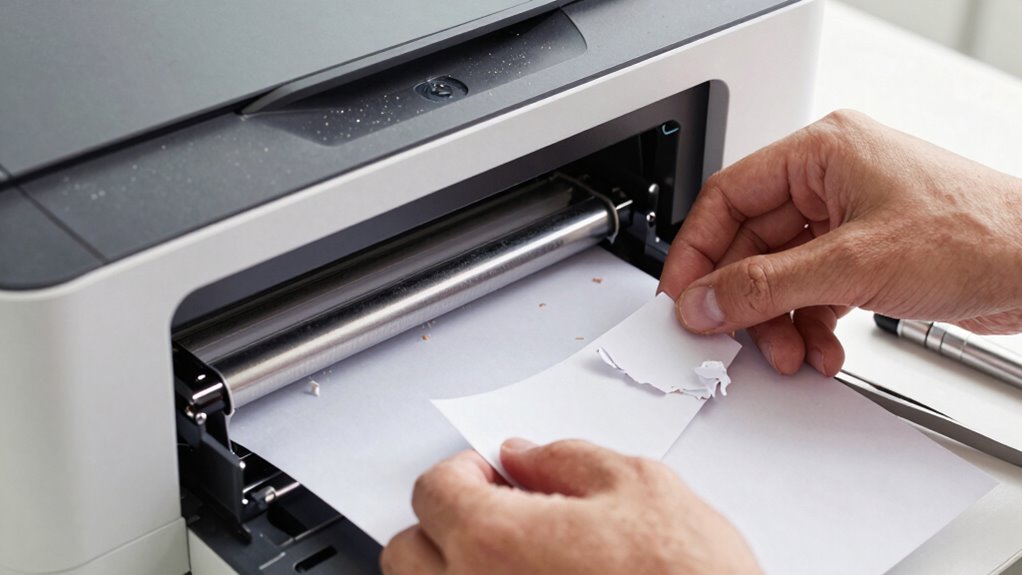
Printer jams are a common issue that can disrupt your workflow and cause frustration. To troubleshoot, start by turning off your printer and carefully removing the jammed paper. Check for torn pieces or debris that might block the paper path. Be mindful of different paper types; some thicker or textured paper can cause jams if not compatible with your printer. Always use paper recommended by the manufacturer to prevent issues. Next, examine the toner cartridge for proper installation and toner compatibility. An improperly seated or incompatible toner can lead to paper misfeeds. Gently clear any obstructions, then reload paper, ensuring it’s stacked neatly and not overfilled. Turn the printer back on and run a test print to confirm the jam is resolved.
Know When to Call a Professional or Consider Replacing Your Printer

Sometimes, despite your best efforts to maintain it, a printer continues to experience persistent issues or shows signs of aging that can’t be remedied with simple troubleshooting. When problems persist, it’s time to decide whether to seek professional repair or consider a printer replacement. If your printer frequently jams despite maintenance, produces poor print quality, or has outdated technology, repairing it may no longer be cost-effective.
Consider these signs:
- Repeated breakdowns despite repairs
- Expensive or unavailable replacement parts
- Outdated features that hinder productivity
- High ongoing repair costs
In these cases, investing in a new printer might save you time and money in the long run. Knowing when to call a professional or opt for a printer replacement ensures smooth printing and avoids frustration.
Frequently Asked Questions
How Often Should I Perform Maintenance on My Printer?
You should perform maintenance on your printer at least once a month to keep it running smoothly. Stick to a regular maintenance schedule and do routine checks for paper jams, ink levels, and dust buildup. This proactive approach prevents issues before they happen and extends your printer’s lifespan. If you print frequently, consider more frequent maintenance to ensure consistent quality and avoid unexpected jams or failures.
What Are Signs My Printer Needs Professional Repair?
If your printer suddenly prints with streaks, smudges, or strange error message codes, it’s a clear sign you need professional repair. These print quality issues and error codes indicate deeper problems like worn-out parts or firmware glitches that simple troubleshooting can’t fix. Ignoring these signs can cause permanent damage, so don’t delay—reach out to a technician to keep your printer running smoothly and avoid costly replacements.
Can Using Third-Party Ink or Toner Cause Jams?
Using third-party ink or toner can cause jams because of inconsistent ink quality and poor cartridge compatibility. Low-quality ink may clog printheads or create uneven flow, increasing the risk of paper jams. Additionally, incompatible cartridges might not fit properly, leading to misfeeds or mechanical issues. To prevent jams, always guarantee your ink or toner matches your printer’s specifications and maintains good quality standards.
How Do Environmental Factors Affect Printer Jams?
Environmental factors can turn your printer into a ticking time bomb if you’re not careful. Humidity issues cause paper to swell and stick, leading to jams, while dust accumulation inside the device acts like a gritty roadblock. Keep your workspace dry and clean, use a soft cloth to remove dust regularly, and store paper properly. These small steps prevent environmental elements from sabotaging your printer’s smooth operation.
Are There Specific Brands More Prone to Paper Jams?
Certain brands are more prone to paper jams due to inconsistent brand reliability and varying paper quality standards. You’ll find that budget or lesser-known brands often struggle with paper handling, leading to frequent jams. To minimize this, stick to reputable brands known for quality and reliability, and always use good-quality paper. This combination helps make certain of smoother operation and fewer interruptions, saving you time and frustration.
Conclusion
Regular maintenance can cut your printer jams by up to 50%, saving you time and frustration. By keeping your printer clean, using proper paper, and checking settings regularly, you’ll prevent most issues before they start. Remember, a well-maintained printer not only works smoother but also lasts longer. So, set aside a few minutes each month for upkeep—your printer will thank you, and you’ll stay productive with fewer interruptions.