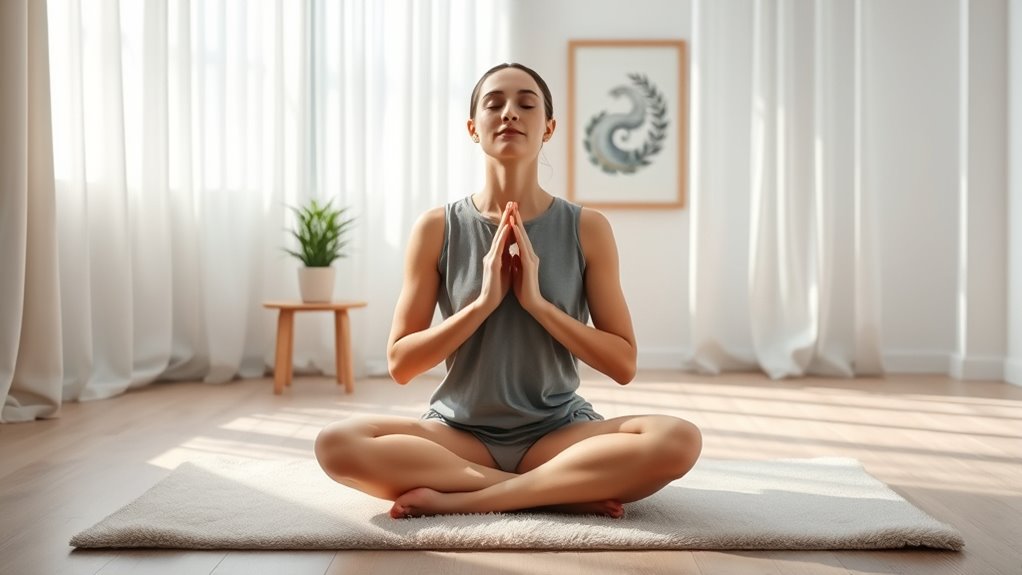

To instantly reduce stress, try mindful breathing exercises like diaphragmatic or box breathing. Find a comfortable position, breathe slowly through your nose, and focus on the sensation of air filling and leaving your lungs. Counting breaths—such as inhaling for four seconds, holding, then exhaling—can quickly calm your nerves. Practicing these techniques regularly boosts your ability to stay centered and manage stress more effectively. Keep exploring, and you’ll discover even more ways to harness the power of your breath.
Key Takeaways
- Practice slow, deep breaths through the nose to activate relaxation and calm the nervous system instantly.
- Use techniques like box breathing or 4-7-8 to quickly reduce anxiety and promote mental clarity.
- Find a comfortable position and focus on sensations of cool inhalation and warm exhalation to anchor your mind.
- Gently acknowledge wandering thoughts and redirect attention to your breath for immediate stress relief.
- Incorporate mindful breathing into daily routines for sustained stress resilience and emotional stability.

Have you ever noticed how a simple breath can instantly calm your mind? It’s incredible how just a few conscious inhalations and exhalations can shift your entire mood and bring clarity amid chaos. This is the power of mindful breathing exercises, a straightforward yet effective way to manage stress. When you incorporate breathing techniques into your daily routine, you’re fundamentally equipping yourself with a practical stress management strategy that’s accessible anytime, anywhere. Whether you’re overwhelmed at work, feeling anxious before a big event, or just seeking a moment of peace, these exercises can help you regain composure quickly.
The beauty of mindful breathing lies in its simplicity. You don’t need special equipment or a dedicated space; all you need is your breath and a bit of focus. To start, find a comfortable position, whether sitting or lying down. Close your eyes if that feels comfortable for you and take a slow, deep breath through your nose. Feel the air fill your lungs, expanding your chest and belly. Then, exhale slowly through your mouth or nose, whichever feels more natural. Concentrate on the sensation of your breath—the coolness of the inhalation, the warmth of the exhalation. As thoughts drift into your mind, acknowledge them gently and bring your attention back to your breath. This process anchors you in the present moment, helping you detach from stressors and calming your nervous system.
Breathing techniques like diaphragmatic breathing, box breathing, or 4-7-8 breaths are excellent tools for stress management. Diaphragmatic breathing emphasizes deep breaths that engage the diaphragm, increasing oxygen flow and promoting relaxation. Box breathing, involving equal counts for inhaling, holding, exhaling, and pausing, creates a rhythmic pattern that calms the mind. The 4-7-8 technique, where you breathe in for four seconds, hold for seven, then exhale for eight, can quickly reduce anxiety and promote sleep. Practicing these methods regularly trains your body to respond more efficiently to stress, making them powerful additions to your stress management strategies. Incorporating mindful breathing into your daily routine also supports emotional stability and overall mental clarity.
Practice diaphragmatic, box, or 4-7-8 breathing techniques regularly to enhance stress resilience and promote calm.
The key is consistency. Even a few minutes of mindful breathing each day can produce noticeable benefits. As you become more familiar with these techniques, you’ll find it easier to access a sense of calm whenever you need it, no matter the situation. Over time, you may notice a reduction in overall stress levels, improved focus, and a greater sense of emotional resilience. Remember, these exercises are not just about relaxation—they’re about empowering you to take control of your mental and emotional well-being. Every conscious breath you take is a step toward a more centered, peaceful you.
Frequently Asked Questions
Can Mindful Breathing Help With Chronic Anxiety?
Yes, mindful breathing can help with chronic anxiety by enhancing your anxiety management skills. It promotes mindfulness benefits like increased calmness and focus, helping you break free from anxious thoughts. When you practice deep, intentional breaths, you activate your relaxation response, reducing stress levels. Consistent mindful breathing exercises can make a meaningful difference in managing ongoing anxiety, giving you a simple yet powerful tool to feel more in control and centered daily.
How Long Should Each Breathing Session Last?
You should aim for each mindful breathing session to last about 5 to 10 minutes. Keep your session duration manageable so you stay consistent. Focus on the breath cycle length, ideally taking slow, deep breaths that last around 4 to 6 seconds each. This allows your body to relax more effectively. Adjust the length as needed, but staying within this timeframe helps you build a calming routine without feeling overwhelmed.
Are There Any Risks or Contraindications?
While mindful breathing generally offers gentle relief, be aware of potential concerns. If you have certain medical contraindications, like respiratory issues or cardiovascular conditions, consult your healthcare provider before starting. Breathing technique risks are minimal but can include dizziness or discomfort if done improperly or too rapidly. Always listen to your body, and stop if you feel any adverse effects. Proper guidance guarantees safe, effective stress relief.
Can Children Practice Mindful Breathing Exercises?
Yes, children can practice mindful breathing exercises. You can teach them child-friendly techniques like simple breath counting or deep breathing. These methods are easy for kids to understand and do, helping them relax and focus. Encourage them to take slow, deep breaths, counting each inhale and exhale. Make it fun and engaging, so they develop healthy stress management skills early on.
How Quickly Can I Expect to See Stress Reduction Results?
You can often notice stress reduction within minutes of practicing mindful breathing, thanks to its immediate physiological effects like lowered heart rate and relaxed muscles. These exercises also boost your mental health by calming your mind and reducing anxiety. While some people feel instant relief, consistent practice enhances long-term benefits, making stress easier to manage over time. So, with regular practice, you’ll likely see quicker, deeper improvements in your stress levels.
Conclusion
Now that you’ve unveiled the secret to instant stress relief, you can conquer every pressure storm that comes your way. Just a few mindful breaths can turn your chaos into calm faster than you can say “peace.” Imagine transforming into a zen master in seconds, no matter how insane life gets. So, breathe deeply, stay present, and watch stress melt away like snow in the sun—your superpower for a calmer, happier life.