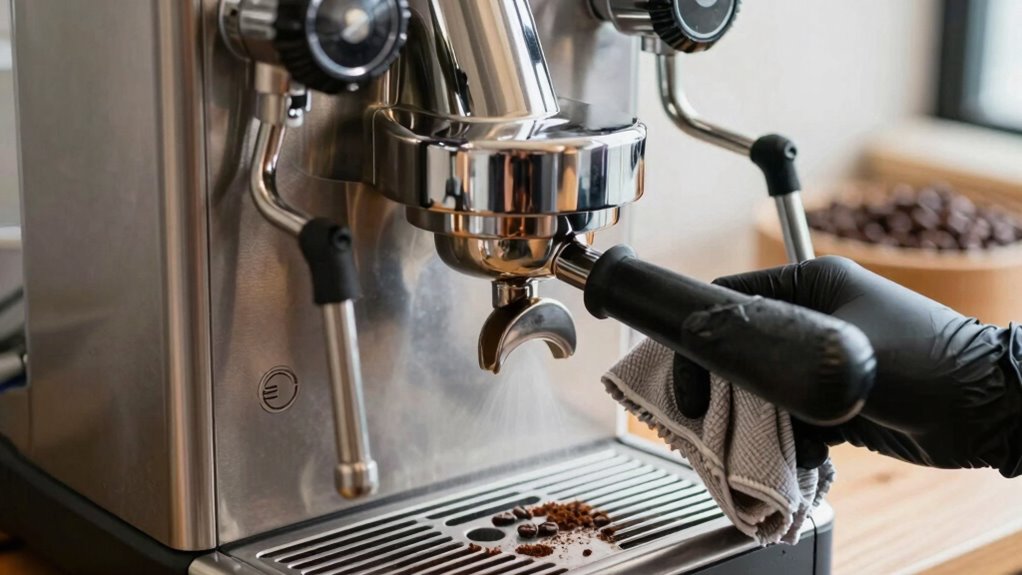
To prevent bitter shots, you need to establish a consistent cleaning routine for your espresso machine. Rinse the portafilter and wipe down parts daily to remove oils and coffee residues. Regularly descale the machine to eliminate mineral buildup that hampers water flow and flavor. Clean the brew group and shower screen weekly for peak performance. If you keep up with these habits, you’ll enjoy fresh, flavorful espresso every time—plus, you’ll discover more about keeping your machine in top shape.
Key Takeaways
- Regularly clean the portafilter, brew group, and shower screen to remove oils, coffee residues, and mineral deposits.
- Descale the machine weekly to prevent mineral buildup that causes bitter flavors and clogging.
- Use filtered or softened water to reduce mineral deposits and maintain optimal water flow.
- Wipe daily with a damp cloth and rinse parts thoroughly to prevent mold, odors, and flavor contamination.
- Schedule routine maintenance checks to ensure seals, gaskets, and internal components stay clean and functional.
Why Regular Cleaning Keeps Your Espresso Tasting Perfect
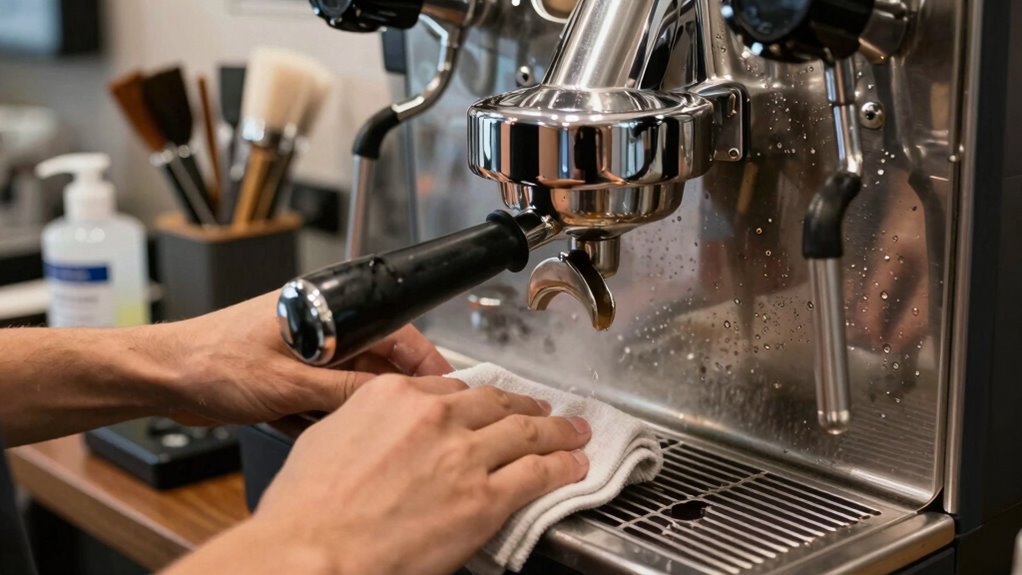
Regular cleaning is vital because it prevents oil, coffee residue, and mineral buildup from affecting the flavor of your espresso. When you keep your machine clean, you preserve the coffee bean freshness in every shot. Old oils and residues can quickly taint the taste, making your espresso bitter or off-flavor. Additionally, water quality plays a key role; mineral deposits from hard water can accumulate and alter the extraction process. Regular cleaning guarantees that mineral buildup doesn’t interfere with water flow or heat transfer, maintaining ideal brewing conditions. You can also prevent equipment damage by adhering to a consistent cleaning routine, which helps avoid costly repairs. Implementing a scheduled maintenance routine ensures that all components function optimally over time. By staying consistent with your cleaning routine, you ensure each shot is bright, aromatic, and true to the beans’ natural flavor. Proper maintenance also prolongs the lifespan of your espresso machine, preventing costly repairs. Incorporating preventive care into your routine further safeguards your investment. This simple habit preserves the quality of your espresso and the longevity of your machine.
Daily Cleaning Routines to Prevent Oil and Mineral Buildup
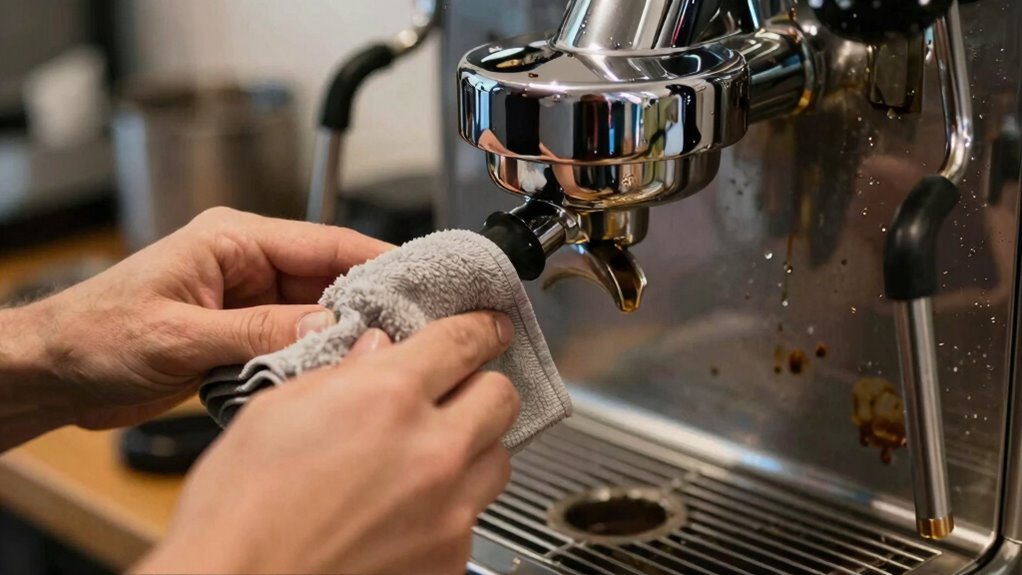
To keep your espresso machine running smoothly, you need to follow a simple daily cleaning routine. Rinse the portafilter regularly, wipe down the drip tray, and clean the shower screen weekly to prevent oil and mineral buildup. These quick steps help make certain your coffee stays flavorful and your machine stays in top shape. Additionally, using appropriate cleaning products can help maintain the machine’s longevity and performance proper maintenance techniques. Regularly inspecting and replacing worn seals and gaskets can also prevent leaks and ensure consistent operation machine longevity. Incorporating preventive maintenance practices into your routine can further extend the life of your espresso machine and optimize its performance.
Rinse Portafilter Regularly
Rinsing your portafilter daily is essential to prevent the buildup of oil residues and mineral deposits that can affect your espresso’s flavor. Regular portafilter rinsing ensures that leftover coffee oils don’t accumulate, which can lead to bitter tastes and clogging over time. You should clean the portafilter after each use, focusing on removing grounds and residues thoroughly. Maintaining a consistent cleaning frequency—at least once a day—helps keep your machine in ideal condition. Use warm water and a brush or cloth to scrub the basket and handle gently. Avoid harsh detergents that might leave residues. This simple step not only preserves the quality of your espresso but also prolongs your machine’s lifespan by reducing oil and mineral buildup. Additionally, employing passive voice detection tools can help identify and correct unclear or awkward phrasing in your maintenance instructions. Regularly inspecting and cleaning your machine’s components, such as the group head and shower screen, further minimizes the risk of buildup impacting performance. Incorporating proper cleaning techniques into your routine can enhance your espresso quality and prevent long-term issues.
Wipe Drip Tray Daily
After you’ve cleaned your portafilter, taking a moment to wipe down the drip tray daily prevents oil and mineral buildup that can impact your machine’s performance. A quick daily wipe keeps excess coffee oils and water residue from accumulating, which can cause unpleasant odors or mold. Use a damp cloth or a soft sponge to clean the drip tray thoroughly, paying attention to corners and edges where grime can hide. Regularly removing and rinsing the drip tray ensures any trapped debris is cleared away. This simple daily routine helps maintain maximum cleanliness, prevents clogging, and extends your espresso machine’s lifespan. Additionally, understanding cabling solutions can help you organize and maintain your setup efficiently, preventing potential issues down the line. Incorporating cleaning schedules into your routine ensures ongoing maintenance and optimal machine performance. Being aware of descaling methods can further enhance your machine’s longevity and taste quality.
Clean Shower Screen Weekly
Have you checked your espresso machine’s shower screen lately? Regular weekly maintenance is key to keeping your shots tasting great. Over time, oil, mineral deposits, and coffee residue can clog the shower screen, affecting water flow and extraction quality. To prevent buildup, remove the shower screen and give it a thorough clean. Use a brush or a soft cloth to scrub away any deposits, ensuring all holes are clear. Soaking the shower screen in a descaling solution or warm vinegar can help dissolve stubborn deposits. Once clean, reattach it securely. Making this a weekly habit prevents blockages and ensures consistent water distribution, which leads to better espresso flavor and prevents bitter shots caused by uneven extraction. Consistent weekly maintenance keeps your machine running smoothly. Regular cleaning also supports natural pool filtration systems by reducing chemical buildup, maintaining water quality, and promoting a healthier brewing environment. Additionally, using proper cleaning techniques helps extend the lifespan of your espresso machine components.
How to Descale Your Espresso Machine Effectively
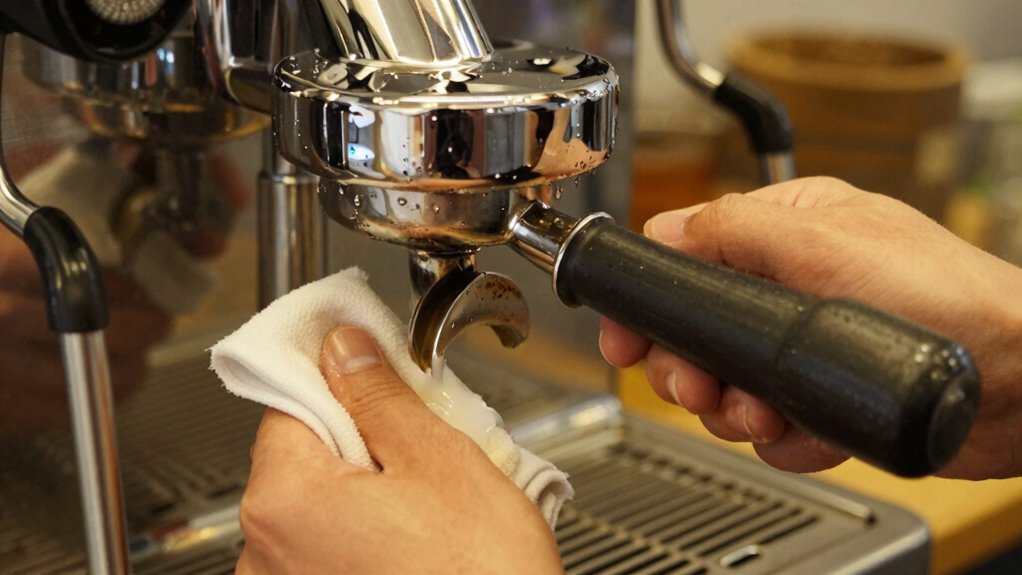
Descaling your espresso machine is essential to maintain its performance and guarantee your coffee tastes great. Over time, mineral buildup from water can clog internal components, affecting water flow and heat transfer. To descale effectively, start by turning off the machine and emptying the water reservoir. Use a descaling solution recommended by your manufacturer or a mixture of equal parts water and white vinegar. Run the solution through the brewing cycle, then let it sit for about 20 minutes. Follow up by flushing with clean water to remove any residue. Regular descaling prevents scale buildup, ensuring your machine operates smoothly and consistently. Additionally, understanding drone insights and proper maintenance routines can help you keep your equipment in top condition. This maintenance step preserves your coffee’s rich flavor and extends your machine’s longevity, saving you from costly repairs down the line. Incorporating regular cleaning routines into your maintenance schedule can further enhance the performance and lifespan of your espresso machine. Scheduling preventative maintenance regularly ensures issues are caught early before they affect your coffee quality. Moreover, using proper descaling techniques helps prevent damage to internal components and maintains optimal brewing conditions.
Cleaning the Brew Group and Portafilter: Step-by-Step Tips
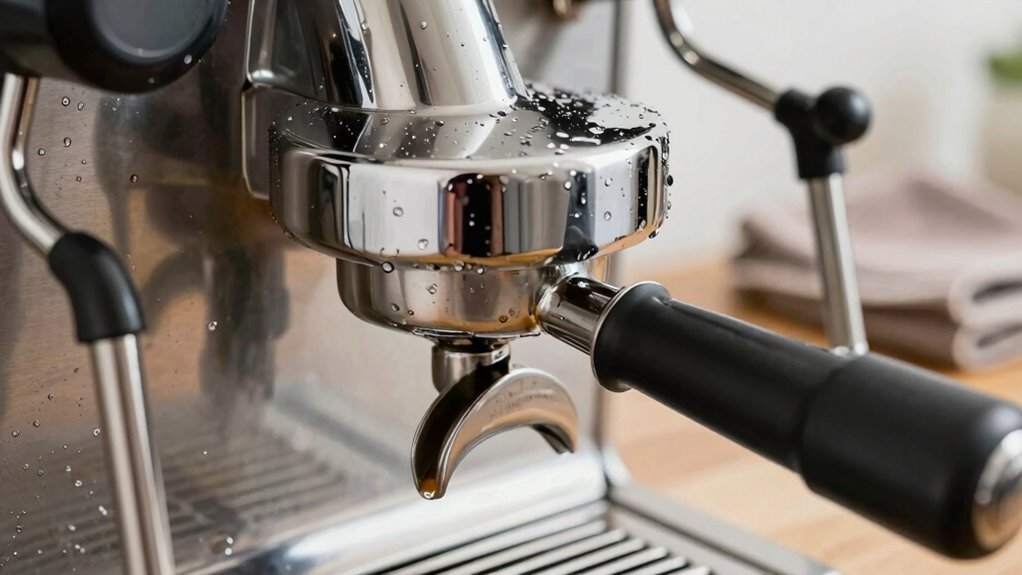
Regularly cleaning the brew group and portafilter is essential for guaranteeing your espresso machine produces the best-tasting coffee. Proper maintenance prevents bitter flavors caused by old coffee residues. Follow these step-by-step tips:
Regular cleaning ensures your espresso tastes fresh and prevents bitterness.
- Remove the portafilter and disassemble the brew group components, rinsing with warm water.
- Use a brush to scrub the brew group and clean the puck preparation area, focusing on removing coffee oils and grounds.
- When reassembling, ensure your tamping techniques are consistent, applying even pressure for ideal puck preparation before inserting the portafilter.
- Additionally, regularly perform routine maintenance checks to identify and address potential issues early, keeping your machine functioning smoothly.
This routine keeps your machine in top shape, improves extraction, and prevents bitterness. Regular cleaning not only prolongs your espresso machine’s lifespan but also guarantees consistently rich, flavorful shots every time.
Troubleshooting Common Cleaning Challenges and Residues
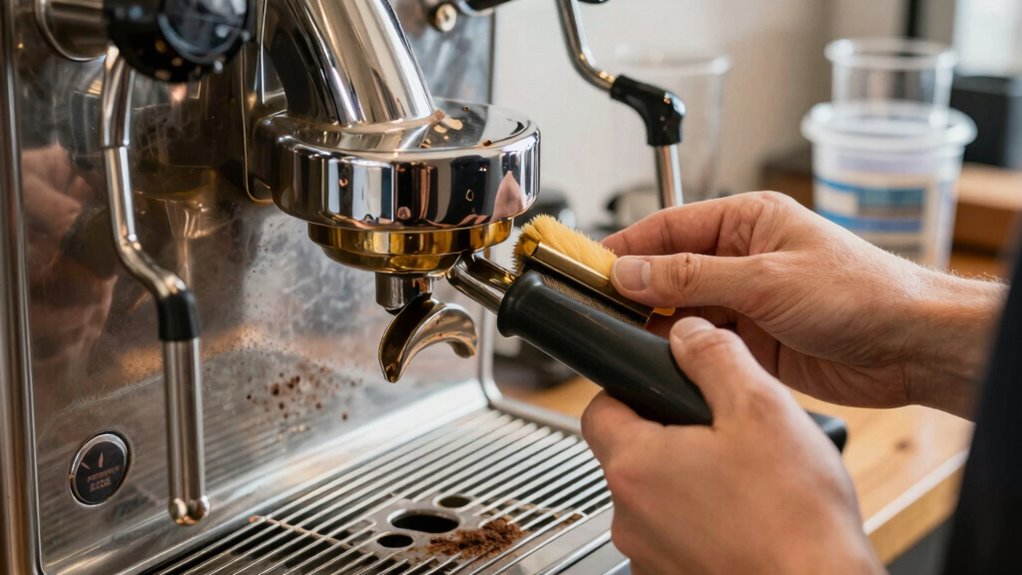
Residue buildup can clog your machine and affect the quality of your espresso, so it’s important to address it promptly. Hard water deposits can also leave stubborn residues and harm your equipment over time. Understanding how to clean these challenges effectively keeps your machine running smoothly and your coffee tasting great. Incorporating traditional healing practices into your maintenance routine can further support the longevity and performance of your espresso machine. Regular descaling with appropriate cleaning solutions helps prevent mineral buildup and extends the lifespan of your equipment.
Residue Buildup Solutions
Have you noticed a decrease in your espresso machine’s performance or a change in taste? Residue buildup can cause bitter shots and clog your machine. To resolve this, consider these solutions:
- Regularly descale your machine to remove mineral deposits and residues.
- Use fresh coffee beans and ensure proper grinder calibration to prevent old grounds from creating buildup.
- Clean all removable parts thoroughly, including filters and baskets, to prevent oils and residues from accumulating.
Keeping your grinder calibrated ensures consistent grind size, reducing residue formation. Fresh coffee beans reduce oil and debris buildup, maintaining cleaner internal components. By staying consistent with these steps, you prevent residue issues that compromise flavor and machine function, ensuring each shot tastes as it should.
Hard Water Effects
Hard water can quickly lead to mineral buildup inside your espresso machine, making cleaning more challenging and affecting performance. To combat this, prioritize limescale prevention by using filtered or softened water. Mineral deposits from hard water can clog water lines, damage heating elements, and reduce the machine’s efficiency. Regular descaling helps remove existing limescale and prevents future buildup. If you notice slower water flow or inconsistent shots, it’s a sign that mineral deposits are accumulating. Using descaling solutions specifically designed for espresso machines ensures thorough cleaning. By maintaining proper water quality and staying vigilant about mineral deposit buildup, you’ll keep your machine running smoothly and extend its lifespan, all while consistently pulling flavorful, bitter-free shots.
Maintaining Your Cleaning Habit for Consistently Delicious Espresso
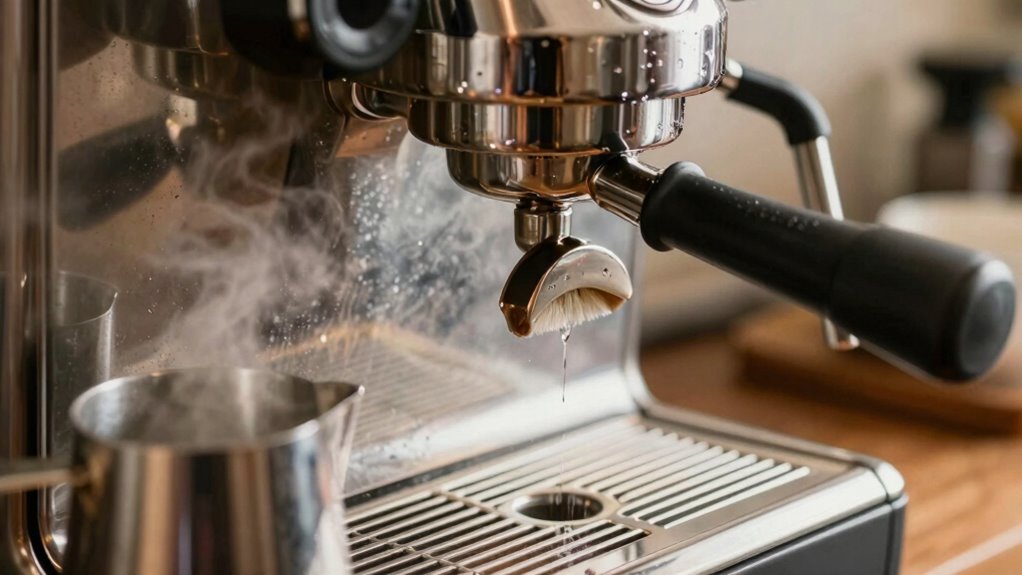
Regularly cleaning your espresso machine is essential to keep your drinks tasting their best. Developing a consistent cleaning habit ensures your coffee flavor stays rich and prevents buildup that can cause bitter shots. To maintain peak performance, focus on these key steps:
Consistent cleaning keeps your espresso flavorful and prevents buildup that causes bitterness.
- Daily rinsing and wiping to remove coffee oils and residue, preserving flavor.
- Weekly descaling to prevent mineral buildup that can harm machine longevity.
- Monthly deep cleaning of parts like the portafilter and group head to avoid bacteria and ensure smooth operation.
Frequently Asked Questions
How Often Should I Replace My Espresso Machine’s Water Filter?
You should replace your espresso machine’s water filter every 2 to 3 months, depending on your usage and water quality. Follow your maintenance schedule closely to guarantee ideal performance and taste. Regular water filter replacement prevents mineral buildup and mold growth, which can cause bitter shots. Keep an eye on the filter’s condition, and don’t wait too long—timely maintenance helps maintain the perfect espresso experience.
Can Homemade Cleaning Solutions Damage My Espresso Machine?
Homemade solutions can be a double-edged sword, like a wolf in sheep’s clothing. If you use DIY cleaning methods, make sure they’re gentle and safe for your machine. Harsh DIY cleaning ingredients can corrode parts or leave residues that damage your espresso machine. Always research and stick to recommended cleaning solutions, and avoid overly acidic or abrasive homemade remedies to keep your machine running smoothly and tasting perfect.
What Are Signs My Machine Needs Professional Servicing?
If your espresso machine leaks or makes strange noises, it’s a sign you need professional servicing. Leaks can indicate worn or damaged seals, while strange noises often point to motor or pump issues. Ignoring these signs can cause further damage. You should schedule a service promptly to prevent costly repairs and guarantee your machine operates smoothly. Regular maintenance can also help catch problems early, keeping your coffee tasting perfect.
Is It Necessary to Use Specific Cleaning Products for Different Machine Brands?
Is it necessary to use specific cleaning products for different machine brands? Think of your espresso machine as a delicate symphony—using compatible cleaning products guarantees harmony. While brand-specific cleaning solutions are ideal, many compatible cleaning products work across various brands without harm. However, always check your machine’s manual to avoid damaging delicate components. Using the right cleaning products keeps your machine performing at its best and prevents bitterness in your shots.
How Do I Prevent Mold Growth Inside My Espresso Machine?
To prevent mold growth inside your espresso machine, you need to regularly clean the water reservoir and descaling your machine on schedule. Make sure to empty and rinse the reservoir weekly, and use a suitable cleaning solution. Descaling should be done every 1-3 months, depending on usage and water hardness. Keeping these habits guarantees mold stays out, and your machine stays clean and safe for brewing.
Conclusion
By sticking to a regular cleaning routine, you’ll keep your espresso machine in tip-top shape and your shots tasting flawless. Think of it as tending a garden—you need to prune and nurture to see beautiful blooms. Don’t let buildup and residues sneak in and spoil the experience. With consistent care, your machine will keep serving rich, bitter-free espresso that hits the spot every time. Keep at it, and your mornings will always start right.