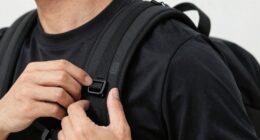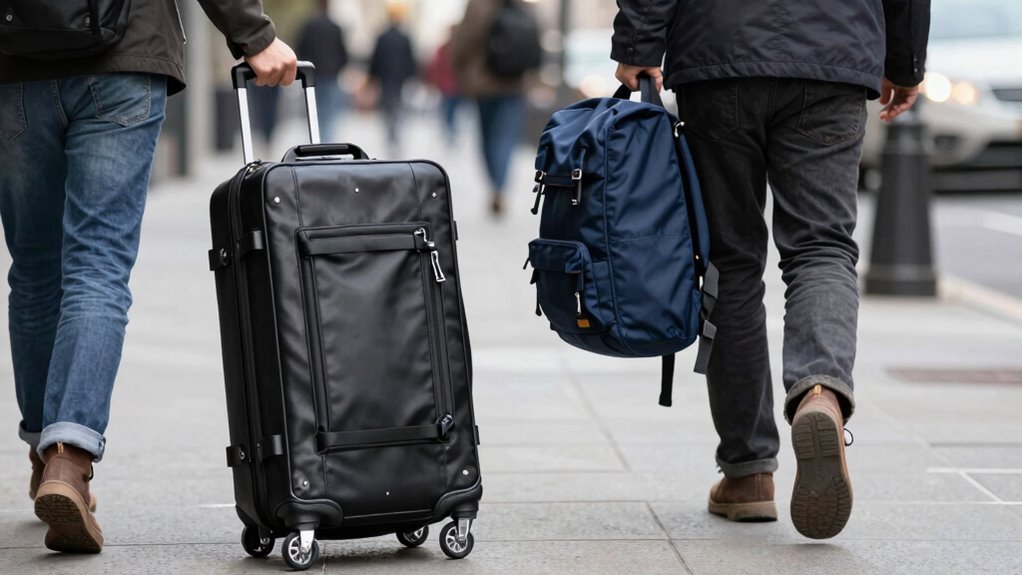

Choosing between a rolling bag and a backpack depends on your commute and personal comfort. Backpacks offer even weight distribution, making them better for crowded or uneven terrains, while rolling bags are great for open spaces and heavier loads. Consider your style, budget, and how much maneuverability you need. To get a clearer picture of which fits your daily routine best, explore how factors like design, storage, and durability come into play.
Key Takeaways
- Backpacks distribute weight evenly, reducing shoulder strain, ideal for crowded or uneven routes, while rolling bags are easier to maneuver on open surfaces.
- Rolling bags excel in transporting heavy loads over wide areas but are less practical in tight spaces or stairs.
- Backpacks offer customizable comfort features like padded straps and ergonomic support, enhancing daily wear comfort.
- Style and professional appearance can be tailored with sleek rolling bags or minimalist backpacks, matching workplace dress codes.
- Budget options and durability vary; consider materials, maintenance, and route terrain when choosing the most suitable commute bag.
Key Differences Between Rolling Bags and Backpacks

When choosing between a rolling bag and a backpack, understanding their key differences can help you pick the right option for your needs. Rolling bags typically feature an ergonomic design with built-in wheels and a handle, making it easier to transport heavier loads without straining your back. They usually have a higher weight capacity, allowing you to carry more items comfortably. Backpacks, on the other hand, are designed to be worn on your shoulders, distributing weight evenly across your back and shoulders. While they often have a lower weight capacity compared to rolling bags, they excel in mobility and convenience in crowded areas. Knowing these differences helps you determine whether you need a bag that’s optimized for heavier loads or one that offers hands-free portability. Additionally, considering ergonomic design and how it impacts comfort can enhance your overall commuting experience by incorporating calming routines or natural remedies during your journey. Incorporating ergonomic principles can also improve long-term comfort and reduce strain during your daily commute. Furthermore, choosing a bag with adjustable features can adapt to different load sizes and personal preferences, ensuring better user comfort over time.
Which Bag Is More Comfortable for Daily Use?

When choosing a bag for daily use, you’ll want to consider how it distributes weight, as this affects comfort over time. Ease of maneuverability also plays a role, especially if you navigate crowded spaces often. Additionally, think about shoulder strain—some bags put less pressure on your shoulders, making them more comfortable for long days. Incorporating ergonomic design principles can further enhance overall comfort and reduce strain during your commute. Considering weight distribution can help prevent fatigue and discomfort throughout the day, and paying attention to adjustable straps can improve fit and support.
Weight Distribution Benefits
Have you ever noticed how some bags feel more comfortable to carry throughout the day? That’s often due to better weight distribution and ergonomic support. A backpack naturally distributes weight evenly across your shoulders and back, reducing strain and preventing discomfort. This dream symbolism of clocks and time highlights the importance of balance and harmony, much like how an ergonomic bag promotes even weight transfer. This balanced weight transfer minimizes pressure points, helping you maintain good posture and avoid aches. In contrast, rolling bags shift the weight to your arm and hand when pulling, which can cause uneven strain if you’re carrying additional weight or walking long distances. Proper weight distribution in a backpack makes it easier to carry heavy loads comfortably, especially during extended periods. Additionally, ergonomic support in bag design can significantly improve overall comfort and reduce fatigue during daily commutes. Choosing a bag with adjustable straps and padded back panels can further enhance comfort and support, making your daily routine more manageable. Incorporating weight management strategies can also help prevent strain and improve overall comfort when carrying your belongings. Ultimately, choosing a bag that promotes ergonomic support and even weight distribution enhances your daily comfort and reduces fatigue.
Ease of Maneuverability
While both rolling bags and backpacks offer ease of movement, backpacks generally provide better maneuverability in crowded or tight spaces. Backpacks allow you to navigate through busy streets or crowded hallways more effortlessly because you’re not limited by wheel stability. They stay close to your body, giving you greater control and ease of maneuverability, especially on uneven terrain or stairs. Rolling bags, although convenient on smooth surfaces, can be cumbersome in tight spots or crowded areas, where wheels might get caught or require extra effort to steer. Overall, backpacks excel in maneuverability ease, making daily commutes smoother when agility and quick movement matter most. If you prioritize ease of navigation in a variety of environments, a backpack is often the more practical choice. Additionally, choosing the right bag can help prevent strain and injury, ensuring your daily commute remains comfortable and safe. Being aware of ergonomic design features can further enhance comfort during long or frequent use. Proper weight distribution and adjustable straps in backpacks also contribute to reducing musculoskeletal strain, making them a smarter choice for everyday use. Moreover, selecting a bag with lightweight construction can further improve ease of handling during your daily routine.
Shoulder Strain Levels
Backpacks often distribute weight more evenly across your shoulders and back, reducing strain during daily use. An ergonomic design helps alleviate pressure points, making long periods of wear more comfortable. Look for backpacks with padded shoulder straps, as they help prevent soreness and reduce discomfort caused by uneven weight distribution. Proper padding absorbs shock and minimizes pinching, which is essential if you carry heavier loads regularly. Additionally, adjustable straps allow you to customize fit, further decreasing shoulder strain. In contrast, rolling bags eliminate the need to carry weight on your shoulders altogether, but if you prefer a backpack, prioritizing ergonomic features and shoulder strap padding can notably improve comfort and reduce fatigue during your daily commute. Considering ergonomic design principles and motor features can also influence how much weight you need to carry, impacting overall comfort. Moreover, selecting a lightweight bag can further lessen the physical burden on your shoulders and back. Incorporating ergonomic considerations into your choice ensures better long-term comfort and reduces the risk of musculoskeletal issues. To optimize comfort, choosing a bag with ventilated padding can also help prevent overheating and sweat buildup during extended wear.
How Much Storage Do You Need and How to Organize It

Determining how much storage space you need depends on what you plan to carry daily and how organized you want your belongings to be. Think about essential items like your laptop, which benefits from dedicated compartments to keep it protected. If you carry a water bottle regularly, look for bags with convenient water bottle pockets to prevent leaks and keep hydration accessible. Consider your daily routine: do you need extra space for books, chargers, or snacks? Overloading your bag can cause strain, so aim for a size that fits your essentials comfortably. Organizing your belongings with compartments or pouches helps you find things quickly and keeps everything tidy. Proper storage planning ensures your commute is smooth and stress-free. Additionally, selecting versatile compartments can adapt to changing needs and help you stay organized on busy days. Incorporating protective styling options like crochet styles for locs can also keep your hair neat and reduce daily maintenance.
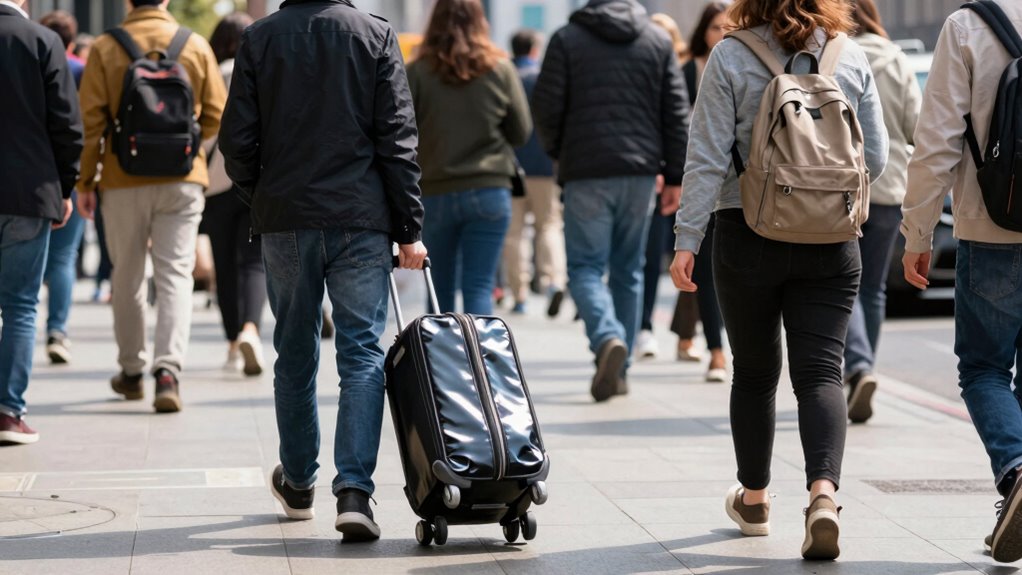
Choosing the right bag can make maneuvering crowded streets much easier. When sidewalk congestion is high, your bag’s size and design influence how smoothly you move. A rolling bag can glide through pedestrian flow, reducing the need to carry or adjust constantly. Conversely, a backpack keeps your hands free, allowing better agility in tight spaces. Consider these points:
- Rolling bags work best in wide sidewalks and open areas.
- Backpacks excel in dense crowds where quick movements matter.
- Think about your route: busy streets or narrow alleys?
- Ease of stopping and starting can influence your choice.
Style and Professionalism: Matching Your Bag to Your Look
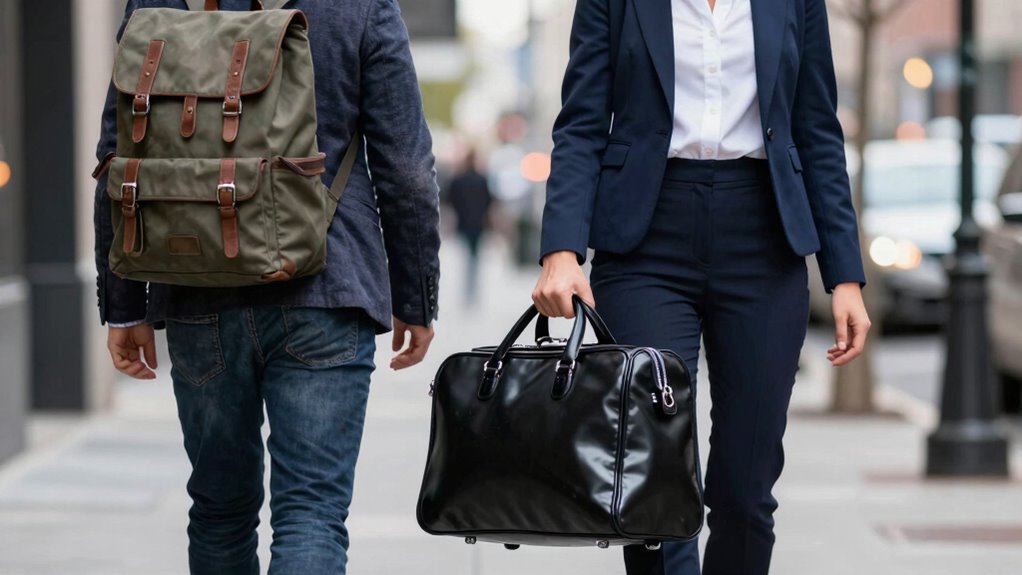
Ever wondered how your bag style can boost your professional image? Choosing the right bag enhances your fashion coordination and reinforces a polished, professional appearance. A sleek rolling bag often pairs well with business attire, signaling organization and efficiency. It complements a formal look without seeming too casual. Conversely, a backpack can project a more relaxed yet still professional vibe, especially if it’s minimalist and well-maintained. The key is matching your bag’s style to your overall look, ensuring it aligns with your workplace environment. A thoughtfully selected bag shows you pay attention to details, boosting your credibility. Ultimately, your choice should reflect your personal style while reinforcing a professional presence, helping you make a confident impression every day.
How Much Do These Bags Cost? Budget-Friendly Options
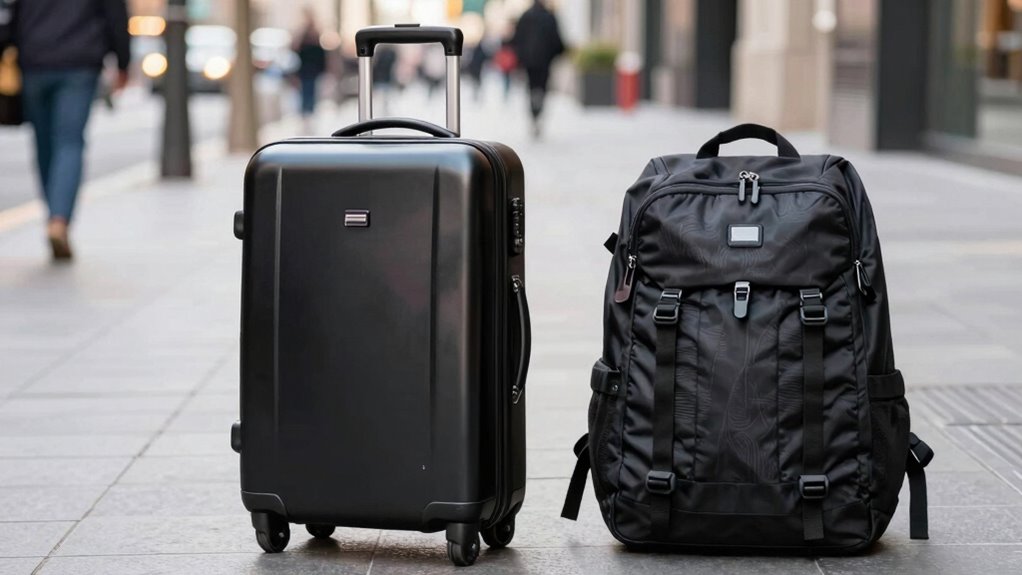
Finding a bag that matches your style and professionalism doesn’t have to break the bank. There are plenty of budget-friendly options that keep your commute affordable without sacrificing quality. For affordable commuter bags, you can explore:
- Basic rolling backpacks under $50, perfect for light loads and easy maneuvering.
- Entry-level backpacks around $30-$60, offering durability and style for daily use.
- Packable tote bags for less than $20, great for short trips or quick errands.
- Secondhand or outlet store finds, often priced well below retail, giving you quality at a lower cost.
With these options, you can find functional, stylish, and affordable commuter bags that fit your budget and lifestyle, making your daily commute smoother and more economical.
Will Your Bag Last? Durability and Maintenance Tips
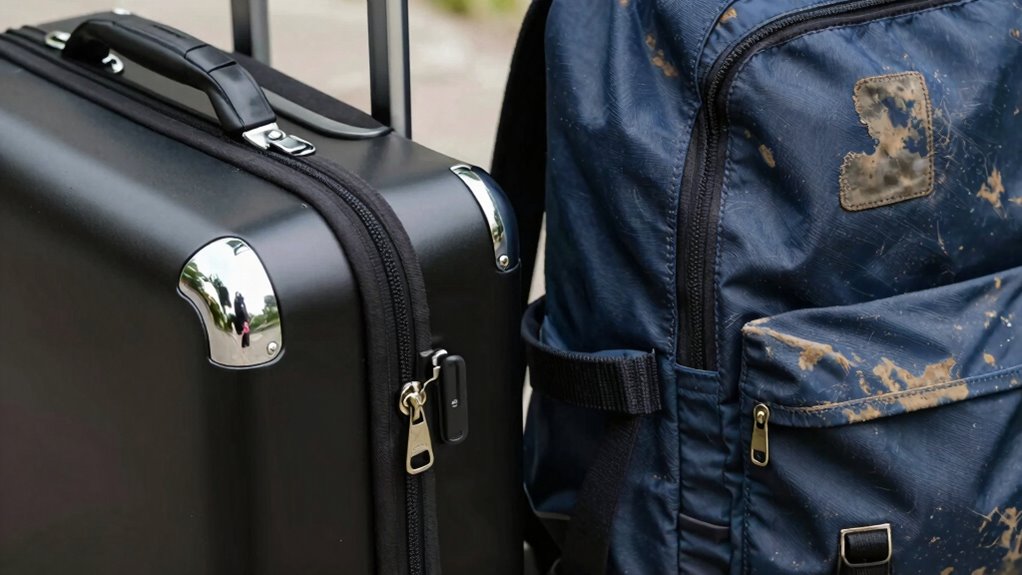
To guarantee your bag lasts through daily wear and tear, paying attention to its durability and maintenance is essential. Material longevity depends on selecting high-quality fabrics and sturdy hardware, which resist tearing and fraying. Regular maintenance practices extend your bag’s lifespan; for example, clean it with gentle soap and avoid overstuffing to prevent stress on seams. Check zippers and straps periodically, repairing any minor damage early. Protect your bag from harsh weather by using waterproof sprays or storage in dry places. Avoid exposure to excessive sunlight or chemicals that can weaken materials. Proper care not only preserves your bag’s appearance but also ensures it remains functional for years. By following these tips, you maximize durability and get the most out of your investment.
Find Your Perfect Commuter Bag: A Simple Decision Guide
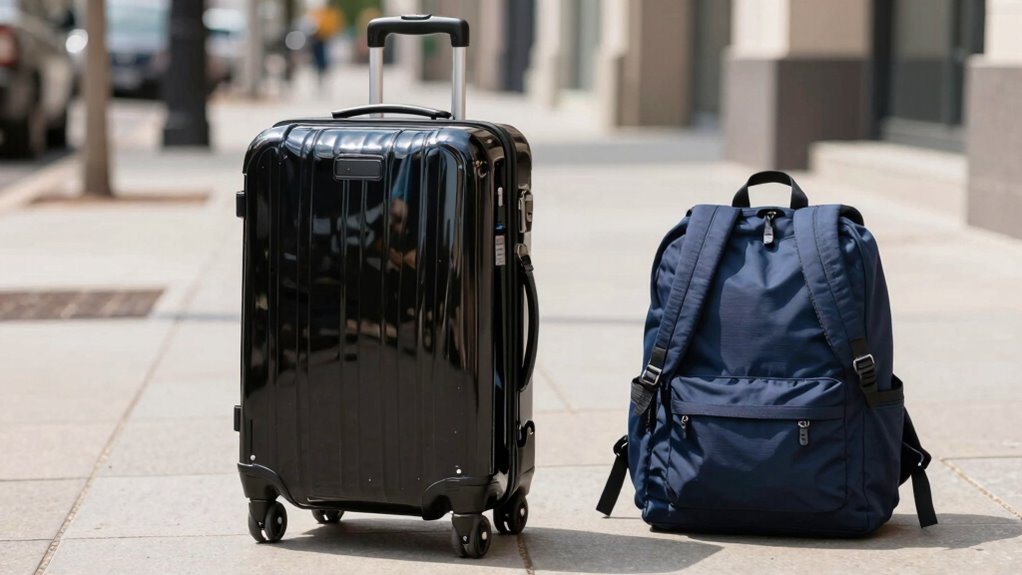
Choosing the right commuter bag depends on your daily needs and personal preferences. To find the best fit, consider these factors:
- Luggage security: Pick a bag with secure zippers and hidden compartments to protect your valuables.
- Color coordination: Match your bag with your work wardrobe or accessories for a polished look.
- Functionality: Decide if you prefer a rolling bag for easier transport or a backpack for hands-free convenience.
- Size and capacity: Make sure it fits your essentials without being bulky, balancing practicality and style.
Frequently Asked Questions
Are Rolling Bags Suitable for All Types of Terrain?
Rolling bags aren’t suitable for all terrains, especially if your urban mobility involves uneven surfaces or cobblestone streets. They work well in airports and smooth city sidewalks, making airport travel easier. However, if you frequently navigate rough or hilly terrain, a backpack offers better mobility and comfort. Consider your typical commute and terrain to choose the best option, ensuring convenience whether you’re in urban environments or heading through more challenging landscapes.
Can Backpacks Be Secured Against Theft in Busy Areas?
Think of your backpack as a shield in a bustling crowd. Yes, you can secure backpacks against theft in busy areas by using lockable zippers, hidden compartments, and anti-theft straps. These features boost your security concerns and help prevent theft. Stay vigilant and choose a backpack with theft prevention options, so you can confidently navigate crowded streets, knowing your belongings are better protected—turning a vulnerable spot into a stronghold.
How Do Weather Conditions Affect Bag Choice?
Weather conditions heavily influence your bag choice, especially regarding weather adaptability and rain resistance. If you face frequent rain or unpredictable weather, a backpack with water-resistant materials keeps your belongings dry and offers hands-free convenience. Conversely, a rolling bag with rain-resistant features is ideal for longer commutes or heavy loads. Consider your typical weather and commute style to pick a bag that adapts well and protects your items effectively.
Are There Ergonomic Features to Prevent Back Strain?
Yes, ergonomic features like shoulder support and lumbar padding help prevent back strain. Look for backpacks with padded shoulder straps that distribute weight evenly and lumbar padding that cushions your lower back. These features reduce pressure and improve comfort during your commute. By choosing a bag with proper ergonomic design, you can avoid back pain and carry your belongings more comfortably on busy days.
Which Bag Type Offers Better Weight Distribution?
Your backpack offers better weight distribution, preventing severe weight imbalance and shoulder pressure. Unlike rolling bags, which can cause uneven weight spread and strain on your arm, backpacks evenly distribute weight across your shoulders and hips. This helps you stay balanced and reduces discomfort during long commutes. So, if you want to avoid shoulder strain and keep your posture perfect, a backpack’s ergonomic design is your best bet.
Conclusion
Choosing the right bag can make your daily commute smoother and more efficient. Did you know that 65% of commuters say the right bag improves their overall travel experience? Whether you prefer a rolling bag for ease or a backpack for mobility, consider your comfort, storage needs, and style. With this guide, you’ll find the perfect fit to start your day confidently and hassle-free. Your ideal commute awaits—just pick the one that works best for you.