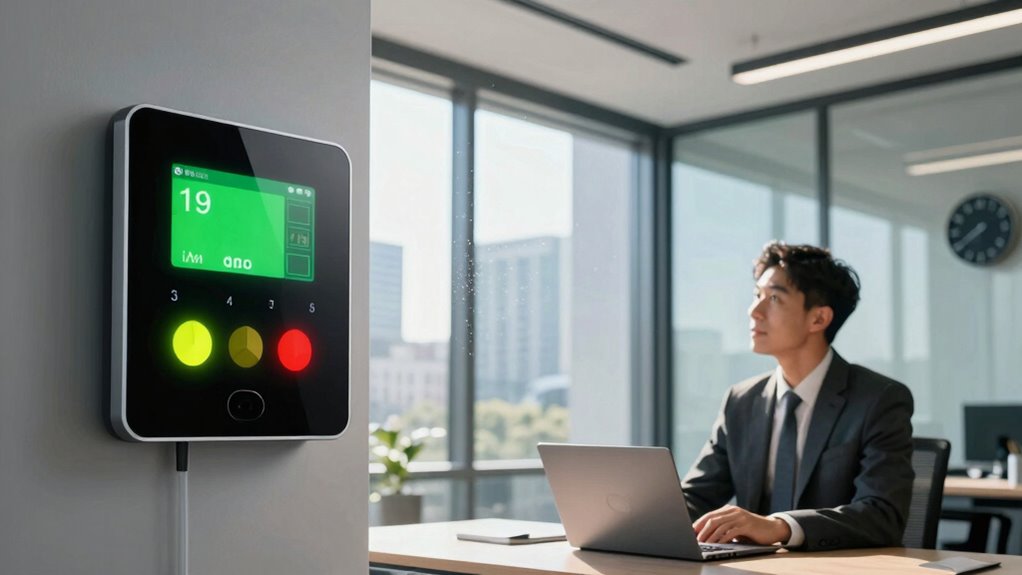

Office air monitors give you instant data on pollutants like dust, VOCs, and chemicals, so you can act fast. When levels spike, you can quickly open windows, adjust ventilation, or change cleaning routines to keep the space healthy. This real-time feedback helps you prevent health issues and boosts comfort for everyone. Staying proactive with air quality means fewer complaints and better productivity—you’ll discover even more ways to improve your workspace as you continue.

Get the little things that make your day delivered free — and shop member deals
- Fast, free delivery on millions of items
- Access to Prime Big Deal Days deals on October 6–7
- Prime Video, Amazon Music and more included
Key Takeaways
- Enable immediate detection of pollutant spikes for quick ventilation or air filtration adjustments.
- Provide instant alerts to prevent exposure to harmful indoor contaminants.
- Offer real-time data to inform cleaning schedules and maintenance routines.
- Support proactive decisions that improve overall workspace air quality and employee health.
- Facilitate faster compliance with safety standards through continuous monitoring insights.
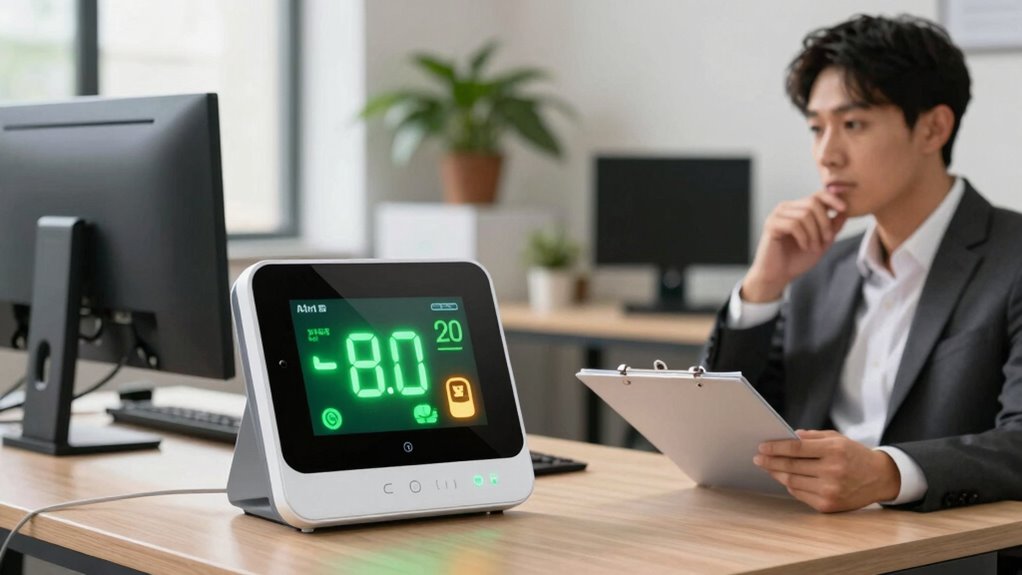
In today’s fast-paced work environments, having real-time air quality data can dramatically influence daily decisions. When you’re aware of indoor pollutants lurking in your office, you gain the power to act swiftly, ensuring a healthier workspace for everyone. Air quality sensors are essential tools that continuously monitor the environment, providing instant feedback about airborne contaminants like dust, VOCs (volatile organic compounds), and other indoor pollutants. With this data at your fingertips, you can make informed choices that directly impact your team’s comfort and safety.
Indoor pollutants often go unnoticed until they cause noticeable discomfort or health issues. Common culprits include cleaning chemicals, off-gassing from office furniture, and even outdoor pollutants that seep indoors. These pollutants can trigger allergies, headaches, or fatigue, lowering productivity and morale. By deploying air quality sensors, you get real-time insights into these invisible hazards, enabling you to identify problems before they escalate. For example, if sensors detect a spike in VOC levels, you can improve ventilation or temporarily halt the use of certain cleaning agents. This proactive approach minimizes exposure to harmful substances and maintains a healthier environment.
Indoor pollutants like cleaning chemicals and furniture off-gassing can cause health issues; sensors help detect and address these hazards early.
The immediacy of data from air quality sensors means you don’t have to rely on guesswork or delayed lab results. Instead, you see instant alerts when pollutant levels rise beyond safe thresholds. This allows you to take quick action, whether that’s opening windows, adjusting HVAC settings, or informing staff about potential air quality issues. As a result, you can prevent health complaints and reduce absenteeism caused by poor indoor air quality. Furthermore, monitoring trends over time helps you identify recurring issues, guiding long-term improvements in your office’s ventilation and cleaning protocols. Recognizing these indoor pollutants is crucial for creating effective strategies to improve overall air quality.
Integrating air quality sensors into your daily routine transforms how you manage your workspace. It shifts your focus from reactive to proactive, giving you the tools to maintain optimal air quality at all times. When you understand the presence and levels of indoor pollutants, you can prioritize interventions that promote well-being. Proper air quality management can significantly reduce health risks associated with poor indoor environments and improve overall comfort for your team. This not only enhances employee satisfaction but also aligns with health and safety standards, demonstrating your commitment to a safe workplace. In essence, real-time air quality data empowers you to make smarter, faster decisions that protect health, boost productivity, and create a more comfortable environment for everyone. Indoor air quality plays a crucial role in overall well-being and workplace safety.
As an affiliate, we earn on qualifying purchases.
Frequently Asked Questions
How Accurate Are Office Air Monitors Compared to Professional Assessments?
Office air monitors are fairly accurate for daily decisions, but their precision depends on sensor placement and data interpretation. Proper placement guarantees they capture representative air quality, while understanding how to interpret the data helps you make informed choices. While they might not match professional assessments in complexity, they provide quick, actionable insights for everyday decisions, keeping you aware of air quality changes and helping you respond promptly.
Can Air Monitors Detect Specific Pollutants or Only General Air Quality?
Did you know indoor pollutants can be up to five times higher than outdoor air? Office air monitors can detect specific pollutants like VOCs, particulate matter, and carbon dioxide, not just general air quality. This lets you identify exact issues quickly, so you can take targeted actions to improve indoor air quality. Knowing specific pollutants helps you make smarter decisions about ventilation, cleaning, and air purification, protecting your health daily.
How Often Should Office Air Monitors Be Calibrated for Optimal Performance?
You should calibrate your office air monitor at least once every six months to guarantee peak performance. Regular sensor maintenance is essential, so follow a consistent calibration schedule to keep readings accurate. If you notice discrepancies or unusual readings, recalibrate sooner. Staying on top of this schedule helps you trust your air quality data, enabling quick, informed decisions to maintain a healthy office environment.
Are There Health Risks Associated With Poor Indoor Air Quality?
You’re playing with fire if you ignore indoor pollution, as poor air quality can pose serious health risks. Exposure to indoor pollutants can cause respiratory issues, allergies, and long-term health implications. Regularly monitoring your office air quality with air monitors helps catch problems early, protecting your health. Don’t wait for symptoms to appear—stay proactive and guarantee a safe, healthy environment for everyone.
What Is the Typical Cost Range for a Reliable Office Air Monitor?
A reliable office air monitor typically costs between $100 and $300, depending on its features and sensor technology. Higher-end models often meet strict air quality standards and include advanced sensors for real-time data. You’ll want one that provides accurate readings, so investing in a monitor with quality sensor technology guarantees better decision-making for your indoor environment, helping maintain a healthier workspace.
As an affiliate, we earn on qualifying purchases.
Conclusion
By using office air monitors, you can make quick, informed decisions to improve your workspace instantly. Imagine reducing indoor pollutants by up to 30% in just days—creating a safer, healthier environment. With real-time data at your fingertips, you’ll spot issues before they escalate, saving time and money. Embracing this technology means you’re always one step ahead, ensuring your office remains a productive, comfortable space where everyone can thrive.
real-time indoor air quality monitor
As an affiliate, we earn on qualifying purchases.
As an affiliate, we earn on qualifying purchases.
air pollution detector for workspace
As an affiliate, we earn on qualifying purchases.
As an affiliate, we earn on qualifying purchases.
NFL season / tailgating Picks
team gear
As an affiliate, we earn on qualifying purchases.