
When choosing between laser and inkjet printers for professional use, consider your long-term needs. Laser printers handle a variety of paper types, produce sharp, durable prints, and have lower ongoing costs for high-volume printing. Inkjet printers excel at color accuracy and detailed images but may cost more over time due to frequent ink replacements. To make the best decision for your work, explore the full tradeoffs that can impact your workflow and budget.

Get the little things that make your day delivered free with Prime
- Fast, free delivery on millions of items
- Prime Video, Amazon Music and more included
- Member-only deals all year
Key Takeaways
- Laser printers offer lower long-term costs and higher durability for high-volume professional printing needs.
- Inkjet printers provide superior color accuracy and detail, ideal for artistic and high-fidelity projects.
- Laser printers handle various paper types better, ensuring sharper, more durable prints over time.
- Inkjet printers have lower upfront costs but higher ongoing ink replacement expenses.
- The choice depends on balancing color quality needs against operational costs and print volume.
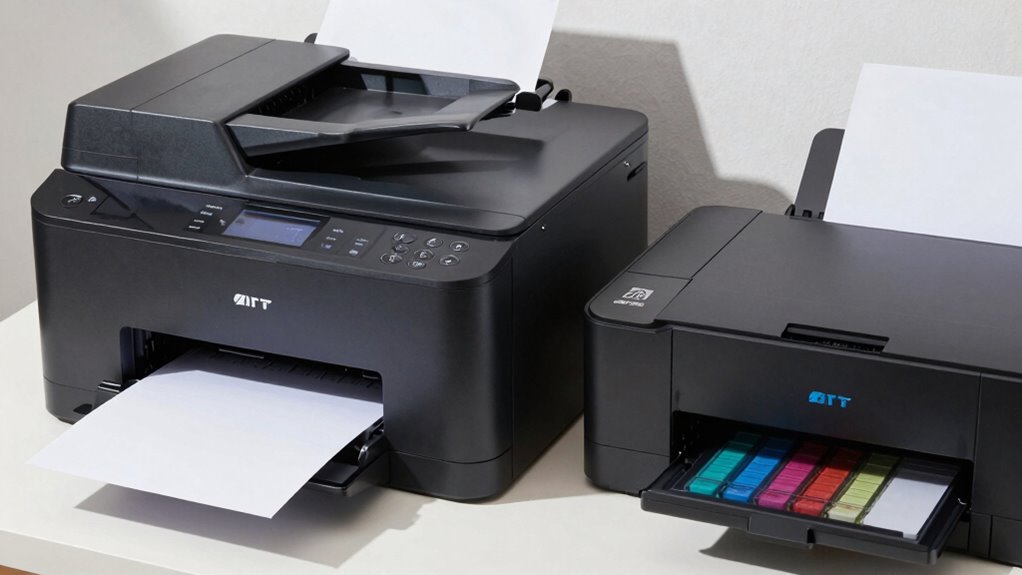
When choosing a printing method for professional use, understanding the differences between laser printers and inkjet printers is essential. Your decision impacts not just the immediate quality of your prints but also the long-term efficiency and costs involved. One key factor to consider is paper quality. Laser printers generally perform better with a wider range of paper types, especially thicker or specialty papers, because they use heat to fuse toner onto the surface. This process results in sharper, more durable images and text, making laser printers ideal for producing professional reports, presentations, or marketing materials that need to withstand handling. Inkjet printers, on the other hand, tend to be more sensitive to paper quality. They work best with smoother, high-quality paper designed specifically for ink absorption. Using subpar or incompatible paper can lead to smudging, bleeding, or uneven color, which diminishes the overall professionalism of your output. Additionally, paper quality directly influences the overall appearance and longevity of your printed materials.
Laser printers excel with various paper types, producing sharp, durable prints ideal for professional documents and marketing materials.
Color accuracy is another critical aspect where these two technologies diverge. If you require precise color matching for branding, client proofs, or detailed graphics, inkjet printers often deliver superior results. They can produce a broader color gamut, capturing subtle shades and gradients more effectively. This makes inkjet printers especially suitable for artists, photographers, or designers who depend on high fidelity in color reproduction. Conversely, laser printers excel at sharp, crisp text and simple graphics but may not match the nuanced color range of inkjets. While modern laser printers have improved color capabilities, they still tend to prioritize speed and clarity over complex color accuracy. This means that for tasks demanding exact color matching, inkjets often represent the better investment.
In terms of long-term tradeoffs, you should also weigh factors like maintenance, operational costs, and print volume. Laser printers typically have higher upfront costs but lower cost per page, making them more economical for high-volume printing. They also tend to require less frequent maintenance and produce less mess, since toner cartridges don’t smudge or bleed like ink cartridges. Inkjet printers might be cheaper initially but can become more expensive over time due to frequent ink cartridge replacements and potential paper wastage caused by smudging or misprints. If you print frequently and need consistent quality with durability, a laser printer’s benefits outweigh the drawbacks. However, if your work hinges on detailed color work and high paper quality, investing in an inkjet might be worthwhile despite the higher ongoing costs.
Ultimately, your choice hinges on the specific demands of your professional needs, balancing paper compatibility, color accuracy, and long-term operational costs to find the best fit.
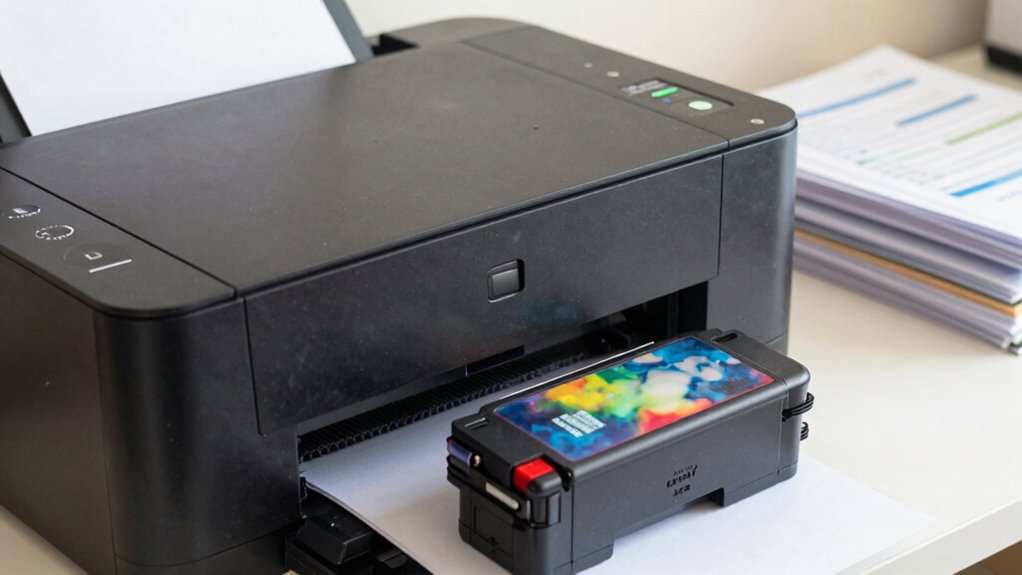
professional laser printer for high volume printing
As an affiliate, we earn on qualifying purchases.
As an affiliate, we earn on qualifying purchases.
Frequently Asked Questions
Which Printer Type Is More Environmentally Friendly Long-Term?
Laser printers tend to be more environmentally friendly long-term because they use eco-friendly materials and have lower energy consumption per print. While inkjet printers may seem cheaper upfront, their frequent ink cartridge replacements generate more waste and often involve less sustainable materials. Laser printers’ durability and efficiency minimize waste over time, making them a smarter eco choice for professionals who prioritize long-term sustainability and want to reduce their environmental impact.
How Do Maintenance Costs Compare Over Several Years?
Over several years, laser printers generally have lower maintenance costs because toner replacements tend to last longer and are often cheaper per page. Ink cartridges for inkjet printers need frequent replacements, which can add up quickly. Plus, ink cartridges can dry out or clog, requiring additional upkeep. So, if you’re looking for cost-effective, long-term printing, a laser printer usually wins in terms of maintenance expenses.
Are Laser Printers Suitable for High-Resolution Photo Printing?
Sure, laser printers excel at text, but when it comes to high-resolution photo printing, they’re about as useful as a screen door on a submarine. Your photo quality and color accuracy suffer, leaving you with dull, washed-out images instead of stunning visuals. If you’re serious about photo printing, inkjet printers will serve you better, delivering vibrant colors and sharp details that laser printers just can’t match.
What Is the Typical Lifespan of Each Printer Type?
You’ll find that laser printers typically last longer, often around 5 to 10 years, thanks to their durable components and faster print speeds. Inkjet printers usually have a shorter lifespan, around 3 to 5 years, because of their delicate ink systems. When considering lifespan, keep in mind that toner replacements are less frequent and cheaper over time, making laser printers more cost-effective in the long run.
Which Printer Type Is Better for Frequent Large-Volume Printing?
When it comes to frequent large-volume printing, laser printers are your best bet. They excel in print speed, getting pages out quickly, and maintain consistent color accuracy for professional results. Don’t let the speed bump slow you down—lasers are built for heavy workloads, making them ideal for high-volume tasks. You’ll find they keep pace and deliver quality, so you’re always ready to meet demanding deadlines.
color inkjet printer for photographers
As an affiliate, we earn on qualifying purchases.
As an affiliate, we earn on qualifying purchases.
Conclusion
Now, the choice between laser and ink printers isn’t just about upfront costs or speed—it’s about what truly matters in your professional world. Will the long-term savings and efficiency of one outweigh the vibrant quality and flexibility of the other? The decision could reshape your workflow in ways you hadn’t anticipated. So, which path will you take? The answer might just surprise you—if you dare to look beyond the surface.
heavy-duty toner cartridges for laser printers
As an affiliate, we earn on qualifying purchases.
As an affiliate, we earn on qualifying purchases.
high-quality specialty paper for laser printing
As an affiliate, we earn on qualifying purchases.
As an affiliate, we earn on qualifying purchases.
Columbus Day / Indigenous Peoples' Day Picks
long weekend sales
As an affiliate, we earn on qualifying purchases.