

Your environment subtly shapes your choices through carefully crafted cues and spatial setups. Small signals, like water fountains or recycling bins, guide you toward healthier and more sustainable habits without forcing you. The way spaces are arranged can encourage movement, social interaction, or focus, acting as passive motivators. If you pay attention, you’ll notice how environments silently influence your daily actions—and understanding this can help you harness their power for positive change.
Key Takeaways
- Environment actively shapes choices through subtle cues and spatial arrangements that guide behavior unconsciously.
- Small signals embedded in spaces, like signage or item placement, passively encourage healthier or sustainable habits.
- Thoughtful spatial design, such as layout and organization, influences movement, social interaction, and focus.
- Designed environments serve as ongoing, passive reminders that foster habits without conscious effort.
- Leveraging motivational cues and smart design can inspire natural, positive behavior change without overt commands.
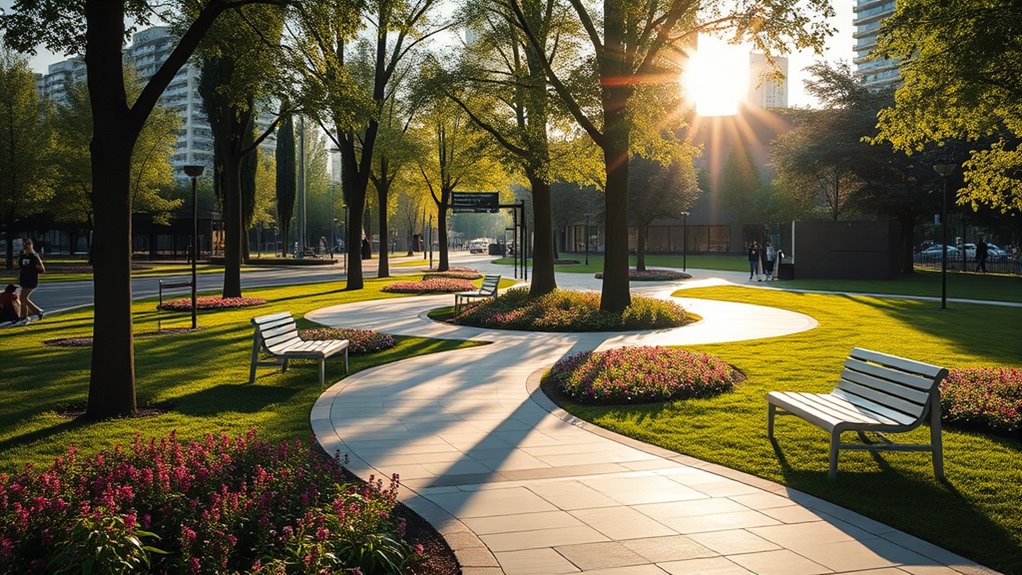
Have you ever wondered how your surroundings influence your actions? The environment around you isn’t just a backdrop; it actively shapes your choices, behaviors, and habits. When you walk into a space, subtle cues and arrangements guide what you do next without you even realizing it. This is the silent power of environment design. One of the key ways it works is through motivational cues—small signals embedded in the environment that encourage certain behaviors. For example, a water fountain in a gym subtly prompts you to hydrate, or a recycling bin placed near the coffee machine nudges you to recycle your cups. These cues don’t demand your attention but influence your instincts, gently steering you toward healthier or more eco-friendly habits.
Spatial arrangements are equally impactful. The way a room is organized can make all the difference in how you behave within it. Imagine walking into an office where the desks are arranged in a circular layout versus a cubicle setup. The circular arrangement fosters openness and collaboration, prompting spontaneous conversations and teamwork. Conversely, cubicles might promote privacy but can also create a sense of isolation. When environments are thoughtfully designed with specific behaviors in mind, they can naturally encourage movement, social interaction, or focus. For instance, placing healthy snacks at eye level in a cafeteria or at the front of a grocery store makes it more likely you’ll choose them over less nutritious options. The spatial setup subtly guides your decision-making process without overtly telling you what to do.
The beauty of environment design lies in its ability to harness these cues and arrangements to promote positive change. When spaces are intentionally structured, they act as constant, passive reminders—part of your daily routine that fosters habits without requiring conscious effort. You might not realize it, but the placement of items, the flow of a space, and the visual signals around you are all working together to influence your behavior. This approach is especially powerful because it respects your autonomy; it doesn’t impose rules but gently encourages beneficial actions through smart design. Additionally, understanding how environment design can incorporate nutrient-rich ingredients and other health-focused elements can further enhance its impact. By understanding and leveraging motivational cues and spatial arrangements, you can craft environments that naturally inspire healthier, more productive, and more conscious choices. Ultimately, your surroundings hold a silent but compelling power to shape who you are and what you do every day.
Frequently Asked Questions
How Quickly Can Environment Design Influence Behavior Change?
Environment design can have an instant impact on your behavior, often prompting quick adaptation. You might notice changes almost immediately, especially when cues or layouts are altered to guide your actions. While some shifts take time, small adjustments in your surroundings can influence your decisions and habits quickly. This exemplifies how powerful environment design is, enabling you to make meaningful changes without lengthy processes or waiting periods.
What Are Common Mistakes in Environment Design for Behavior Change?
Think of environment design like tuning a dance floor; if you miss the rhythm, your moves falter. Common mistakes include ignoring how habit formation relies on consistent cues and neglecting social norms that influence behavior. You might also overcomplicate the space or fail to make desired behaviors easy and accessible. These missteps can trip up your efforts, making behavior change feel like an uphill climb instead of a smooth glide.
Can Environment Design Override Individual Motivation?
You might wonder if environment design can override individual motivation. It often can, especially when nudging ethics and design psychology are applied thoughtfully. By subtly shaping choices through cues and layout, you influence behavior without forcing it. This approach leverages the environment’s silent power, guiding actions even when motivation is crucial. However, ethical considerations are essential to ensure the design respects autonomy and promotes positive change.
How Cost-Effective Is Environment-Based Behavior Modification?
You can see that environment-based behavior modification is highly cost-effective when you consider cost analysis and resource allocation. It often requires fewer ongoing efforts compared to individual motivation strategies, making it a smart investment. By designing your environment thoughtfully, you maximize impact while minimizing expenses, ensuring resources are allocated efficiently. This approach provides long-term benefits, reducing the need for continuous reinforcement, and ultimately delivers better value for your investment.
Are There Ethical Concerns in Designing Environments to Influence Behavior?
Did you know 60% of people feel manipulative environments threaten their autonomy? When designing spaces to influence behavior, manipulation ethics and autonomy concerns come into play. You might wonder if it’s ethical to subtly steer choices or compromise free will. While environment design can promote positive habits, you must balance influence with respect for individual autonomy, ensuring your actions don’t cross ethical lines or diminish personal agency.
Conclusion
By designing your environment thoughtfully, you can effortlessly influence behavior without needing constant reminders. For example, simply positioning healthy foods at eye level increases fruit and vegetable intake by over 50%. This silent power of environment design shapes habits naturally, making positive changes feel effortless. So, next time you want to adopt a new habit, remember that tweaking your surroundings might be your most effective, low-effort strategy for lasting change.