
Choosing between a dynamic and condenser microphone depends on your recording needs. Dynamic mics are durable, handle loud sounds well, and are great for live performances or noisy environments. Condensers capture detailed, nuanced sounds and are ideal for studio vocals and instruments. Understanding their differences helps you pick the right mic for your setup. Keep exploring to discover tips on selecting the best microphone for your specific use and environment.
Key Takeaways
- Dynamic microphones are durable, less sensitive, and ideal for live, high-volume settings; condensers are sensitive and suited for studio recording.
- Dynamic mics use a coil and magnet to convert sound into electrical signals; condensers use a capacitor with a vibrating diaphragm.
- Condenser microphones offer broader frequency response and capture subtle nuances, perfect for vocals and detailed instruments.
- Dynamic microphones handle loud sounds and rough handling, making them suitable for outdoor or stage use.
- Choose a condenser for studio, detailed recordings; opt for a dynamic mic for durability and loud source handling.
What Are Dynamic and Condenser Microphones?
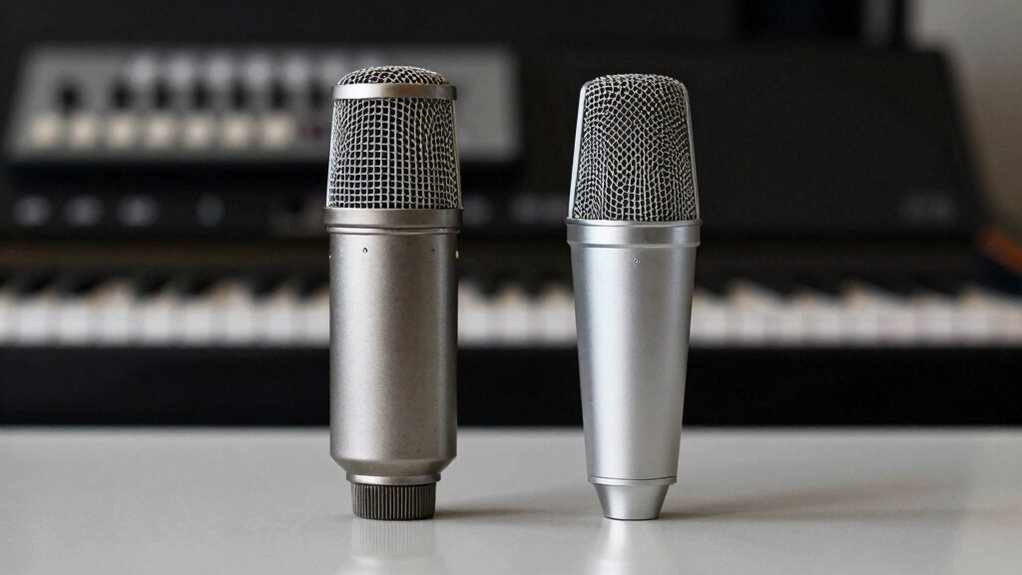
Have you ever wondered how different microphones capture sound so differently? It all comes down to their design, especially their polar patterns and impedance matching. Dynamic microphones typically have a cardioid polar pattern, which helps focus on sound from one direction and reject noise from others. They have high impedance, making them compatible with many audio devices without extra gear. Condenser microphones, on the other hand, often feature multiple polar patterns, like omnidirectional or figure-eight, giving you more versatility. They usually have lower impedance, which helps with signal quality and clarity. Proper impedance matching between the microphone and your audio interface ensures the best sound transfer, reducing noise and distortion. Additionally, frequency response is an important factor that influences how accurately a microphone reproduces different sounds, helping you select the best option for your recording needs. Understanding SSD organization tips can also improve your workflow when working with digital audio files, ensuring quick access to your recordings. Furthermore, being aware of polar pattern diversity allows you to choose microphones best suited for specific recording environments and purposes.
How Do Dynamic and Condenser Microphones Work?
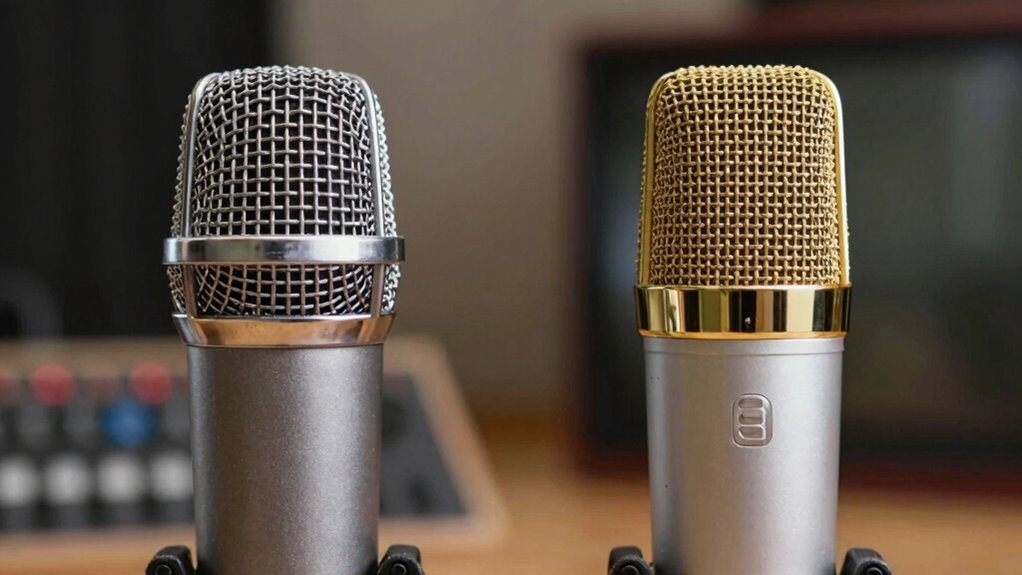
You’ll notice that dynamic and condenser microphones use different transducer mechanisms to convert sound waves into electrical signals. This difference affects how each mic captures sound, including their sensitivity and response to various frequencies. Understanding these core processes helps you choose the right microphone for your needs. Additionally, the choice between them can influence the overall sound quality and suitability for specific recording environments. For instance, condenser microphones often have a wider frequency response, making them ideal for capturing detailed vocals and instruments.
Transducer Mechanism Differences
Dynamic and condenser microphones use different transducer mechanisms to convert sound into electrical signals. In a dynamic mic, the transducer mechanism involves a diaphragm attached to a coil of wire positioned within a magnetic field. When sound waves hit the diaphragm, it moves the coil, generating an electrical current. This design often produces a hypercardioid or cardioid polar pattern, depending on the internal structure. In contrast, condenser microphones use a capacitor as their transducer mechanism. Sound waves cause a diaphragm to vibrate, changing the distance between two plates. This variation in capacitance creates an electrical signal. Condenser mics typically have a broader polar pattern, like omnidirectional or figure-eight, offering different pickup characteristics. Understanding these mechanisms helps you choose the right mic for your specific recording needs.
Sound Wave Conversion Process
Sound waves are vibrations in the air that microphones capture and convert into electrical signals. In dynamic microphones, a diaphragm attached to a coil moves within a magnetic field when sound hits it, generating an electrical current. Condenser microphones use a charged diaphragm and backplate, where sound causes the diaphragm to vibrate, changing the capacitance and producing a signal. Both types have specific polar patterns, which determine how they pick up sound from different directions, influencing their suitability for various environments. Their frequency response varies, with condensers typically capturing a broader range of frequencies more accurately, while dynamics tend to focus on louder sounds. Understanding this conversion process helps you choose a microphone that best fits your sound source and recording needs.
Sensitivity and Response
Have you ever wondered why some microphones pick up quiet sounds easily while others require loud sources? The answer lies in their sensitivity and response. Dynamic microphones tend to have a limited frequency response and lower sensitivity, making them less responsive to soft sounds. Condenser mics, on the other hand, are highly sensitive with a broader frequency response, capturing more detail at varied polar patterns. This means they excel at picking up subtle nuances but can also be more prone to feedback.
- Polar pattern affects how much sound is captured from different directions
- Higher sensitivity means better for quiet sources
- Broader frequency response captures more tonal detail
- Response varies based on the microphone’s design and purpose
- Microphone design influences overall sensitivity and response characteristics
When Should You Use a Dynamic Microphone?
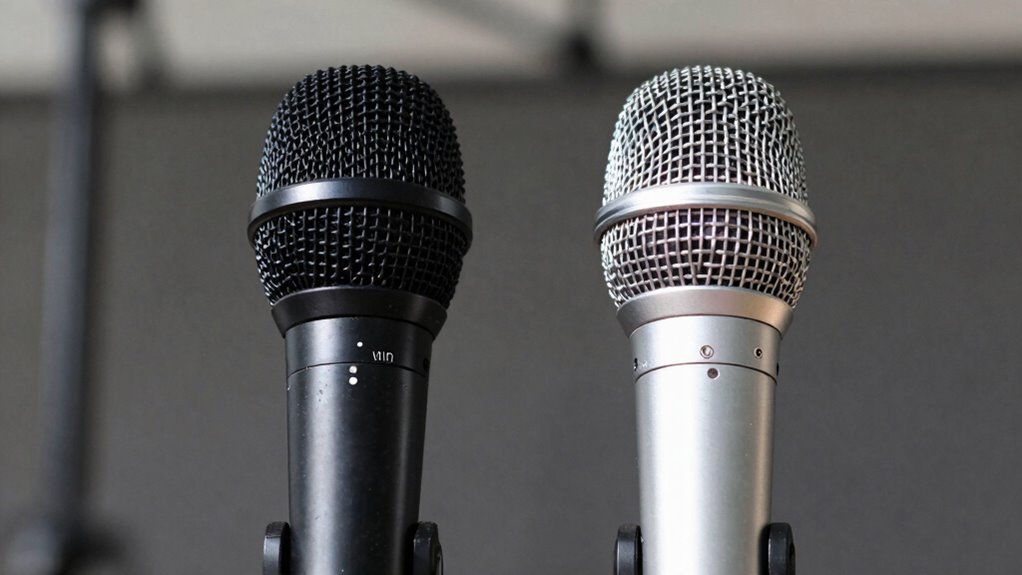
You should consider using a dynamic microphone when you need durability and versatility in demanding environments. They excel in live performances because they can handle high sound pressure levels without distortion, making them ideal for loud instruments and vocals. If you’re recording a podcast in a noisy setting, a dynamic mic can focus on your voice while minimizing background noise. Their rugged construction means they can withstand rough handling and varying conditions, which is essential on stage or in field recordings. Dynamic microphones don’t require external power, simplifying setup and reducing potential technical issues. Use them when you need a reliable, straightforward solution that performs well in high-pressure situations, ensuring your sound stays clear and consistent regardless of the environment. Additionally, their cultural significance in various communities highlights their importance in both traditional and modern audio applications.
When Is a Condenser Microphone the Better Choice?
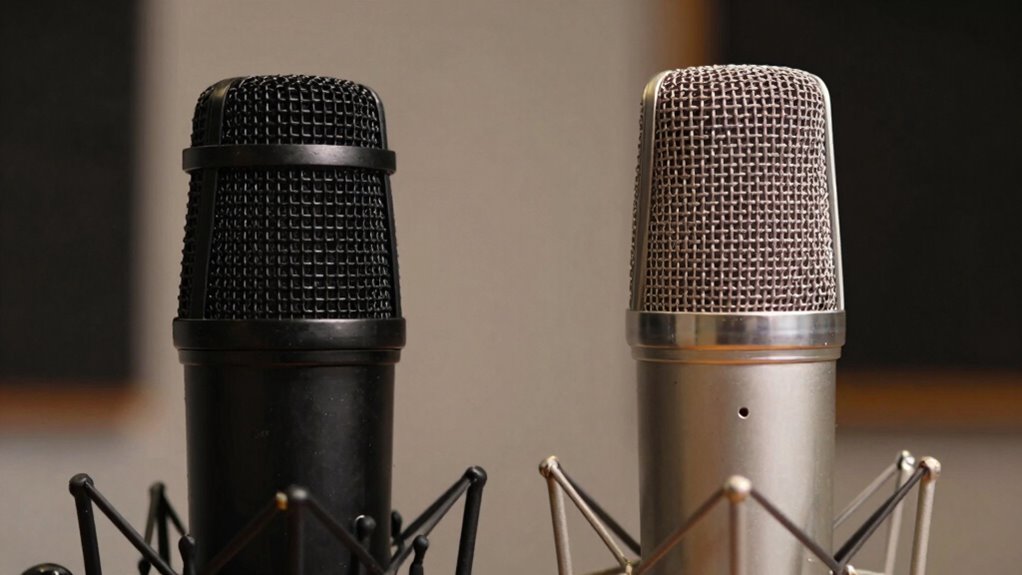
Condenser microphones are the better choice when capturing detailed, nuanced sounds is a priority. They excel in studio recording environments where clarity and precision are essential, especially for vocals and instruments. If you’re recording live vocals or acoustic performances, a condenser mic captures subtle dynamics and tonal variations better than other types.
Condenser microphones excel at capturing detailed, nuanced sounds with clarity and precision.
Consider these points:
- Ideal for capturing the full richness of studio vocals
- Perfect for capturing delicate acoustic instruments
- Provides accurate sound reproduction for detailed recordings
- Suitable when you need high sensitivity and wide frequency response
Use a condenser mic when your goal is to achieve crisp, transparent recordings that highlight every nuance, making them perfect for studio work and detailed vocal performances.
Which Microphone Sounds Better for Your Recordings?
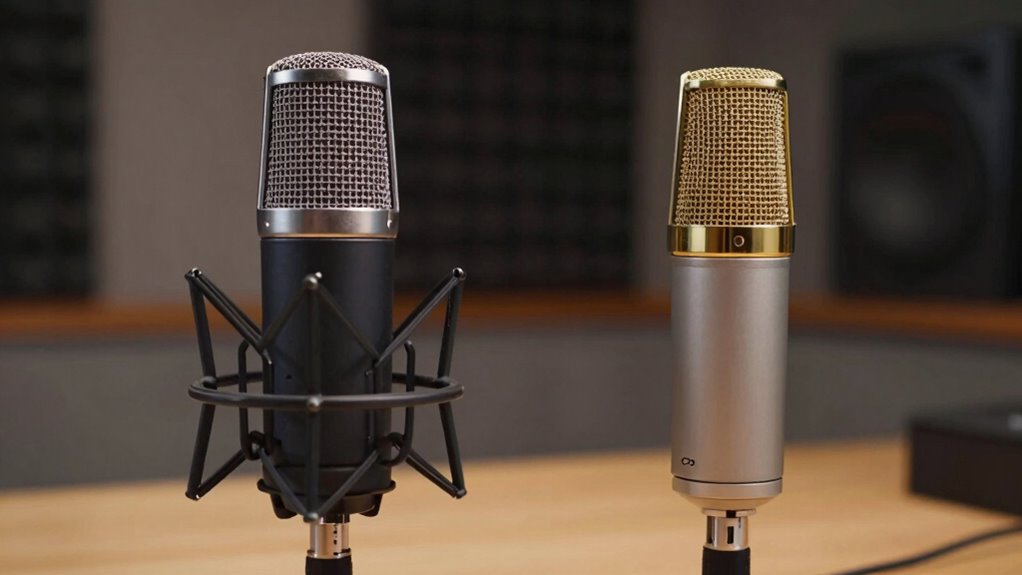
Choosing the right microphone depends on the sound you want to achieve, as different types bring unique qualities to your recordings. A microphone’s frequency response plays a significant role in how accurately it captures your sound; a wider response range offers more detail, while a narrower one emphasizes specific tones. Durability also matters, especially if you’ll be recording in various environments or performing live. Dynamic microphones tend to be more durable and handle high sound pressure levels better, making them ideal for loud sources. Condenser mics usually deliver a richer, more detailed sound, especially for vocals and studio recordings, but may be less rugged. Ultimately, the best microphone for your recordings balances the desired sound quality with durability suited to your recording environment.
How Much Do Microphones Cost and Which Offers More Value?
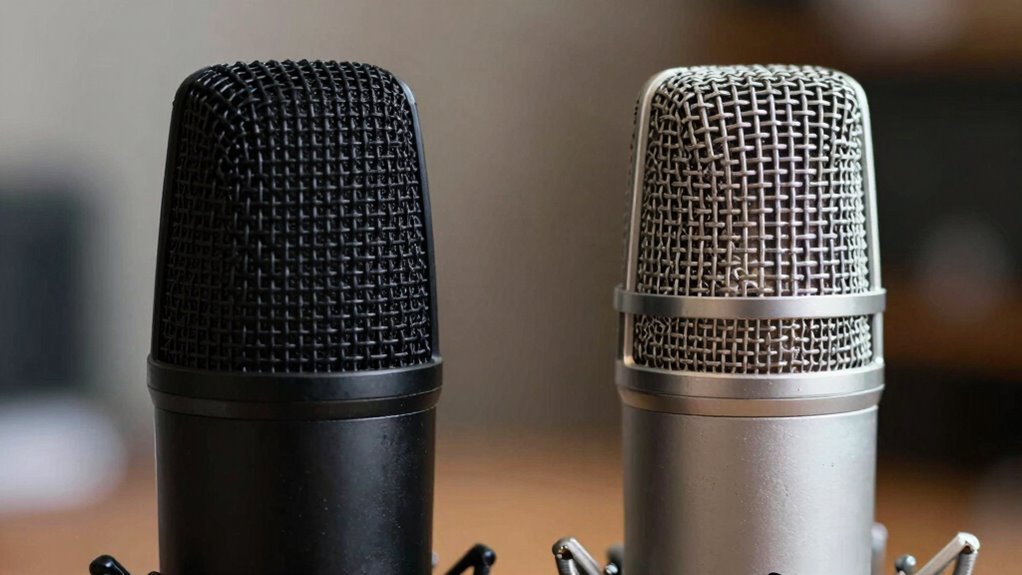
Microphone prices vary widely, reflecting differences in quality, features, and durability. When considering cost considerations, it’s essential to weigh what you get for your money. Cheaper microphones may save you upfront but often lack durability factors, potentially needing replacements sooner. Mid-range models typically balance price and quality, offering better longevity and sound clarity. High-end microphones deliver superior durability and sound fidelity, but at a higher cost. Keep in mind:
Microphone costs vary; higher quality models offer better durability and sound, but balance your needs and budget wisely.
- Durability factors impact long-term value more than initial price
- Investing in a reputable brand can save money over time
- Consider your usage environment to choose a durable option
- Cheaper mics may require more maintenance or replacement
Ultimately, the most valuable microphone is one that meets your needs without sacrificing quality or longevity.
Tips for Choosing the Right Microphone for Your Setup
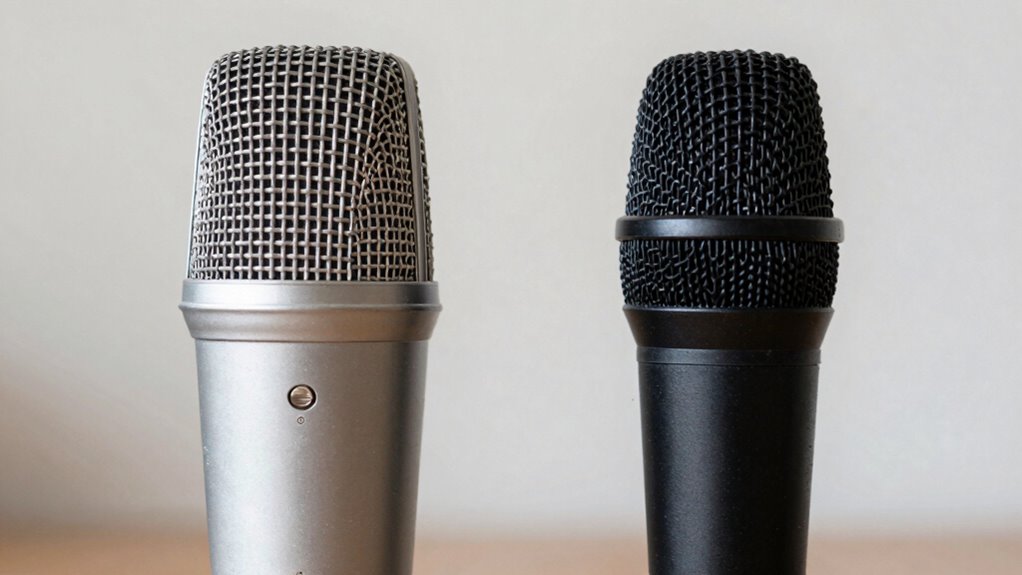
When selecting a microphone, consider where you’ll be using it most often and how it’ll fit into your environment. Setting a clear budget helps you focus on options that offer the best value without overspending. Balancing your environment needs with your budget guarantees you choose a mic that meets your requirements and saves you money.
Environment Compatibility Tips
Selecting the right microphone for your environment is essential to capturing clear, high-quality sound. Your choice depends on factors like studio acoustics or outdoor durability. For indoor settings with controlled acoustics, condenser microphones excel because of their sensitivity and accuracy. For outdoor use or rugged conditions, dynamic microphones are more durable and resistant to weather.
Consider these tips:
- Prioritize outdoor durability if you’ll be outdoors frequently
- Use condenser mics for studio recordings with good acoustics
- Opt for rugged, weather-resistant mics in challenging environments
- Match microphone type to your setup’s noise levels and acoustics
- Printmaking paper choices can influence how sound interacts with surfaces, affecting recording quality in some environments. Additionally, understanding Gold IRA markets can help you make informed decisions about your investments outside of audio equipment.
- Being aware of environmental noise levels ensures you select a microphone that minimizes unwanted background sounds and captures the intended audio accurately. Recognizing ambient sound characteristics in your environment can help tailor your microphone choice for optimal results.
Matching your mic to your environment ensures ideal sound, reduces unwanted noise, and improves overall recording quality, whether indoors or outdoors.
Budget and Budgeting
Are you trying to find a high-quality microphone without breaking the bank? Managing budget constraints can be challenging, but there are plenty of cost-effective options that deliver great sound without overspending. Start by setting a clear budget to narrow your choices. Consider versatile microphones that work well for multiple uses, which helps maximize your investment. Look for models with good reviews and proven reliability within your price range. Don’t forget to factor in additional costs like accessories or necessary adapters. Sometimes, opting for a slightly lower-priced microphone from a reputable brand can save you money while still providing excellent audio quality. Ultimately, choosing the right mic involves balancing your needs with your budget, ensuring you get the best value for your money. Understanding audio technology can help you make more informed decisions when selecting a microphone.
Common Mistakes to Avoid When Picking a Microphone
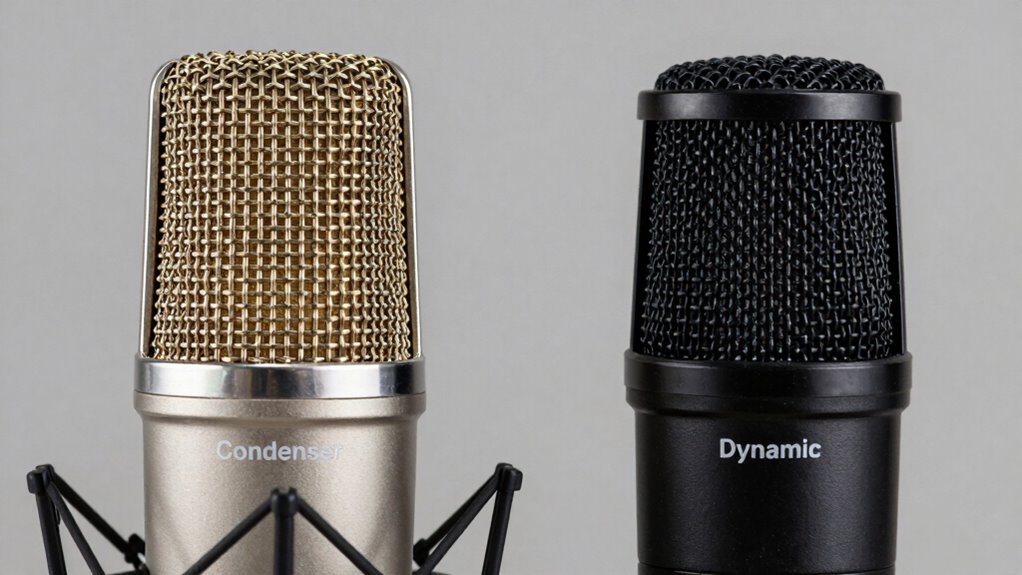
Choosing the right microphone can be tricky, especially if you overlook common mistakes that can affect your audio quality. One mistake is ignoring the environment; selecting a sensitive condenser mic in a noisy space can pick up unwanted sound. Another is prioritizing affordability over microphone durability, risking equipment failure during critical recordings. You might also overlook the importance of matching the mic type to your specific recording needs, which impacts overall sound clarity. Finally, neglecting to test the microphone beforehand can lead to surprises in sound performance. Keep these points in mind:
Choosing the right microphone and testing it beforehand ensures optimal sound quality and equipment longevity.
- Choose a microphone suitable for your environment
- Don’t compromise on microphone durability for cheap options
- Match the mic type to your recording purpose
- Always test the mic before use
Avoiding these mistakes helps ensure better audio quality and longevity of your equipment.
Final Tips: Matching Microphone Types to Your Recording Needs

To get the best results from your microphone, you need to match its type to your specific recording needs. Consider microphone durability, especially if you’ll be using it frequently or in rugged environments—some brands are known for sturdiness and long-lasting build quality. Also, check the brand reputation; trusted manufacturers often provide reliable performance and better customer support. For vocals or studio work, condenser mics deliver detailed sound, but they may be more delicate. Dynamic microphones are durable and handle high sound pressure levels, making them ideal for live performances or rough handling. By understanding your recording environment and prioritizing durability and brand reputation, you can choose a microphone that offers consistent, high-quality results tailored to your needs. Additionally, microphone construction can influence its ability to withstand wear and tear over time. Selecting a microphone with robust construction can further enhance its longevity and reliability in various settings. Evaluating microphone durability ensures you pick a model that remains dependable through extensive use. For optimal performance, consider environmental conditions as they can significantly impact your microphone choice and longevity.
Frequently Asked Questions
Can Both Microphone Types Be Used for Live Performances?
Yes, you can use both microphone types for live performances. Dynamic mics are ideal for instrument amplification and handling loud sounds without distortion, making them perfect for vocals on stage. Condenser mics excel in studio recording, capturing detailed sound. While condensers can be used live, they’re more sensitive and prone to feedback, so dynamic microphones are usually preferred for live settings.
How Do Microphone Polar Patterns Affect Their Use?
You should consider polar patterns because they influence microphone versatility and directional sensitivity. A cardioid pattern captures sound primarily from the front, reducing background noise, making it ideal for live performances. Omnidirectional patterns pick up sound equally from all directions, offering more flexibility in studio settings. By understanding these patterns, you can select a mic that best suits your environment, ensuring better sound quality and minimizing unwanted noise or feedback.
Are There Hybrid Microphones Combining Dynamic and Condenser Features?
Yes, there are hybrid microphones that combine features of both dynamic and condenser types. These hybrid microphones give you the flexibility to capture a wide range of sounds, making them versatile for different recording situations. You can benefit from their combined features, such as the durability of dynamic mics and the sensitivity of condenser mics, allowing you to adapt easily whether you’re recording vocals, instruments, or live performances.
Which Microphone Type Is More Durable for Outdoor Use?
When it comes to outdoor gigs, a dynamic microphone is your best friend—think of it as the tough, rugged superhero in your audio arsenal. Its construction durability and weather resistance make it ideal for unpredictable elements. Unlike condenser mics, which are more sensitive and delicate, dynamic mics withstand wind, rain, and rough handling. So, if you need a microphone that can brave the outdoors, choose a dynamic one for durability and resilience.
How Do Environmental Factors Influence Microphone Selection?
Environmental factors greatly influence your microphone choice. If you face high environmental noise, a dynamic microphone works better since it isolates sound more effectively. For humid conditions, choose a mic with humidity resistance to prevent damage and maintain performance. You need to take into account both environmental noise and humidity resistance to ensure your microphone functions reliably outdoors, especially when exposure to moisture or loud background noise is common.
Conclusion
Choosing the right microphone is like picking the perfect paintbrush for your artwork. Whether you go dynamic or condenser, selecting the right tool helps your sound shine just like a masterpiece. Consider your recording environment, budget, and needs, and don’t be afraid to experiment. With the right microphone, you’ll turn your audio projects into vibrant, professional-quality creations—bringing your sonic vision to life with clarity and confidence.