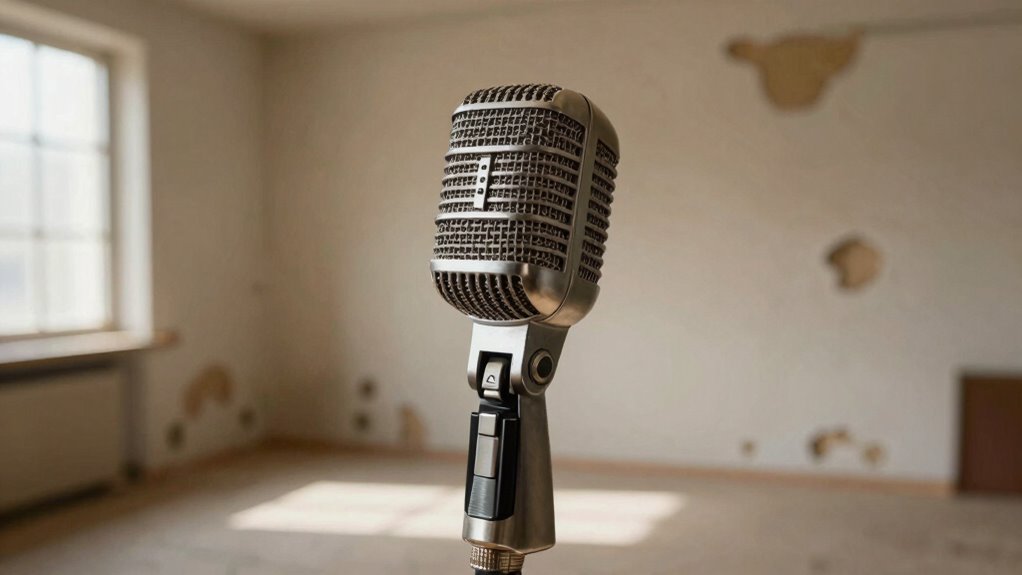

Dynamic microphones are great for untreated rooms because they naturally reject background noise and room reverberation, helping your recordings stay clear. They handle loud sounds without distortion and are less sensitive to ambient ambient noise or vibrations. Their rugged build makes them reliable in diverse environments, reducing worries about damage. Plus, they focus on your main source, producing a warm, natural tone. Keep going to discover even more reasons why they’re ideal for less controlled spaces.

Get the little things that make your day delivered free — and shop member deals
- Fast, free delivery on millions of items
- Access to Prime Big Deal Days deals on October 6–7
- Prime Video, Amazon Music and more included
Key Takeaways
- Dynamic mics naturally reject ambient noise and room reflections, making them ideal for untreated spaces.
- Their limited frequency response minimizes capturing unwanted reverberations and echoes.
- Rugged construction ensures durability and stable performance in unpredictable acoustic environments.
- They handle high sound pressure levels without distortion, suitable for loud sources in untreated rooms.
- Focused sound pickup and natural tone provide clear recordings despite poor room acoustics.

If you’re recording in an untreated room, choosing the right microphone can make a significant difference. Dynamic mics are often the best choice because of how they handle unpredictable acoustics and noise. Unlike condenser microphones, which are sensitive to a broad range of frequencies and ambient sounds, dynamic mics have a more limited frequency response. This means they naturally reject much of the room’s unwanted reverberation and background noise, helping your recordings sound cleaner even without acoustic treatment. Their rugged construction also makes them durable and reliable, so you can focus on capturing sound without worrying about delicate components.
One of the key advantages of dynamic mics is their ability to handle high sound pressure levels without distortion. This makes them perfect for recording loud sources like vocals, drums, or amplified instruments in a space where sound reflections can cause issues. Because they don’t pick up as much of the room’s ambient noise, your recordings stay focused and clear. You won’t need to spend hours trying to dampen echoes or invest in expensive acoustic panels. Instead, you can simply position the mic correctly and let its design do the work.
Handling noise is another crucial factor that makes dynamic mics suitable for untreated rooms. These microphones are less sensitive to mechanical noise or vibrations that might come from handling or nearby equipment. This means you don’t have to worry as much about noise leaks or accidental bumps ruining your take. Their robust build helps minimize the impact of handling noise, giving you a more stable recording environment. This is especially useful if you’re working in a space with less soundproofing or if you record yourself without a sound booth.
Furthermore, the limited frequency response of dynamic mics helps prevent capturing unwanted high-frequency room reflections that can make recordings sound harsh or distant. Instead, they focus on the core sound source, providing a natural and warm tone that’s less affected by room acoustics. This makes them excellent for spoken word, podcasts, and live performances in spaces where acoustic treatment is limited or unavailable.
best dynamic microphone for untreated rooms
As an affiliate, we earn on qualifying purchases.
As an affiliate, we earn on qualifying purchases.
Frequently Asked Questions
Can Dynamic Mics Be Used for Live Vocals in Untreated Rooms?
Yes, you can use dynamic mics for live vocals in untreated rooms. Their directional pickup pattern helps minimize room acoustics issues, reducing unwanted reflections. Focus on proper microphone placement—placing the mic close to your mouth can further cut down on room noise and echo. Dynamic mics are rugged, versatile, and less sensitive to ambient sound, making them ideal for live performances in spaces with challenging acoustics.
How Do Dynamic Mics Compare to Condenser Mics in Noisy Environments?
Dynamic mics outperform condenser mics in noisy environments because they handle background noise better. They have a narrower frequency response and lower sensitivity differences, which help focus on the sound source and reject unwanted sounds. Condenser mics are more sensitive and have a wider frequency response, making them prone to picking up ambient noise. So, if you’re in a loud setting, a dynamic mic will give you cleaner, clearer recordings.
Are Dynamic Mics Suitable for Recording Acoustic Instruments?
Think of a dynamic mic as a sturdy net catching the essence of an acoustic instrument. Yes, they’re suitable for recording acoustic instruments, especially when you focus on proper instrument mic placement. Their durability and high sound pressure level handling make them versatile for various instruments. While they may not capture every subtle nuance like condensers, dynamic mics excel in delivering a warm, punchy sound that complements most acoustic setups.
What Are the Limitations of Dynamic Microphones in Studio Settings?
Dynamic microphones have limitations in studio settings because their polar patterns tend to be less directional, which can lead to bleed and unwanted noise. Additionally, their frequency response is generally narrower, making them less ideal for capturing subtle tonal details. You might find them less suitable for detailed recordings or precision mixing, especially when compared to condenser mics. However, they excel at handling high sound pressure levels and reducing background noise.
Do Dynamic Mics Require Special Handling or Maintenance?
Dynamic mics don’t require special handling or maintenance beyond basic care. Their microphone durability means they can withstand rough handling, making them ideal for live use or casual recording. Just use proper handling techniques, like avoiding dropping or knocking the microphone, and keep the grille clean. Regularly check for dust or debris, but overall, dynamic microphones are low-maintenance and built to last, ensuring reliable performance over time.
rugged handheld microphone for recording
As an affiliate, we earn on qualifying purchases.
As an affiliate, we earn on qualifying purchases.
Conclusion
In untreated rooms, dynamic mics are your best bet because they’re built to handle room noise and unwanted reflections. They focus on capturing your voice or instrument directly, keeping background clutter at bay. Think of them as your trusty sidekick, always ready to shine where others might stumble. When you’re working with less-than-perfect acoustics, these microphones help you stay on track and get a clear, professional sound—truly the unsung heroes in your setup.
high SPL dynamic microphone for vocals
As an affiliate, we earn on qualifying purchases.
As an affiliate, we earn on qualifying purchases.
noise rejecting microphone for podcasts
As an affiliate, we earn on qualifying purchases.
As an affiliate, we earn on qualifying purchases.
NFL season / tailgating Picks
team gear
As an affiliate, we earn on qualifying purchases.