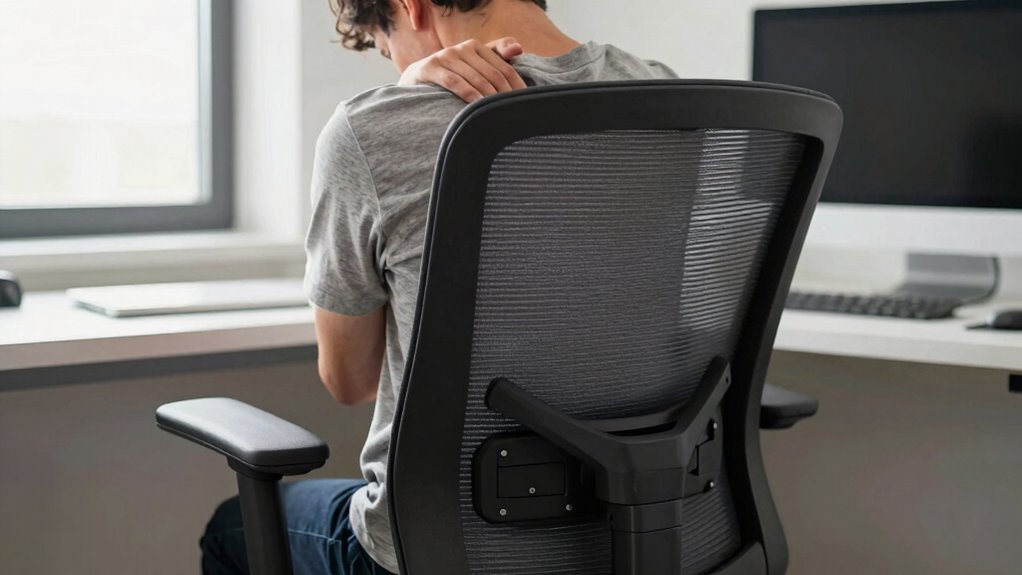

Even with an ergonomic chair, poor posture habits and muscle weaknesses can still cause back pain. Slouching, leaning forward, or uneven sitting put strain on your spine, negating the chair’s benefits. Weak core muscles fail to support your back properly, while ingrained habits and movement patterns make it harder to stay aligned. Combining posture awareness, muscle strengthening, and regular movement is essential for relief. Keep going, and you’ll get some helpful tips to address these common issues.

Get the little things that make your day delivered free — and shop member deals
- Fast, free delivery on millions of items
- Access to Prime Big Deal Days deals on October 6–7
- Prime Video, Amazon Music and more included
Key Takeaways
- Poor posture habits and improper setup can negate the benefits of ergonomic chairs.
- Weak core muscles fail to provide necessary spinal support during prolonged sitting.
- Ingrained habits like slouching or muscle imbalances undermine ergonomic benefits.
- Relying solely on the chair without active posture correction or movement limits relief.
- Lack of regular movement, stretching, and muscle strengthening can cause persistent back pain.

If your back still hurts despite trying different treatments, it’s understandable to feel frustrated. You’ve invested in an ergonomic chair, expecting it to solve your discomfort, but the pain persists. That’s because sitting in a chair alone isn’t enough to address underlying issues. Your body’s posture and muscle strength play crucial roles in maintaining back health, and neglecting them can keep pain lingering regardless of your chair’s design.
Posture correction is often overlooked, yet it’s essential for long-term relief. Even with an ergonomic chair, if you slouch, lean forward, or sit unevenly, you put strain on your spine and supporting muscles. An ergonomic chair promotes good posture, but you must actively maintain it. Sit back fully into the chair, keep your feet flat on the floor, and avoid crossing your legs. Make sure your hips are aligned with your knees, and your monitor is at eye level to prevent craning your neck. Small adjustments like these can make a significant difference in reducing back stress.
Maintaining good posture with small adjustments can significantly reduce back stress and promote long-term relief.
Muscle strengthening is equally important. Sitting correctly isn’t enough if your core muscles—the muscles around your abdomen and back—are weak. These muscles act as natural support for your spine, and if they’re underdeveloped, your back will continue to bear unnecessary strain. Incorporate exercises that target your core, such as planks, bridges, or gentle back extensions. Strengthening these muscles helps stabilize your spine and reduces the load on your lower back, even during long hours at your desk. Additionally, understanding how muscle imbalances can contribute to persistent pain emphasizes the importance of a comprehensive approach to back health. Regular movement and posture awareness can help prevent the development of muscle imbalances over time. Engaging in preventive measures like stretching and mindful sitting habits is key to avoiding future discomfort. Incorporating targeted exercises into your routine can also help address specific weaknesses that contribute to pain.
Sometimes, your pain persists because of ingrained habits or muscle imbalances that an ergonomic chair can’t correct alone. No matter how perfect your setup seems, if you’re constantly slouching or not engaging your core, your back remains vulnerable. It’s about combining posture correction with muscle strengthening routines. Regular movement breaks to stretch and activate different muscle groups also prevent stiffness and promote circulation, which can alleviate chronic discomfort. Moreover, understanding the importance of body mechanics can guide you to adopt healthier movement patterns that protect your back during daily activities.
core strengthening exercise equipment
As an affiliate, we earn on qualifying purchases.
As an affiliate, we earn on qualifying purchases.
Frequently Asked Questions
Can Poor Posture Negate Ergonomic Benefits?
Yes, poor posture can negate ergonomic benefits. When you slouch or lean forward, muscle tension increases, and spinal alignment worsens, undermining the chair’s support. Even with an ergonomic chair, if you don’t maintain proper posture, your muscles strain, and your spine isn’t properly aligned. To truly benefit, you need to sit correctly, keep your back straight, and avoid habits that cause muscle tension and misalignment.
How Often Should I Adjust My Chair During Work?
A stitch in time saves nine, so you should adjust your chair regularly during work. Aim to do so every 30 to 60 minutes to maintain posture awareness and prevent discomfort. Customizing your chair to support your back and align with your body promotes comfort and reduces strain. Frequent adjustments help you stay active and mindful of your posture, making ergonomic benefits more effective and reducing ongoing back pain.
Does Seat Cushion Material Affect Back Pain?
Yes, seat cushion material can influence back pain. Softer cushions with ideal firmness provide better support, reducing pressure on your lower back. Durable materials ensure consistent comfort over time without compressing too much or losing shape. When choosing a cushion, consider firmness and material durability, as both affect how well your hips and spine are supported. Proper support from the cushion helps maintain good posture, easing back pain during long hours of sitting.
Are Standing Desks Better for Back Health?
Standing desks can be beneficial, but only if you practice proper posture correction and prioritize desk ergonomics. Standing promotes blood flow and relieves pressure, but prolonged standing can cause discomfort, so switch between sitting and standing. You’ll want to set your desk height correctly and use anti-fatigue mats. By balancing movement with mindful posture correction, you optimize back health, making standing desks a smart, supportive solution rather than a one-size-fits-all fix.
What Exercises Help Reduce Chronic Back Pain?
To reduce chronic back pain, you should focus on core strengthening and flexibility exercises. Engage in activities like planks and bridges to build a strong core, supporting your spine. Incorporate gentle stretches like yoga or hamstring stretches to improve flexibility. Regularly doing these exercises helps alleviate tension, enhances posture, and reduces pain over time. Consistency is key—make them part of your daily routine for the best results.
ergonomic office chair with lumbar support
As an affiliate, we earn on qualifying purchases.
As an affiliate, we earn on qualifying purchases.
Conclusion
Even with an ergonomic chair, your back might still feel like a stubborn knot in a tangled ball of yarn. Remember, comfort isn’t a one-size-fits-all hat; it’s a dance between good habits, movement, and awareness. Think of your spine as a delicate garden—you need to tend to it daily with gentle care and mindful choices. Keep moving, stay aware, and give your back the love it deserves, so pain doesn’t become the unwelcome guest.
As an affiliate, we earn on qualifying purchases.
As an affiliate, we earn on qualifying purchases.
NFL season / tailgating Picks
team gear
As an affiliate, we earn on qualifying purchases.