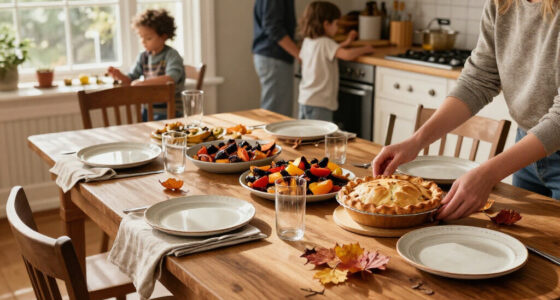
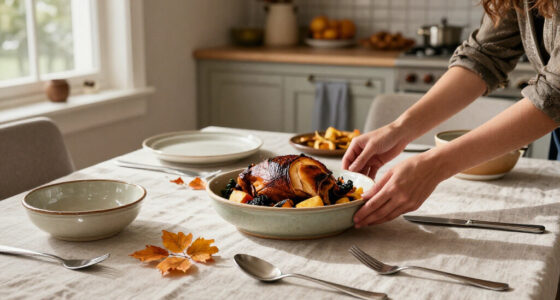
Use this guide to prepare your home, food, and schedule for a relaxed Thanksgiving meal. It is for first-time and occasional hosts who want a practical plan, from guest count and menu through serving and cleanup. Allow 1-2 weeks for planning, 4-6 hours of advance preparation, and about 5-7 hours on the day, depending on the menu and turkey size.

Get the little things that make your day delivered free with Prime
- Fast, free delivery on millions of items
- Prime Video, Amazon Music and more included
- Member-only deals all year

WorldBazaar Thanksgiving Leftover Containers 24PCS
- ✔ Material: Aluminum
- ✔ Quantity: 24 containers: 12 small and 12 large
- ✔ Small dimensions: 5.5 x 4.6 x 1.7 inches

WorldBazaar Funny Pun Thanksgiving Foil Containers with Lids – 36 Pack
- ✔ Material: Disposable aluminum foil
- ✔ Dimensions: 7.4 x 5.4 x 1.8 inches
- ✔ Quantity: 36 containers

Give Thanks Burlap Thanksgiving Banner
- ✔ Brand: Partyprops
- ✔ Material: Natural burlap
- ✔ Number of flags: 11
Difficulty: Beginner | Time: 4-6 hours of preparation across 1-2 weeks, plus 5-7 hours on the day
What You’ll Need
Tools & Materials:
- Guest list and calendar
- Paper or digital checklist
- Food thermometer
- Roasting pan and oven-safe thermometer, if cooking a whole turkey
- Serving dishes, utensils, plates, cups, and napkins
- Food storage containers and refrigerator space
- Cleaning supplies and trash bags
Knowledge:
- Basic kitchen and food handling skills
- Ability to follow a recipe and use an oven
- A way to check guests’ dietary needs and allergies
Set a realistic guest count before choosing the menu. If you are buying a frozen turkey, allow roughly 24 hours of refrigerator thawing for every 4-5 pounds; a large bird may need several days. Never thaw a turkey on the counter. Choose a fresh turkey or start refrigerator thawing early enough for your planned meal.
WorldBazaar Thanksgiving Leftover Containers 24PCS
When a Thanksgiving table produces everything from a small slice of pie to a generous portion of turkey, two container sizes are more useful than a stack of identical pans. This set includes 12 small containers measuring 5.5 x 4.6 x 1.7 inches and 12 large ones at 7.3 x 5.6 x 1.7 inches. That split gives us a practical way to portion different foods and send guests home with amounts that suit them. Both sizes have decorative lids, so the set keeps a coordinated holiday look while covering more than one packing need.Compared with the 36-pack, this is the more adaptable choice, but it provides fewer containers overall. Hosts expecting many guests to take leftovers may prefer the larger uniform supply of the other set. These pans are also disposable aluminum; that can make post-gathering cleanup easier, but they are not a reusable storage solution. Although the listing mentions hand-washing, it also describes the set as single-use, so we would choose them for convenient food handoffs rather than routine washing. Among these picks, this set earns the leading spot because it balances variety, useful capacity, and a direct connection to one of the most common hosting jobs: dealing with leftovers.
Pros:
- Includes 12 small and 12 large pans for different portions.
- Decorative foil lids support storing and handing off leftovers.
- Aluminum containers are lightweight and disposable.
- Works for assorted foods such as turkey, snacks, baked goods, and salads.
Cons:
- The 24-piece total is lower than the 36-pack option.
- Designed for single use rather than repeated storage.
- The listed hand-washing guidance may make the care expectations less clear.
Best for: Hosts who want both small and larger portions for sending home varied Thanksgiving foods.
Not ideal for: Anyone seeking reusable containers, or hosts who need the highest container count in the lineup.
Bottom line: Choose this set when portion flexibility matters more than having the largest number of matching containers.
“Choose this set when portion flexibility matters more than having the largest number of matching containers.”
WorldBazaar Funny Pun Thanksgiving Foil Containers with Lids – 36 Pack
If our priority is having plenty of containers ready when guests ask to take food home, this 36-pack of matching pans is the straightforward choice. Each rectangular container measures 7.4 x 5.4 x 1.8 inches, giving us one consistent format for packing leftovers, cookies, salads, or baked goods. The Thanksgiving graphics—turkeys, pumpkins, and maple leaves—make the handoff feel more festive than plain foil. Compared with the 24-piece set, we get more containers, but give up the smaller size option.That uniformity is helpful when we want a simple supply to set out near the end of the meal, especially for similar portions. It is less suited to hosts who want to separate a small treat from a larger serving without using the same pan for both. The containers come with lids and are described as easy to seal, but the product is single-use, so the convenience is primarily about quick packing and cleanup rather than an enduring food-storage setup. Its bulk count earns it the second position: stronger than the assorted set for quantity, less versatile for portioning, and far more task-focused than the reusable banner.
Pros:
- 36 matching containers provide the highest quantity in this lineup.
- Lids make it convenient to cover and hand off food.
- Thanksgiving graphics add a festive touch to leftovers.
- Rectangular format suits a range of party foods and baked goods.
Cons:
- Only one container size is provided.
- Single-use design creates waste and is not suited to repeated storage.
- Uniform pans may be oversized for small portions.
Best for: Hosts expecting to pack many similar-size portions or send plenty of leftovers home.
Not ideal for: Hosts who need multiple container sizes or prefer reusable food storage.
Bottom line: Pick this bulk set when container count and a coordinated look matter more than portion-size variety.
“Pick this bulk set when container count and a coordinated look matter more than portion-size variety.”
Give Thanks Burlap Thanksgiving Banner
Not every hosting essential has to handle food. The Give Thanks burlap banner adds a visible seasonal cue to a dining area, entryway, or gathering space, with 11 lettered flags and a simulated maple leaf accent. Its natural burlap look is more rustic than the bright illustrated lids on the WorldBazaar containers, so it suits a different decorating style. Since it can be folded for storage and reused, it also avoids the one-meal lifespan of both foil sets.The limitation is purpose: this banner helps create atmosphere, but it will not portion, cover, or send food home. Its flags measure 6.3 x 5.5 inches each, which may feel modest across a large room or wide mantel. Compared with the container picks, it is a longer-lasting purchase for hosts who decorate each fall, yet a lower priority if practical serving and leftover logistics are the immediate concern. We place it third because its reusable construction is a meaningful distinction, but its contribution to hosting is narrower than either food container set. Buyers should also account for the burlap style when matching it with polished or colorful holiday decor.
Pros:
- Reusable burlap construction can serve for multiple fall gatherings.
- Eleven pre-strung flags are ready to hang.
- Folds for convenient storage between seasons.
- Simulated maple leaf accent adds a seasonal detail.
Cons:
- Flags are relatively small at 6.3 x 5.5 inches each.
- Provides decoration only, with no food service or storage function.
- Natural burlap styling may not suit every holiday decor scheme.
Best for: Hosts who want a reusable, rustic Thanksgiving accent for an indoor or outdoor gathering.
Not ideal for: Anyone prioritizing leftover storage, food handoffs, or bold decorations visible across a large space.
Bottom line: Choose this banner to reuse a simple fall decoration, while treating it as a complement to practical hosting supplies.
“Choose this banner to reuse a simple fall decoration, while treating it as a complement to practical hosting supplies.”
As an Amazon Associate we earn from qualifying purchases.
Before You Start
Choose a serving time and work backward from it. Check your oven capacity, refrigerator space, cookware, and seating before committing to dishes. Ask guests about allergies and dietary needs, and keep allergen-sensitive foods and utensils separate. Plan how hot dishes will stay hot and cold dishes will stay cold. Keep raw poultry separate from ready-to-eat foods, and wash hands and surfaces after handling it.
Step-by-Step Instructions
Step 1: Confirm guests and serving time
Contact each guest to confirm attendance, arrival time, dietary needs, allergies, and what they plan to bring. Set a meal time and tell guests when to arrive. Assign potluck items clearly, such as one side dish or dessert, so you do not end up with several versions of the same dish and no drinks.
Tip:Ask guests to label dishes that contain common allergens and to bring serving utensils with their contribution.
Check: You have a confirmed head count, a serving time, and a written list of guest contributions and dietary needs.
Choose one main dish, a few sides, bread, dessert, and drinks. Favor dishes that share ingredients or can be made ahead. Mark each dish with its recipe, serving vessel, cooking temperature, and whether it needs oven or stovetop time. Include at least one substantial option that fits guests’ dietary needs, rather than relying on small snacks.
Tip:A menu with fewer dishes is easier to time and serve. Check recipes for oven temperatures that conflict before locking in the plan.
Check: Every menu item has an assigned cook or contributor, a recipe or source, and a serving plan.
Step 3: Shop and prepare the home
Make one shopping list from the recipes, including pantry staples, foil, containers, ice, and drinks. Shop for shelf-stable items early and buy fresh items closer to the meal. Clear refrigerator shelves for raw turkey on a tray and prepared foods. Check that you have enough seats, plates, glasses, and serving utensils. Clean the bathroom, entry, and dining area, then set out a coat area and a place for bags.
Tip:Use a tray under raw poultry to catch drips, and store it on the lowest refrigerator shelf.
Check: Ingredients and equipment are on hand, the refrigerator has room, and guests can sit and serve themselves comfortably.
Step 4: Prepare dishes that can be made ahead
One or two days before the meal, prepare desserts, sauces, chopped vegetables, and casseroles that can be refrigerated safely. Label each container with the dish name and reheating instructions. Keep raw ingredients separate from cooked food, chill cooked dishes promptly, and do not leave perishable food at room temperature for more than two hours.
Tip:Do not assemble a dish in advance if its recipe calls for adding a topping just before baking; store that topping separately.
Check: Make-ahead dishes are labeled, covered, and stored at refrigerator temperature, and the remaining day-of tasks are listed.
Step 5: Create a cooking timeline
Write down when each dish must start, including turkey thawing, seasoning, roasting, resting, sides, and reheating. Work backward from serving time and account for the turkey’s rest before carving. Schedule dishes by oven temperature and cooking duration, and note which can be cooked or warmed after the turkey comes out. Set timers and keep the timeline where you can see it.
Tip:Use the turkey recipe and its weight to estimate roasting time, but use a thermometer—not the clock—to decide when it is done.
Check: The timeline gives every dish a cooking slot and leaves time to rest and carve the turkey before serving.
Step 6: Set up the dining and serving areas
Set the table or buffet the evening before. Put out plates, cutlery, napkins, glasses, and serving utensils. Add labels for dishes with special ingredients or dietary notes. Clear a route between the kitchen and dining area, and make space for hot pans on heat-safe trivets. Place drinks and snacks where guests can reach them without crowding the cooking area.
Tip:Keep candles, decorations, and table linens away from hot pans and open flames.
Check: Guests can find seats, drinks, and serving items, and there is a safe place for each hot dish.
Step 7: Cook and serve safely
Follow your timeline and wash hands, utensils, and surfaces after contact with raw turkey. Cook turkey until a food thermometer reads 165°F (74°C) in the thickest part of the breast and the innermost part of the thigh and wing, without touching bone. Let it rest before carving. Keep hot foods hot and cold foods chilled, and refrigerate perishable leftovers within two hours.
Tip:Check each reading in more than one spot. Color and clear juices alone cannot confirm that poultry is safely cooked.
Check: The turkey reaches 165°F (74°C) in the required locations, dishes are served with clean utensils, and leftovers are stored promptly.
Step 8: Guide guests and manage cleanup
Welcome guests, point out the coat area, bathroom, drinks, and seating, then let them know when the meal will be served. Ask a helper to refill drinks or bring dishes to the table while you finish cooking. After the meal, pack leftovers into shallow containers, label them with the date, and refrigerate them. Clear food scraps and soak cookware while it is still manageable.
Tip:Shallow containers cool food faster than deep pots. Freeze portions you will not eat within a few days.
Check: Guests know where to go, leftovers are dated and chilled within two hours, and the kitchen is safe to use again.
Common Mistakes to Avoid
- Choosing too many dishes or recipes that all need the oven at once. — Limit the menu and map each dish’s oven temperature and cooking time before shopping.
- Starting a frozen turkey too late. — Calculate refrigerator thawing time by weight when you set the menu, then begin thawing several days ahead if needed.
- Relying on appearance or estimated roasting time to judge doneness. — Use a food thermometer and check the breast, thigh, and wing as directed.
- Leaving perishable food out while guests eat or visit. — Serve food in smaller batches when practical and refrigerate perishables within two hours.
Troubleshooting
Problem: The turkey is still partly frozen on the day of cooking.
Solution: Keep it wrapped and thaw it in cold water, changing the water every 30 minutes; allow about 30 minutes per pound and cook it immediately after thawing. Do not use warm water or leave it on the counter.
Problem: The turkey is not at 165°F when the planned roasting time ends.
Solution: Continue roasting and check the temperature every 15-20 minutes in the thickest breast and innermost thigh and wing. Cover browned areas loosely with foil if needed.
Problem: Several dishes need the oven at the same time.
Solution: Prioritize dishes that must be served hot, cook compatible dishes together only when their recipes allow, and reheat prepared sides after the turkey comes out. Keep hot food above 140°F (60°C) while waiting.
Problem: A guest reports an allergy or dietary need after the menu is set.
Solution: Confirm the specific ingredients and severity with the guest. Read labels, use clean separate utensils and surfaces, and offer a clearly identified safe dish; do not guess about ingredients.
What Success Looks Like
Your Thanksgiving meal is ready near the time you promised, guests have seating and food that fits their stated needs, hot dishes are served safely, and the turkey has reached 165°F (74°C) in the breast, thigh, and wing. Perishable leftovers are in the refrigerator within two hours and labeled for later use.
Next Steps
After the meal, refrigerate leftovers in shallow containers and use refrigerated turkey and sides within 3-4 days, or freeze them for longer storage. Wash serving utensils and cookware, note which quantities worked, and save the timeline with changes for next year. Contact a food safety authority or healthcare professional for guidance if you suspect unsafe food handling or an allergic reaction.
Frequently Asked Questions
How much turkey should I plan per guest?
Plan about 1 pound of whole turkey per person for a typical meal with several sides. Choose more if you want generous leftovers, and account for extra guests before buying.
How long does a frozen turkey take to thaw?
Allow about 24 hours in the refrigerator for every 4-5 pounds of turkey. Keep it in a tray on the lowest shelf. If it is still frozen on cooking day, use the cold-water method and cook it right after thawing.
Can I cook the turkey the day before?
Yes. Cook it to 165°F (74°C), carve it, and refrigerate the meat promptly in shallow containers. Reheat it covered until it reaches 165°F (74°C) before serving.
How long can Thanksgiving food sit out?
Refrigerate perishable food within two hours at room temperature. If the room is above 90°F (32°C), refrigerate it within one hour.
What should I do if I do not have enough oven space?
Choose sides that can be made ahead or cooked on the stovetop, use a slow cooker only for recipes suited to it, and schedule reheating after the turkey comes out. Keep hot dishes above 140°F (60°C) while they wait.