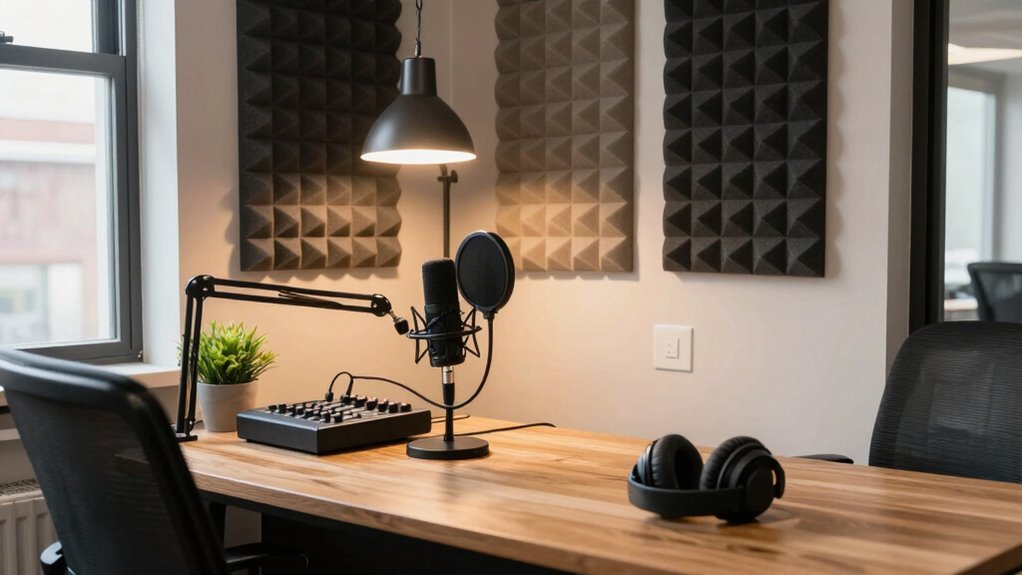

To build a simple podcast corner in your office, select a quiet spot away from noise and high traffic. Use thick curtains, foam panels, or bookshelves filled with books for soundproofing and to reduce echo. Keep your microphone 6-12 inches from your mouth and add a pop filter for clearer sound. Keep things organized, use soft furnishings, and test your setup to improve quality. If you want to create a professional-sounding space, consider these tips and more.

Get the little things that make your day delivered free — and shop member deals
- Fast, free delivery on millions of items
- Access to Prime Big Deal Days deals on October 6–7
- Prime Video, Amazon Music and more included
Key Takeaways
- Choose a quiet, low-traffic corner and enhance acoustics with curtains, foam panels, or bookshelves filled with books.
- Position your microphone 6-12 inches from your mouth, using a pop filter for clear sound.
- Add soft furnishings like rugs and cushions to absorb sound reflections and reduce echo.
- Keep cables organized and use a dedicated power source to minimize noise and interference.
- Regularly test recordings and adjust placement or acoustic treatments for optimal sound quality.
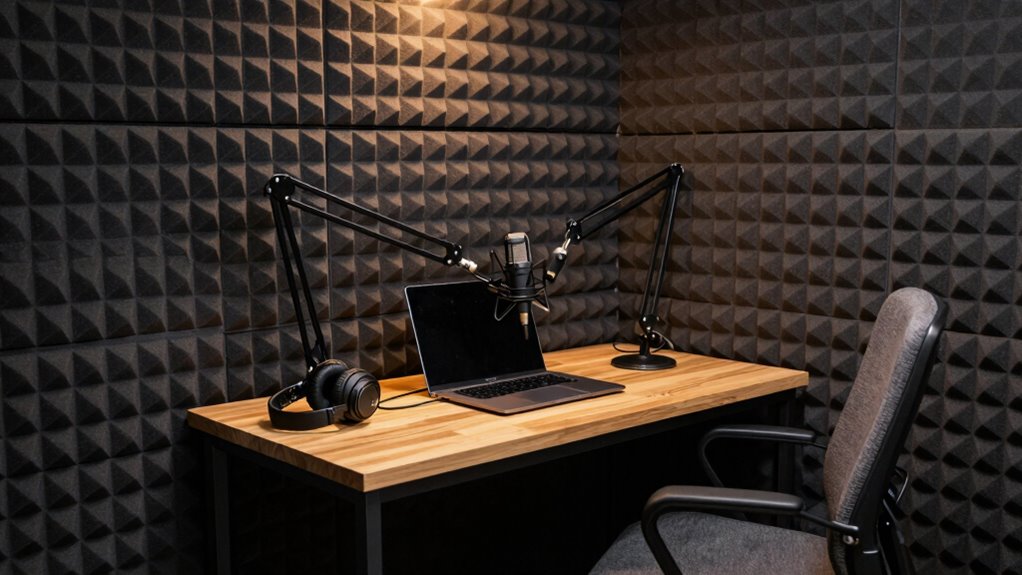
Creating a dedicated podcast corner in a regular office might seem challenging, but it’s easier than you think. The key is to optimize your space for sound quality without overhauling the entire room. Start by choosing a quiet corner, ideally away from high-traffic areas and noisy equipment. Once you’ve identified your spot, focus on soundproofing techniques to reduce echo and external noise. You don’t need costly soundproof booths; simple measures like hanging thick curtains, installing foam panels, or adding bookshelves filled with books can absorb sound reflections. These minor modifications will help create a controlled acoustic environment, making your recordings clearer and more professional.
Choose a quiet corner and add curtains or bookshelves to improve sound quality naturally.
Next, pay attention to microphone placement, which is vital for capturing high-quality audio. Position your microphone close to your mouth, about 6 to 12 inches away, but avoid placing it directly in front of your mouth to prevent plosive sounds. Use a pop filter or windscreen to minimize popping sounds and sibilance. Keep the microphone steady on a boom arm or stand, ensuring it’s at the right height—typically level with your mouth—so you don’t have to lean in or strain. Proper microphone placement not only improves sound quality but also reduces background noise pickup, making editing easier and your voice sound more natural.
In addition, consider the type of microphone you use. A cardioid condenser mic is a popular choice for podcasting because it captures sound primarily from the front, reducing unwanted ambient noise. Connect it to a simple audio interface for better sound quality and easier control over your levels. Make sure your recording space is well-organized and free of clutter that could interfere with your microphone or cause unwanted noise. Keeping cables tidy and using a power source dedicated to your recording equipment can further minimize electrical hum and interference.
Finally, don’t forget about the environment. Soft furnishings like rugs, cushions, or acoustic panels can further dampen sound reflections, creating a warm, studio-like atmosphere. Using soundproofing techniques such as acoustic panels or heavy drapes can significantly improve your recording environment. Test your setup by recording a few sample episodes, then listen critically to identify any issues with echo or background noise. Adjust your soundproofing techniques and microphone placement as needed. With a bit of effort and attention to detail, you’ll have a functional, effective podcast corner right inside your office—ready for crisp, professional-sounding recordings.
podcast microphone with pop filter
As an affiliate, we earn on qualifying purchases.
As an affiliate, we earn on qualifying purchases.
Frequently Asked Questions
What Is the Ideal Budget for Setting up a Podcast Corner?
For a basic podcast corner, plan to spend around $200 to $500. This budget covers a decent microphone for clear audio, soundproofing or foam panels for better acoustics, and a pop filter. Keep in mind, good microphone placement is key to quality recordings, and some budget might go toward audio editing software. With careful selection, you can create a professional-sounding setup without overspending.
How Much Space Is Needed for a Functional Podcast Corner?
You’ll need about 4×4 feet of space for a functional podcast corner. Make sure you include proper acoustic treatment to minimize echo and sound reflections. Position your microphone, headphones, and recording equipment strategically, keeping them away from noisy areas and reflective surfaces. This setup allows you to focus on good equipment placement, creating a soundproof environment that improves audio quality without taking up too much office space.
Can a Podcast Corner Be Shared With Other Office Functions?
Can you share a podcast corner with other office functions? Absolutely, but consider privacy concerns and noise levels. A shared workspace might work if you use soundproofing or partitions to minimize disruptions. To keep quality high and focus intact, it’s better to designate a specific area, even if small. Wouldn’t you want your recordings to sound professional and free from interruptions? Planning ahead guarantees a smooth, effective setup.
What Are the Best Lighting Options for a Podcast Setup?
You should choose lighting fixtures with adjustable color temperature to create a professional podcast setup. Opt for soft, diffused lighting to reduce harsh shadows and provide even illumination on your face. LED panels or ring lights are great options, as they allow you to control brightness and color temperature easily. Aim for a warm or neutral tone (around 3500K-4500K) to guarantee your voice sounds natural and your video looks inviting.
How Do I Soundproof a Small Office Space Effectively?
You can soundproof your small office effectively by using soundproof materials like acoustic panels, foam, or mass-loaded vinyl on walls and ceilings to block external noise. Add acoustic treatment, such as bass traps and diffusers, to absorb echoes and improve sound quality inside. Seal gaps around doors and windows with weatherstripping or acoustic sealant, ensuring minimal sound leakage. These steps create a quiet, professional podcasting environment.
soundproof foam panels for recording
As an affiliate, we earn on qualifying purchases.
As an affiliate, we earn on qualifying purchases.
Conclusion
Now, with your new podcast corner, you’re practically a broadcasting legend in your office! Imagine your colleagues stopping mid-sentence just to listen, thinking you’ve somehow tapped into the secrets of the universe. This simple setup turns even the tiniest space into a powerhouse of creativity and fame — okay, maybe just within your office walls, but still! Get ready to be the star of your own audio universe, one episode at a time.
As an affiliate, we earn on qualifying purchases.
acoustic treatment for home studio
As an affiliate, we earn on qualifying purchases.
As an affiliate, we earn on qualifying purchases.
NFL season / tailgating Picks
team gear
As an affiliate, we earn on qualifying purchases.