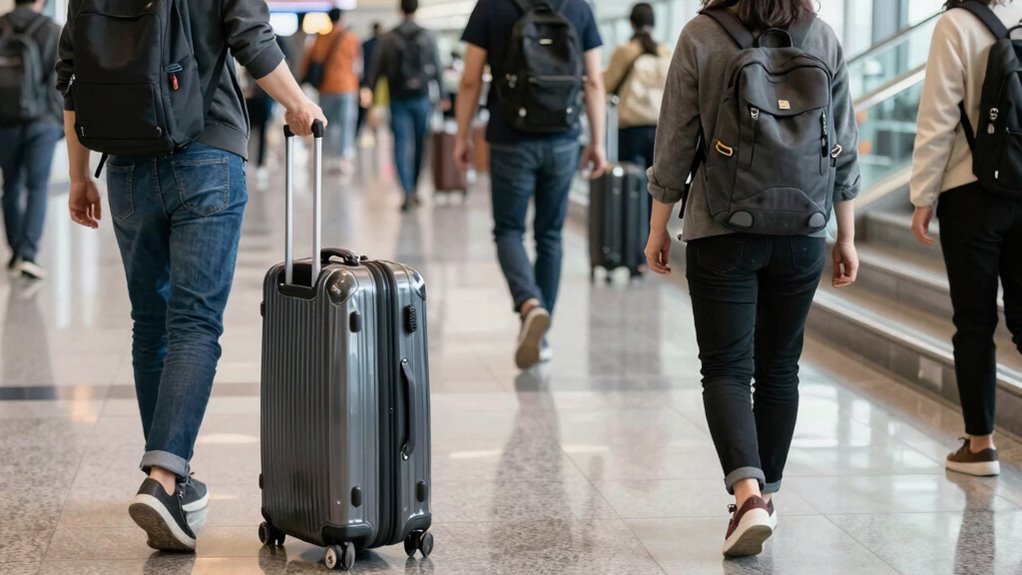

If you want quick, easy mobility through airports, rolling bags make it simple to navigate busy halls and security checkpoints with minimal effort, especially when carrying heavy or multiple items. Backpacks are lightweight and keep your hands free, ideal for short distances or crowded environments. Your choice depends on your travel style and airport layout. Want a deeper look at which option suits your journey best? Keep exploring for more helpful tips.
Key Takeaways
- Rolling bags excel in quick navigation through large airports and security checks due to easy wheeling and organized compartments.
- Backpacks offer better mobility in tight spaces, crowded gates, and when stairs or narrow passages are involved.
- Rolling bags streamline security procedures by allowing faster unpacking and packing at checkpoints.
- Backpacks provide lightweight convenience and quick access to essentials, enhancing gate transfer efficiency.
- Choice depends on airport layout and travel duration, with rolling bags suited for larger airports and backpacks for agility.
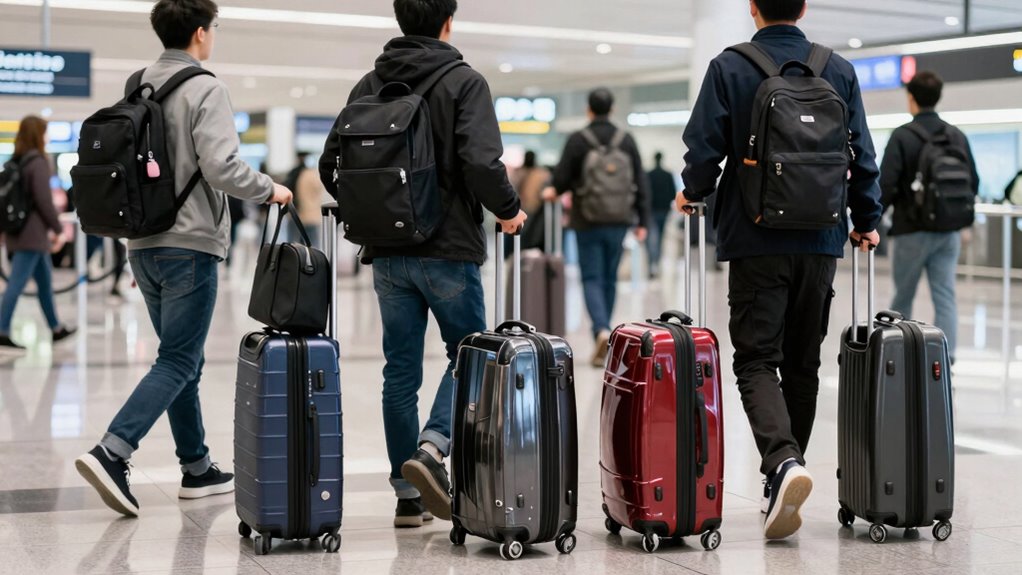
When it comes to maneuvering airports efficiently, choosing between rolling bags and backpacks can make a significant difference in your travel experience. Your decision impacts how smoothly you navigate through security checkpoints, how quickly you reach your boarding gate, and how comfortable you feel during the journey. Rolling bags often come with the advantage of easy mobility, especially when you’re managing multiple items or heavy luggage. They allow you to wheel through security checkpoints and corridors without exerting much effort, which can be a huge time-saver when you’re trying to find security checkpoint shortcuts. If you’re rushing or traveling during busy hours, a rolling bag helps you maintain a steady pace, reducing the likelihood of fatigue and making it easier to keep your belongings organized and accessible. Additionally, rolling bags tend to keep your packed items in order, which speeds up security scans since you can quickly unzip compartments or remove items if needed, further enhancing your security checkpoint shortcuts and overall efficiency. Mobility plays a crucial role in how quickly and comfortably you can navigate through busy airports, influencing your overall travel experience.
On the other hand, backpacks shine in terms of boarding gate convenience. They’re lightweight and free up your hands, allowing you to navigate crowded airports with agility. When your gate is a walk or a short train ride away, a backpack makes it easy to stay mobile, especially if you need to carry essentials like electronics, documents, or snacks without fumbling for a bag. Backpack designs often include compartments that help you organize your items, making it simple to access your boarding pass or ID quickly, which can save precious seconds during boarding. Plus, if your travel involves moving through tight spaces or stairs, backpacks are less cumbersome than rolling bags and don’t require you to keep an eye on wheels, which can sometimes get caught or bump into other travelers. This flexibility boosts your boarding gate convenience and allows you to adapt swiftly if your gate changes unexpectedly. Furthermore, choosing a travel-friendly design can significantly enhance your overall efficiency and comfort during transit. Incorporating ergonomic features can also reduce strain on your shoulders and back during long walks or extended periods of carrying your bag, further improving your airport experience. In addition, selecting a bag with durable materials can ensure it withstands the rigors of frequent travel and handling.
Research shows that appropriate travel gear can lead to a more relaxed and efficient travel experience, helping you stay focused on your journey rather than on managing your luggage. Ultimately, your choice depends on your travel style and airport layout. If you prefer seamless security checkpoint shortcuts and prioritize smooth transit through larger airports, a rolling bag might be your best bet. But if you value agility, ease of movement, and quick access at the boarding gate, a backpack could serve you better. Both options have their merits, and understanding how each complements different aspects of airport efficiency ensures you can tailor your gear to match your travel needs. Whichever you choose, prioritizing ease of maneuvering and quick access will keep your journey more organized and less stressful.
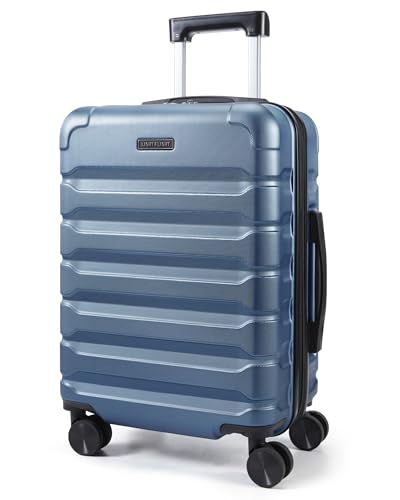
LIGHT FLIGHT Carry On Luggage 22x14x9 Airline Approved Suitcase,Royal Blue
- Airline-Approved Size: Meets overhead compartment requirements
- Expandable Capacity: Increases from 33L to 41L
- Enhanced Packing Space: Adds 8L for extra items
As an affiliate, we earn on qualifying purchases.
As an affiliate, we earn on qualifying purchases.
Frequently Asked Questions
Which Bag Type Is More Secure Against Theft?
A backpack generally offers better theft deterrence because it stays close to your body, making it harder for thieves to snatch. Look for security features like lockable zippers or hidden compartments to enhance protection. Rolling bags can be more vulnerable, especially in busy airports, as they’re easier targets for grab-and-go thefts. Overall, choose a bag with strong security features and keep it within your sight for maximum safety.
How Do Different Airport Customs Procedures Affect Bag Choices?
Different airport customs procedures influence your bag choice by how easily you can access your belongings during customs clearance and baggage inspection. If customs requires quick inspection or frequent stops, a backpack offers convenience with easy access and hands-free mobility. Conversely, rolling bags might slow you down during customs clearance, especially if you need to open compartments or manage security checks. Choose based on how smooth your baggage inspection process is likely to be.
Are There Size Restrictions for Rolling Bags and Backpacks?
Yes, there are size restrictions for rolling bags and backpacks, typically set by airlines and airports. You should check your airline’s specific limits for carry-on and checked luggage before traveling. Smaller sizes often enhance travel comfort by fitting easily in overhead compartments, while larger ones may offer more storage but can be less convenient. Consider style and ease of handling, choosing a bag that balances practicality with your personal travel style.
How Do Bag Weights Impact Airline Baggage Fees?
Your bag weight can really tip the scales when it comes to airline baggage fees. Airlines often have strict baggage policies, and overweight bags can lead to hefty charges—so, it’s worth keeping an eye on weight distribution. If your bag exceeds the limit, you’ll pay more, making it essential to pack smartly. Staying within weight restrictions helps you avoid surprises and keeps your journey smooth as silk.
Which Bag Type Is Better for Uneven or Rough Terrain?
Backpacks are better for uneven or rough terrain because they offer superior durability and better weight distribution, allowing you to navigate challenging surfaces more easily. Rolling bags can be cumbersome on uneven ground, risking damage and making mobility difficult. With a backpack, you can distribute the weight evenly across your shoulders and back, reducing strain and increasing stability. This makes backpacks a more practical choice for outdoor adventures or rugged terrains.
As an affiliate, we earn on qualifying purchases.
Conclusion
Choosing between rolling bags and backpacks is like picking the right tool for a job—each has its own strengths. Rolling bags glide smoothly through airports like a well-oiled train, perfect for those with heavy loads or lots of luggage. Backpacks, on the other hand, are agile mountain goats, easily maneuvering crowded terminals and uneven surfaces. Whichever you pick, know that your choice shapes your travel experience — make it a smooth ride, not a bumpy journey.
LIGHT FLIGHT Carry On Luggage 22x14x9 Airline Approved Suitcase,Royal Blue
- Airline-Approved Size: Meets overhead compartment requirements
- Expandable Capacity: Increases from 33L to 41L
- Enhanced Packing Space: Adds 8L for extra items
As an affiliate, we earn on qualifying purchases.
As an affiliate, we earn on qualifying purchases.

Taygeer Travel Laptop Backpack for Men, Airplane Approved Travel Backpack
- Includes Shoe Bag and Wet Pocket: Separate shoes and wet items
- Spacious with Multiple Pockets: Organized storage for travel essentials
- Fits 15.6-inch Laptop and iPad: Dedicated device compartments
As an affiliate, we earn on qualifying purchases.
As an affiliate, we earn on qualifying purchases.