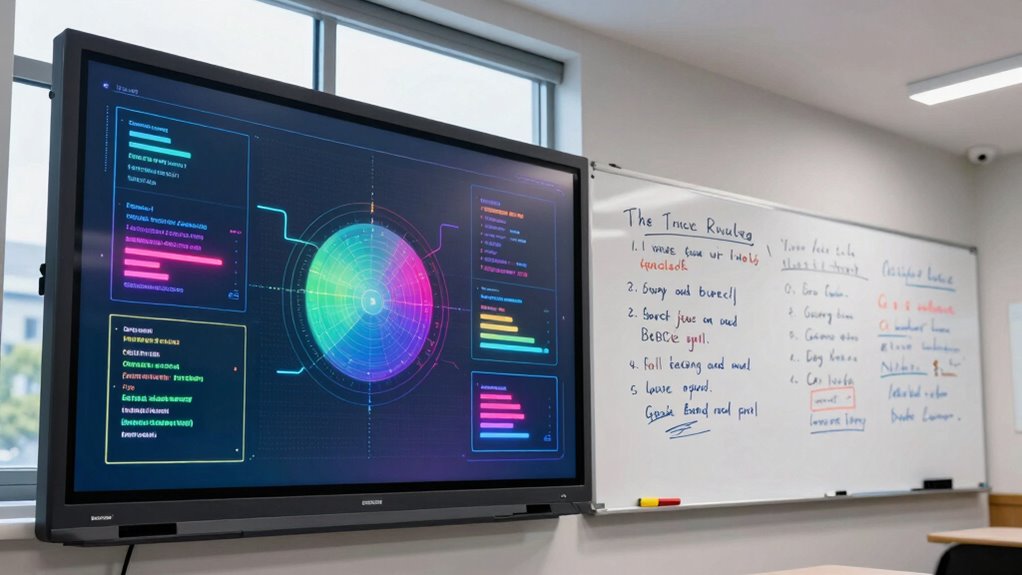

If you need a simple, affordable surface for basic note-taking and communication, whiteboards might be enough. But if you want to increase engagement with multimedia, real-time annotations, and digital collaboration, a smart board can bring more interactivity and flexibility. Consider your budget, goals, and how much tech integration you want. To understand whether the extra investment fits your needs, keep exploring these tools’ features and benefits further.

Get the little things that make your day delivered free with Prime
- Fast, free delivery on millions of items
- Prime Video, Amazon Music and more included
- Member-only deals all year
Key Takeaways
- Smart boards are ideal when interactive multimedia presentations and real-time collaboration significantly enhance engagement and productivity.
- Whiteboards are sufficient for basic note-taking and communication, offering a cost-effective, low-maintenance solution.
- The extra investment in smart boards is justified in environments prioritizing dynamic teaching, advanced collaboration, and digital resource access.
- Consider smart boards if frequent updates, technical support, and integration into digital workflows align with your goals.
- For simple, reliable communication without technological complexity, whiteboards remain the practical choice.

When it comes to classroom and office technology, choosing between smart boards and whiteboards can considerably impact your teaching and collaboration experience. If you’re weighing the options, it’s essential to consider the interactive features each offers. Whiteboards are simple tools—just a surface for writing and erasing. They’re straightforward, reliable, and require no power or software. On the other hand, smart boards integrate digital technology, allowing you to display multimedia, interact directly on the screen, and connect to the internet. These interactive features can transform a lesson or a meeting, engaging participants more deeply and enabling dynamic presentations. You can annotate documents in real time, access cloud-based resources instantly, and even record sessions for later review. Additionally, some smart boards support number formatting tools that help present financial data clearly and accurately. If your goal is to foster active participation and a richer learning environment, the smart board’s interactive capabilities can be a game-changer. Moreover, digital interactivity can enhance engagement and collaboration beyond traditional methods.
However, these advanced features come with cost considerations that you shouldn’t ignore. Whiteboards are significantly cheaper upfront—just the cost of the board itself and some markers and erasers. They don’t require ongoing maintenance or electricity, making them a budget-friendly choice for many institutions. Smart boards, conversely, involve a higher initial investment, including the device, installation, and compatible hardware or software. Plus, they require regular updates and technical support, which can add to long-term costs. If your budget is tight or if you need a simple, reliable surface for everyday use, a whiteboard might make more sense. But if you’re looking to modernize your space, incorporate multimedia, and provide an interactive experience that can motivate and engage your audience, the extra expense of a smart board could be justified. Furthermore, technology integration can enhance overall productivity and learning outcomes when appropriately implemented.
Ultimately, the decision hinges on your specific needs and resources. If you value seamless interactivity and have the budget to support it, investing in a smart board can elevate your teaching or collaboration. It enables greater flexibility, multimedia integration, and a more engaging environment. Yet, if cost considerations are paramount and your focus is on straightforward communication and note-taking, a whiteboard remains a practical and reliable choice. Both tools have their strengths; it just depends on what you aim to achieve and how much you’re willing to invest in your technology upgrade.
Popular right now

LG OLED evo C4 55-Inch 4K Smart OLED TV (OLED55C4PUA) with 144Hz Refresh Rate, HDMI Cable, 24-Month Protection Plan, and Streaming Bundle

Ninja Prestige Smart XL 10-in-1 Air Fryer and Countertop Oven with Pro Cook System, Stainless Steel, DT551

Samsung 65-Inch 4K OLED Smart TV with Dolby Atmos, 120Hz Refresh Rate, and Amber Protection Bundle
As an affiliate, we earn on qualifying purchases.
Frequently Asked Questions
How Durable Are Smart Boards Compared to Traditional Whiteboards?
Smart boards tend to be less durable than traditional whiteboards because they contain electronic components and screens that are sensitive to impacts and moisture. While they offer interactive features, durability testing shows they can be prone to scratches, screen damage, or malfunction if not handled carefully. Whiteboards are generally more rugged and withstand daily use better, making them a reliable choice if durability is your main concern.
What Are the Maintenance Requirements for Smart Boards?
You don’t need to worry about complex maintenance for smart boards. Regular cleaning protocols involve wiping the screen with a soft, slightly damp cloth to keep it clear and responsive. Additionally, software updates are essential; they guarantee your smart board runs smoothly, fixes bugs, and adds new features. Staying on top of these simple tasks helps extend the device’s lifespan while maintaining peak performance, making your investment worthwhile.
Can Smart Boards Be Used in Outdoor Educational Settings?
Smart boards aren’t ideal for outdoor educational settings because they lack weather resistance and portability features. Exposure to rain, sunlight, or extreme temperatures can damage their electronic components. Plus, their size and power needs make transportation and setup difficult outside. If you want tech-enabled outdoor learning, consider rugged, weatherproof alternatives designed for outdoor use, or use portable devices like tablets or laptops paired with outdoor-friendly displays.
Are Smart Boards Compatible With All Types of Classroom Software?
Think of a smart board as a Swiss Army knife—its compatibility depends on the software you choose. While many smart boards boast interactive features and seamless software integration, not all work flawlessly with every platform. You need to check the device specifications and software requirements beforehand. If you select a smart board designed for broad compatibility, you’ll enjoy smooth interaction and a versatile teaching tool that adapts to your needs.
What Is the Learning Curve for Teachers Using Smart Boards?
The learning curve for teachers using smart boards varies, but with proper teacher training, it becomes manageable. As you gain user familiarity, you’ll find browsing features easier and more intuitive. Initially, it might take some time to master interactive tools, but consistent practice and support help you become confident quickly. Investing in training guarantees you maximize the smart board’s potential, making your lessons more engaging and tech-savvy.
Conclusion
Ultimately, choosing between a smart board and a whiteboard depends on your needs. Imagine a teacher in a bustling classroom, using a smart board to instantly access online resources, engaging students with interactive lessons. Or picture a manager in a conference room, jotting quick notes on a whiteboard during a brainstorming session. Both tools serve their purpose, but when interactive tech boosts engagement and efficiency, investing in a smart board can truly transform your space.